Breathing is something you do thousands of times every day without thinking about it. But breathing does much more than bring oxygen into your body. The way you breathe interacts with your diaphragm, abdominal muscles, rib cage, pelvic floor, and spine—all of which play roles in maintaining trunk stability and comfortable posture.
If your breathing becomes shallow or heavily concentrated in the upper chest, you may notice your shoulders rising with every breath or increased tension around your neck and upper back. On the other hand, learning to breathe with better expansion through the rib cage and diaphragm can help coordinate the muscles surrounding your trunk.
That doesn’t mean breathing exercises alone will “fix” posture. Posture is influenced by many factors, including strength, mobility, workstation setup, movement habits, fatigue, and individual anatomy. However, breathing can be a useful part of a broader approach to improving body awareness and core control.
This guide explains how breathing affects posture and core stability, provides beginner-friendly breathing exercises, and recommends useful products you can find on Amazon for practicing breathing, mobility, and core exercises at home.
The Connection Between Breathing and Posture
Table of Contents
The diaphragm is the primary muscle involved in breathing. It sits beneath the lungs and separates the chest cavity from the abdominal cavity.
When you inhale, the diaphragm contracts and moves downward. Your rib cage expands as air enters your lungs. When you exhale, the diaphragm relaxes and moves upward.
But the diaphragm doesn’t work in isolation.
Breathing involves coordination between several structures, including the:
- Diaphragm
- Abdominal muscles
- Intercostal muscles between the ribs
- Pelvic floor
- Muscles surrounding the spine
Together, these structures help regulate pressure inside the abdominal cavity while your body moves, lifts, reaches, walks, or exercises.
What Does Breathing Have to Do With Core Stability?
When people hear “core,” they often think only about visible abdominal muscles.
Your functional core is much more complex.
It includes muscles that surround and stabilize the trunk, such as the diaphragm, transverse abdominis, multifidus, obliques, rectus abdominis, and pelvic floor.
These muscles coordinate to help control movement and maintain trunk stability.
Think of your core as a cylindrical support system.
The diaphragm forms the top, the pelvic floor helps form the bottom, while the abdominal and spinal muscles surround the sides.
Breathing changes pressure within this system. Coordinating your breath with your core muscles can therefore be useful during exercise and everyday movement.
Signs Your Breathing Pattern May Be Affecting Your Posture
Breathing patterns vary naturally, and there isn’t one perfect way to breathe every second of the day.
However, you may want to pay more attention to your breathing if you frequently notice:
- Shoulders lifting dramatically while inhaling
- Persistent neck tension
- Very shallow breathing
- Difficulty expanding your lower ribs
- Excessive chest movement during relaxed breathing
- Holding your breath while concentrating
- Difficulty coordinating breathing during exercise
These signs don’t necessarily indicate a medical problem, but they can provide useful clues about movement and breathing habits.
1. Shallow Chest Breathing May Increase Upper-Body Tension
 When breathing occurs primarily in the upper chest, muscles around the neck and shoulders may become more involved.
These accessory breathing muscles can include the sternocleidomastoid and scalene muscles.
Using them isn’t inherently bad—they have important functions. Problems may arise when they remain unnecessarily active during relaxed breathing.
Over time, you might notice tightness around your neck and shoulders.
Try This
Place one hand on your upper chest and another around your lower ribs.
Take a slow breath through your nose.
Instead of deliberately lifting your shoulders, notice whether you can allow your lower ribs to expand gently.
Exhale slowly without forcing the air out.
2. Your Diaphragm Contributes to Trunk Control
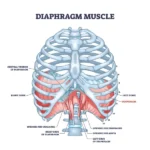 The diaphragm’s primary responsibility is breathing, but it also participates in the pressure-management system of the trunk.
During movements requiring greater stability, the body coordinates the diaphragm with the abdominal wall and other core muscles.
This becomes particularly relevant during activities such as:
- Lifting
- Squatting
- Carrying groceries
- Running
- Strength training
- Reaching overhead
Effective core control isn’t simply about pulling your stomach inward as hard as possible. It’s about coordinating breathing, pressure, and muscular tension according to the task.
3. Breath-Holding Can Change Your Movement
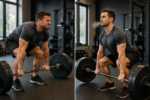 Have you ever noticed yourself holding your breath while typing an important email, lifting something, or concentrating intensely?
It’s surprisingly common.
Breath-holding may increase trunk stiffness temporarily, which can be useful during certain heavy strength exercises when performed appropriately. But constantly holding your breath during ordinary activities can create unnecessary tension.
During everyday movement, relaxed and continuous breathing is usually more appropriate.
Try occasionally checking whether you’re breathing normally while working at your computer.
4. Rib Cage Position Influences Your Trunk
The ribs aren’t simply protective bones surrounding the lungs. Their position and movement interact with your thoracic spine, shoulders, diaphragm, and abdominal muscles.
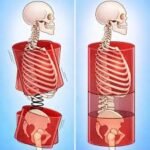 When you inhale, the rib cage should be capable of expanding in multiple directions.
Rather than thinking only about pushing your stomach outward, imagine the lower ribs gently expanding:
- Forward
- Sideways
- Backward
This is sometimes called 360-degree breathing.
It can be a useful exercise for developing awareness of rib-cage movement.
5. Breathing Can Complement Posture Exercises
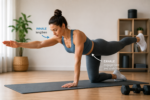 Posture training often focuses on strengthening the back or stretching the chest.
Those strategies can certainly be useful, but breathing exercises can add another dimension.
For example, pairing slow breathing with exercises such as:
- Dead bugs
- Bird dogs
- Glute bridges
- Wall-supported breathing
- Gentle mobility exercises
can help you practice controlling your trunk without excessive tension.
Simple Breathing Exercises for Better Core Awareness
Exercise 1: 90/90 Breathing
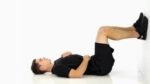 Lie on your back with your hips and knees bent approximately 90 degrees and your feet supported on a wall or chair.
Place your hands around your lower ribs.
Slowly inhale through your nose and feel your rib cage expand.
Then exhale gently through your mouth.
Perform 5–8 slow breaths.
Why Try It?
The supported position allows you to concentrate on breathing and rib movement without worrying about maintaining standing posture.
Exercise 2: Crocodile Breathing
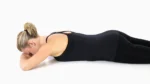 Lie comfortably on your stomach with your forehead resting on your hands.
Take a slow breath through your nose.
Notice whether you can feel your abdomen and lower ribs gently pressing toward the floor.
Slowly exhale.
Repeat for approximately 1–2 minutes.
If lying on your stomach is uncomfortable, skip this exercise.
Exercise 3: Wall-Supported Breathing
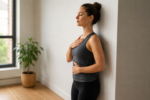 Stand with your back gently against a wall.
Keep your body relaxed rather than forcing your shoulders backward.
Take slow breaths while noticing movement around your ribs.
This exercise combines breathing awareness with a supported standing position.
Exercise 4: Dead Bug With Breathing
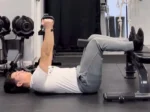 Lie on your back with your hips and knees bent.
Gently engage your abdominal muscles while continuing to breathe.
Slowly lower one heel toward the floor and return to the starting position.
Alternate sides.
The goal is to maintain comfortable trunk control without holding your breath.
Best Products for Breathing, Posture and Core Training
You don’t need equipment to practice breathing exercises. However, a few inexpensive accessories can make floor exercises and mobility work more comfortable.
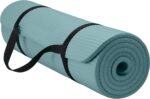
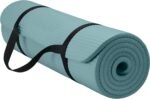
1. Gaiam Essentials Yoga Mat — Best for Floor Exercises
A cushioned exercise mat provides a comfortable surface for 90/90 breathing, dead bugs, mobility exercises, and stretching.
 Why We Like It:
- Cushioned surface
- Useful for multiple exercises
- Easy to roll and store
- Suitable for home workouts
2. Trideer Exercise Ball — Best for Core Stability Exercises
An exercise ball adds instability to certain movements, requiring greater coordination from your trunk muscles.
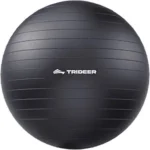
- Core exercises
- Balance training
- Mobility work
- Home workouts
Use the ball for exercises appropriate to your fitness level rather than replacing your regular office chair with it for an entire workday.
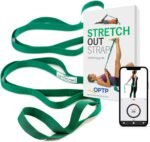
3. OPTP Stretch Out Strap — Best for Mobility Work
Improving mobility in areas such as the hips and shoulders can complement breathing and posture exercises.
 Benefits:
- Multiple hand loops
- Easy to control
- Useful for upper- and lower-body stretches
- Portable
4. Gaiam Yoga Blocks — Best for Supported Positions
Yoga blocks can make floor exercises more accessible by providing additional support.
 Useful For:
- Supported stretching
- Yoga
- Mobility exercises
- Modified positions
5. ProsourceFit Resistance Bands — Best for Posture Strengthening
Breathing exercises work best as part of a broader program that includes strengthening.
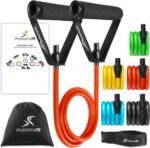 Resistance bands can be used for rows, pull-aparts, shoulder exercises, and other movements targeting muscles important for upper-body control.
6. TriggerPoint GRID Foam Roller — Best for Mobility
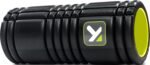 A foam roller can be incorporated into a general mobility routine for areas such as the upper back, glutes, and legs.
7. Meditation Cushion — Best for Seated Breathing Practice
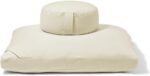 If you prefer practicing breathing while sitting on the floor, a meditation cushion can elevate the hips and make the position more comfortable.
How to Add Breathing Practice to Your Day
You don’t need a 30-minute breathing workout.
Start with a few minutes.
A simple routine could look like this:
Morning: 5 slow 360-degree breaths followed by gentle mobility.
During work: Check periodically whether you’re holding your breath or unnecessarily lifting your shoulders.
Before exercise: Practice several controlled breaths while engaging your core gently.
During exercise: Coordinate your breathing with the movement rather than automatically holding your breath.
Evening: Spend 2–5 minutes practicing relaxed breathing in a comfortable position.
Consistency matters more than making each session complicated.
Breathing and Desk Posture
Desk workers may particularly benefit from becoming more aware of their breathing.
Long periods of concentrated computer work can encourage a forward head position, rounded shoulders, and reduced movement.
Instead of attempting to maintain a rigid “perfect” posture all day, focus on creating a comfortable workstation and changing positions regularly.
Keep your monitor near eye level, support your feet, relax your shoulders, and take regular movement breaks.
Breathing exercises can complement these habits, but they shouldn’t replace movement.
Common Breathing and Posture Mistakes
Forcing Your Stomach Out
Diaphragmatic breathing isn’t simply about pushing your belly outward as far as possible. Ideally, breathing involves expansion around the lower rib cage as well.
Pulling Your Shoulders Back Constantly
Good posture doesn’t require squeezing your shoulder blades together all day. Excessive muscular tension can become uncomfortable.
Holding Your Breath During Core Exercises
A core exercise isn’t necessarily more effective because you’re holding your breath. Learn to maintain appropriate abdominal tension while continuing to breathe when the exercise permits.
Expecting Breathing to Fix Everything
Breathing is only one part of posture and movement.
Strength, mobility, sleep, ergonomics, exercise, stress, and daily activity all matter.
Frequently Asked Questions
Can breathing improve posture?
Breathing exercises may improve body awareness, rib-cage mobility, and coordination between the diaphragm and trunk muscles. They can complement posture training but shouldn’t be considered a standalone cure for poor posture.
What is 360-degree breathing?
It is a cue encouraging expansion around the lower rib cage rather than directing every breath exclusively into the upper chest or abdomen.
Should my stomach move when I breathe?
Some abdominal movement during relaxed breathing is normal. Your lower ribs should also be able to expand as the diaphragm contracts.
How often should I practice breathing exercises?
Beginners can start with approximately 2–5 minutes once or twice per day. Quality and comfort are more important than performing long sessions.
Can breathing strengthen my core?
Breathing contributes to core coordination and pressure management, but breathing exercises aren’t a replacement for progressive strength training.
Final Thoughts
Understanding how breathing affects posture and core stability can change the way you think about both posture and abdominal training.
Your diaphragm doesn’t work separately from the rest of your body. It coordinates with your rib cage, abdominal wall, pelvic floor, and spinal muscles every time you breathe and move.
Practicing controlled breathing can help you become more aware of unnecessary tension, improve coordination during core exercises, and better understand how your trunk responds during movement.
Start simply. Practice a few slow breaths, allow your lower ribs to expand naturally, and avoid forcing your body into a rigid posture.
For home practice, a Gaiam Essentials Yoga Mat is a useful starting point. Adding yoga blocks, an OPTP Stretch Out Strap, resistance bands, or a Trideer Exercise Ball can help you gradually expand your routine from breathing awareness into mobility and strength training.
Ultimately, better posture isn’t about staying perfectly still. It’s about having enough strength, mobility, awareness, and movement variety to remain comfortable throughout your day.