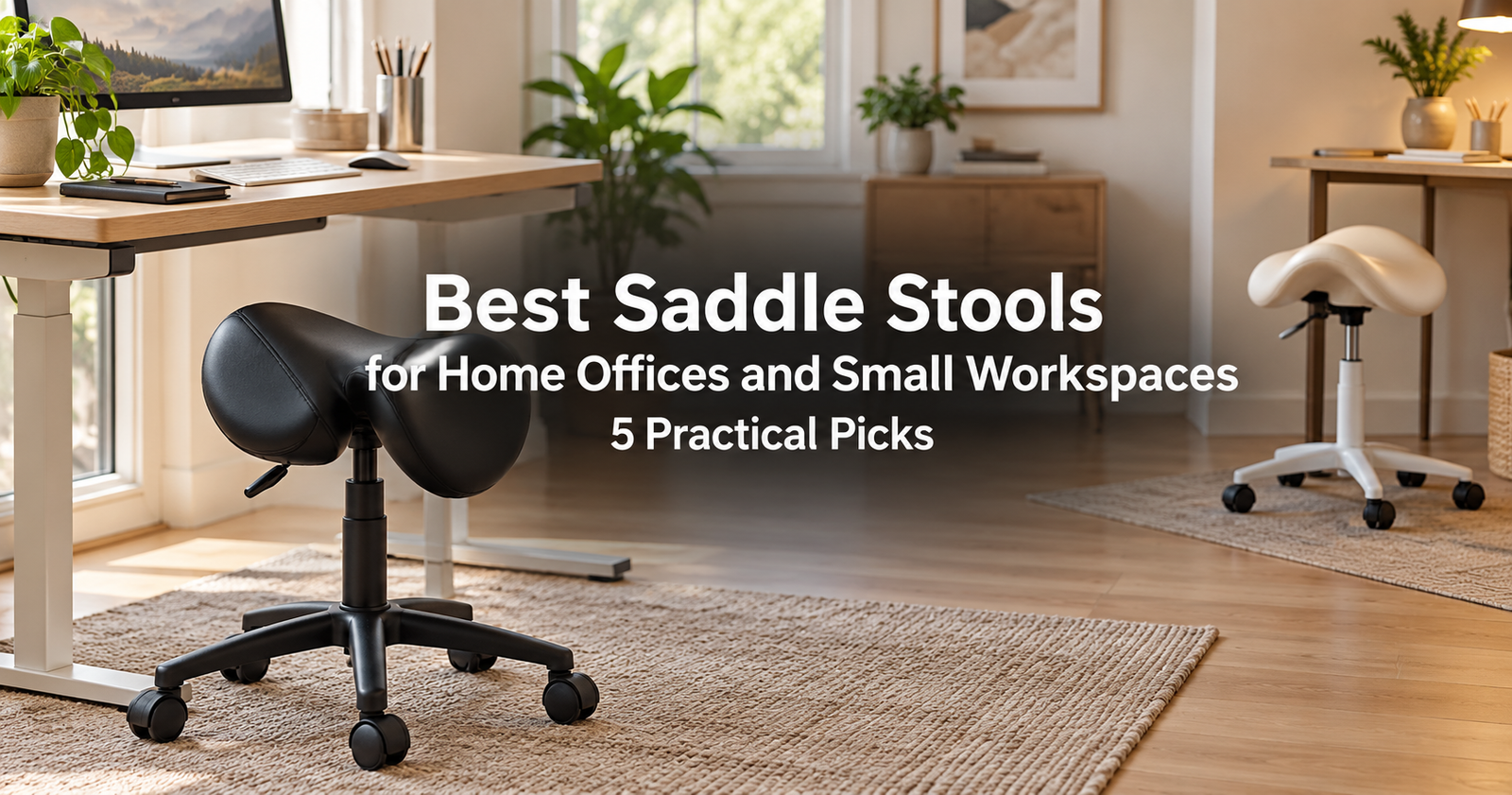
A large office chair can dominate a small workspace. If you work at a compact desk, share a room with other activities, or want another seating option alongside a conventional chair, a saddle stool may be worth considering.
Saddle stools have a shaped seat designed for a straddled sitting position. Many omit armrests and a backrest, making them visually less bulky than a traditional office chair. However, a small seat does not necessarily mean a small footprint—the wheeled base can still occupy considerable floor space.
Choosing the right model requires careful attention to seat height, desk compatibility, and personal comfort. Some saddle stools are designed for raised work surfaces and may be too tall for an ordinary desk.
This guide compares five options using manufacturer information rather than hands-on testing. The recommendations focus on fit and practical features, without assuming that saddle seating is better for everyone.
Quick Comparison
Table of Contents
| Saddle stool | Main feature | Worth considering for | Important fit check |
|---|---|---|---|
| Humanscale Pony | Smaller contoured seat | A backless alternative for shorter desk sessions | Select the correct cylinder height |
| Master Massage Berkeley | Split seat with height and tilt adjustment | Raised desks and mixed work tasks | Published minimum seat height is 21 inches |
| Jobri BetterPosture | Padded saddle with adjustable seat angle | Buyers seeking a conventional saddle shape | Confirm current dimensions and model |
| Salli SwingFit | Adjustable-width split seat with swing movement | Users wanting more configuration options | Match seat size, lift, and base to your setup |
| Humanscale Active Pony | Smaller seat with a movement mechanism | Buyers who prefer gentle seat movement | Trial the moving seat before committing |
What Is a Saddle Stool?
A saddle stool supports a different sitting position from a conventional flat chair seat. Its shape generally allows the thighs to slope downward, with the legs positioned on either side of the seat.
Designs vary considerably. Some use a one-piece cushion, while others have two separated seat sections. Some remain relatively stable when adjusted, while others include a mechanism that allows movement.
A saddle stool is also different from a kneeling chair, which incorporates shin supports, or a ball chair, which uses a rounded seat.
Treat these as different seating choices rather than a hierarchy of “better” posture. Your body, tasks, desk, and need for back support should guide the decision.
1. Humanscale Pony Saddle Stool
A Smaller Seat for a Less Bulky Setup
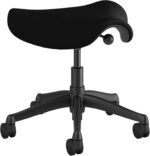
The Humanscale Pony is worth investigating if you want a backless stool with a smaller seat.
Humanscale distinguishes the Pony from its larger Saddle model and offers standard-height and stool-height configurations. Its published brochure identifies short-duration computer work as one potential use.
 Why Consider It?
The smaller seat and absence of armrests may suit a workspace where a large chair feels intrusive. It can also serve as an alternative seat for specific tasks rather than replacing your primary chair immediately.
However, the smaller cushion does not establish whether the entire stool will fit beneath your desk.
What to Check Before Buying
Confirm the exact height range of the selected cylinder. Standard-height and taller stool configurations serve different work surfaces.
Measure the base, under-desk clearance, and space needed to position your legs comfortably. Ask about a trial or return option, since a contoured seat can feel very different from a familiar office chair.
Best suited to: Users seeking a smaller backless seat for shorter work sessions.
Main consideration: Correct height configuration and personal seat comfort.
2. Master Massage Berkeley Split-Seat Saddle Stool
A Height-and-Tilt Option for Raised Work Surfaces
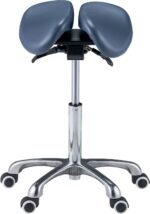
The Master Massage Berkeley uses a two-part saddle seat with height and angle adjustment.
The manufacturer lists a seat-height range of 21–28 inches, tilt adjustment, a five-star aluminum base, and polyurethane wheels.
 Why Consider It?
The split seat and tilt adjustment provide features to compare if you are exploring saddle seating for a raised desk, craft station, or mixed-use workspace.
The seat’s position should allow you to work without lifting your shoulders or reaching downward awkwardly.
What to Check Before Buying
Its 21-inch minimum height may be too high for some users at a fixed desk. Measure your required working position before ordering.
Also verify the exact version. Berkeley listings include models with and without backrests. The reviewed manufacturer page contains inconsistent load-capacity information, so obtain written confirmation if that specification affects your choice.
Best suited to: Buyers with compatible raised work surfaces who want split-seat and tilt features.
Main consideration: Minimum height, model variations, and specification confirmation.
3. Jobri BetterPosture Saddle Chair
A Padded Saddle With Adjustable Seat Angle
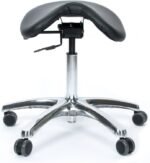
The Jobri BetterPosture is another option for buyers comparing a conventional padded saddle shape.
Jobri’s published product card lists an adjustable seat angle, molded foam, a 21–28-inch seat-height range, and a 25-inch-diameter base for the documented version.
 Why Consider It?
This model provides a useful comparison against split-seat and moving-seat alternatives.
Its published base measurement also demonstrates why you should assess floor space separately from seat size. A stool can look compact above the desk while occupying a substantial area below it.
What to Check Before Buying
The product card is older, so confirm that its measurements match the current item being sold. Check the model number, height range, load limit, caster type, and adjustment controls.
Make sure the base fits between desk supports without trapping your feet or restricting movement.
Best suited to: Buyers wanting a padded saddle with adjustable angle.
Main consideration: Confirm current specifications rather than relying on an older product card.
4. Salli SwingFit Saddle Chair
More Adjustment for Seat Width and Movement
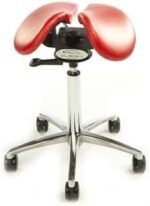
The Salli SwingFit offers a two-part seat with adjustable width and a swing mechanism.
Salli lists standard and smaller seat options, different gas-spring heights, and alternative bases. The standard base is approximately 560 millimeters in diameter, with a smaller option available.
 Why Consider It?
Seat-width adjustment may be useful if a fixed saddle shape does not fit comfortably. The swing mechanism also gives you a different experience from a seat adjusted to a fixed angle.
These features make a trial particularly valuable. More movement and adjustment do not automatically mean greater comfort.
What to Check Before Buying
Choose the seat, gas spring, casters, and base as a complete configuration.
For example, Salli lists its normal seat with the short gas spring at approximately 510–640 millimeters high. Other configurations rise considerably higher, and some caster choices add height.
Best suited to: Users wanting adjustable seat width and a moving-seat mechanism.
Main consideration: Configuration complexity, cost, and compatibility with your desk.
Amazon.com: Salli Swing Fit Saddle Seat : Home & Kitchen
5. Humanscale Active Pony
An Alternative for Users Who Prefer Seat Movement
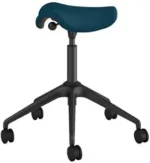
The Active Pony belongs to the same family as the standard Pony but adds a movement feature.
Humanscale lists a smaller seat and 7 degrees of tilt for active movement. This distinguishes it from the standard Pony rather than simply offering another upholstery choice.
 Why Consider It?
It is worth comparing if you already like the idea of a smaller backless seat and want some movement while working.
However, a moving seat may feel distracting during precise tasks or unsuitable for someone who prefers a stable sitting surface.
What to Check Before Buying
Ask to try the actual Active Pony. A demonstration of the standard Pony will not show how the movement mechanism feels.
Verify the chosen height range, base dimensions, and caster specification. Do not assume every configuration will fit a fixed-height desk.
Best suited to: Buyers specifically interested in a smaller saddle-style seat with movement.
Main consideration: The movement feature should be comfortable for your tasks and preferences.
These Amazon links open searches, not verified individual listings. Some models are primarily sold through specialist dealers; confirm the exact configuration and seller.
How to Choose a Saddle Stool for a Small Home Office
 Check Minimum Seat Height First
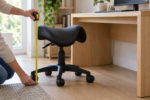
Minimum height can be more important than maximum height.
A stool that starts too high may leave your feet inadequately supported or place you too high above the keyboard. Raising the stool cannot solve a desk that is too low for the resulting position.
OSHA’s conventional workstation guidance emphasizes supported feet, appropriate chair adjustment, and suitable back support. Consider those requirements when deciding whether a backless alternative fits your work.
 Measure the Entire Base
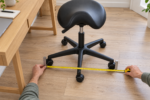
Measure the available floor area beneath and behind your desk.
Include desk legs, drawers, shelving, and the space needed to sit down and stand up. A small cushion does not reduce the diameter of a five-star base.
Also check whether the stool can be stored where you intend without blocking a walkway.
Compare Seat Shape and Width
A saddle seat should be assessed through actual use where possible.
Check whether its shape permits a comfortable leg position without forcing an unusually wide stance. A split seat is not automatically more comfortable than a one-piece seat.
Do not continue using a stool through numbness, pain, or persistent pressure in the expectation that you must simply adapt.
 Consider Back Support and Task Duration
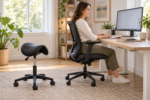
Most stools in this guide do not provide a conventional backrest.
If you need supported sitting for prolonged computer work, keep that requirement central to your decision. A saddle stool may work as an alternative for certain tasks while a properly fitted office chair remains your main seat.
Avoid assuming that the word “ergonomic” establishes suitability for an entire working day.
Match Casters to the Floor
Check whether the casters are suitable for your flooring and whether the stool remains controllable when sitting down or standing up.
OSHA recommends casters appropriate to the workstation’s floor surface.
Follow the manufacturer’s instructions rather than fitting unapproved replacement wheels or glides.
 Review the Trial and Return Policy
Saddle seating is highly personal. A trial period can help you assess fit more effectively than product photographs.
Check whether assembled, used, customized, or upholstered items remain returnable, and calculate any return-shipping charges before ordering.
Which Saddle Stool Should You Choose?
Start with the Humanscale Pony for a smaller backless seat, or compare the Master Massage Berkeley and Jobri BetterPosture if their published height ranges suit your workspace.
The Salli SwingFit offers more seat-width and configuration choices. The Active Pony is a separate alternative for users who specifically prefer movement.
Choose according to fit, desk height, and the tasks you actually perform. A saddle stool should give you another comfortable working option without forcing your body or workspace into an unsuitable arrangement.