Sitting for several hours on a flat or poorly supportive chair can make maintaining comfortable posture difficult. You may gradually slide forward, round your lower back, lean toward your computer, or place excessive pressure on your hips and tailbone.
An ergonomic seat wedge can improve the angle and support of your chair. By elevating the hips slightly, a wedge may create a more open hip angle and make it easier to maintain an upright position.
However, choosing the best seat wedge for anterior pelvic tilt requires care. A cushion with an excessively steep slope may push the pelvis too far forward and exaggerate the curve in the lower back. The ideal cushion should provide moderate elevation, balanced pressure distribution, and enough stability to help you sit comfortably without forcing your pelvis into one position.
Below are five ergonomic seat wedges and contoured seat cushions suitable for office chairs, cars, dining chairs, gaming chairs, and other seating environments.
Quick Comparison of the Best Seat Wedges
Table of Contents
| Product | Best For | Primary Material | Key Feature |
|---|---|---|---|
| 5 STARS UNITED Seat Cushion | Best overall | Memory foam | Contoured design with coccyx cutout |
| ComfiLife Gel Seat Cushion | Cooling comfort | Gel and memory foam | Cooling gel layer |
| Everlasting Comfort Seat Cushion | Long workdays | Memory foam | Deep U-shaped tailbone cutout |
| Cushion Lab Pressure Relief Cushion | Premium support | Sculpted memory foam | Anatomical hip and thigh support |
| TravelMate Wellness Cushion | Firm value option | Medium-firm memory foam | Large and supportive surface |
1. 5 STARS UNITED Seat Cushion — Best Overall
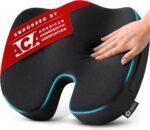
The 5 STARS UNITED Seat Cushion is our best overall choice because it combines supportive memory foam with an ergonomic contoured shape. It can be used on office chairs, gaming chairs, car seats, wheelchairs, and dining chairs.
Rather than functioning as an aggressively angled wedge, the cushion creates moderate elevation and supports the thighs and sitting bones. A rear coccyx cutout helps reduce direct pressure on the tailbone.
This shape may suit people who want to improve their sitting posture without being pushed into an excessive forward pelvic position. Its memory foam gradually conforms to the body while providing enough resistance to keep the user from sinking directly into the chair.
The nonslip bottom is another valuable feature. Seat cushions that move during the day can become distracting and may undermine posture. The 5 STARS UNITED cushion is designed to remain more stable on smooth seating surfaces.
Its removable cover makes cleaning easier, particularly when the cushion is used daily.
 Key features:
- Supportive contoured memory foam
- U-shaped coccyx cutout
- Nonslip bottom
- Removable and washable cover
- Suitable for office, home, car, and travel use
Possible limitations:
- The foam may feel firm in colder environments
- The added height may require chair adjustment
- It may not be wide enough for every body type
Best for: Office workers who want balanced support and tailbone pressure relief.
2. ComfiLife Gel and Memory Foam Seat Cushion — Best Cooling Pick
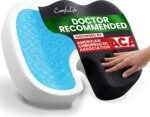
Memory foam can provide excellent support, but it may also trap heat during long sitting sessions. The ComfiLife Gel and Memory Foam Seat Cushion addresses this concern by placing a cooling gel layer over supportive memory foam.
The cushion includes a U-shaped cutout designed to reduce direct pressure around the coccyx. Its contoured surface can also help users remain centered rather than repeatedly sliding toward the front of the chair.
This model is a practical option for warm offices, long commutes, and people who prefer a softer cushion. It can be transferred between an office chair, dining chair, vehicle seat, or wheelchair using its built-in carrying handle.
The removable zippered cover simplifies cleaning. Its nonslip base can also help prevent the cushion from moving on smooth office-chair upholstery.
Although the gel layer may feel cooler than foam alone, cooling performance can vary depending on room temperature, clothing, and the length of the sitting session.
 Key features:
- Cooling gel layer
- Supportive memory-foam base
- U-shaped coccyx cutout
- Nonslip bottom
- Carrying handle
- Removable, washable cover
Possible limitations:
- May feel too soft for users who prefer firm support
- Cooling performance will vary
- Foam may compress more under heavier users
Best for: People who want pressure relief but find conventional memory foam too warm.
3. Everlasting Comfort Memory Foam Seat Cushion — Best for Long Workdays
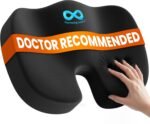
The Everlasting Comfort Seat Cushion is designed for people who spend extended periods sitting at a desk, gaming, driving, or travelling.
It uses thick memory foam to improve comfort on hard or minimally padded chairs. Its deep U-shaped rear cutout reduces direct contact around the tailbone while the surrounding foam distributes body weight across the hips and thighs.
For posture-conscious users, the cushion provides a consistent and stable sitting surface. This may make it easier to remain in contact with the chair’s backrest and lumbar support.
The design does not lock the body into a fixed position, allowing the user to shift naturally throughout the day. This is important because changing positions regularly is generally more comfortable than trying to hold one supposedly perfect posture for several hours.
The cushion is relatively thick, so you may need to lower your office chair after adding it. If the cushion causes your feet to lose contact with the floor, use a footrest or adjust the chair height.
 Key features:
- Thick memory-foam construction
- Deep U-shaped coccyx cutout
- Nonslip bottom
- Removable cover
- Suitable for office chairs, gaming chairs and cars
Possible limitations:
- Extra thickness may change your desk ergonomics
- The standard model may feel narrow to larger users
- Memory foam can retain body heat
Best for: Remote workers, gamers, drivers, and anyone who regularly sits for long periods.
4. Cushion Lab Pressure Relief Seat Cushion — Best Premium Pick
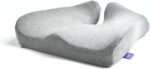
The Cushion Lab Pressure Relief Seat Cushion takes a different approach from a basic triangular wedge. It uses a deeply sculpted surface designed to support the hips and thighs while distributing pressure across a larger area.
The anatomical contour can help keep the user centered in the chair. This may appeal to people who feel as though they slide forward when using a traditional seat wedge.
Its memory foam provides a more customized feel than a flat cushion. The raised areas support the thighs, while the recessed sections create additional space around sensitive pressure points.
The Cushion Lab model also includes a breathable and removable cover, making it suitable for long office sessions. Its premium materials and more elaborate design make it one of the more expensive choices in this roundup.
Before purchasing, measure your chair carefully. A contoured cushion works best when it can rest flat between the armrests without curling at the edges or pushing the user excessively forward.
 Key features:
- Anatomically sculpted design
- Supports the hips and thighs
- Pressure-distributing memory foam
- Breathable removable cover
- Helps the user remain centered
Possible limitations:
- Costs more than basic seat wedges
- The pronounced contour may require an adjustment period
- May be too large for compact chairs
Best for: Users seeking a premium ergonomic cushion with more structured hip and thigh support.
5. TravelMate Large Medium-Firm Wellness Seat Cushion — Best Firm Value
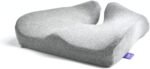
The TravelMate Wellness Seat Cushion is a straightforward option for people who prefer a firmer and less aggressively contoured surface.
Its large sitting area gives users enough room to reposition throughout the day. The medium-firm memory foam helps prevent the uncomfortable bottoming-out sensation that can occur with thin or overly soft cushions.
Although it does not have the deep anatomical contouring of the Cushion Lab model, its simplicity can be an advantage. It can add supportive padding to an office chair, kitchen chair, wheelchair, or other firm seating surface without forcing the pelvis into a dramatic angle.
The broad surface is also suitable for users who feel restricted by narrow U-shaped cushions. However, people with significant tailbone sensitivity may prefer a model with a deeper coccyx cutout.
 Key features:
- Medium-firm memory foam
- Large sitting surface
- Simple and versatile design
- Removable cover
- Suitable for multiple chair types
Possible limitations:
- Provides less targeted tailbone relief
- Limited anatomical contouring
- May not create enough slope for users wanting a true wedge
Best for: Users who want a roomy, moderately firm cushion at a reasonable price.
Can a Seat Wedge Help With Anterior Pelvic Tilt?
A seat wedge changes the relationship between your hips, knees, pelvis, and torso. When the rear of the cushion is higher than the front, it elevates the hips and creates a more open hip angle.
That position may help people who habitually roll their pelvis backward and slump. However, anterior pelvic tilt involves the pelvis already rotating forward. A steep wedge could potentially increase that position and exaggerate the arch in the lower back.
Research has found that seating aids can influence spinal posture, but individual responses differ. Therefore, a seat cushion should be considered an ergonomic aid rather than a treatment or corrective medical device. You can read more in this published study about the effects of seating aids on sitting posture.
The best cushion should make sitting feel more comfortable without increasing lower-back tension, hip tightness, numbness, or pain.
How to Choose the Best Seat Wedge
Select a Moderate Slope
Avoid assuming that a steeper wedge will provide better posture. A moderate incline is generally easier to tolerate and less likely to make you slide forward.
Look for Supportive Foam
 A cushion that is too soft may collapse during long sitting sessions. Medium-firm memory foam usually provides a better balance between comfort and stability.
Measure Your Chair
Measure the usable seat width between the armrests and check the seat depth. The cushion should rest flat without curling at the sides or pressing into the backs of your knees.
Consider a Coccyx Cutout
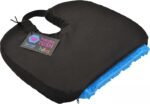 A U-shaped or V-shaped rear cutout can help reduce direct tailbone pressure. This feature may be valuable for users who experience coccyx sensitivity while sitting.
Choose a Nonslip Base
A cushion that continually moves can negatively affect comfort and positioning. Look for rubberized dots or another nonslip treatment, particularly for leather and vinyl chairs.
Check the Cover
 A removable and washable cover makes the cushion easier to maintain. Breathable fabric may also improve comfort during long workdays.
How to Use a Seat Wedge Correctly
Place the cushion fully against the rear of the chair unless the manufacturer provides different instructions. The thickest section of a conventional wedge normally goes at the back.
Sit with your weight distributed evenly across both sitting bones. Your feet should remain flat on the floor or on a stable footrest. Ideally, your hips should be approximately level with or slightly higher than your knees.
After adding the cushion, adjust the chair height, lumbar support, armrests, and backrest. The seat wedge should work with your ergonomic chair setup rather than replace those adjustments.
Start by using the cushion for 20 to 30 minutes. Increase the duration gradually if it remains comfortable. Stop using it if it increases pain, numbness, tingling, or lower-back tension.
Most importantly, take regular movement breaks. Even a high-quality ergonomic cushion cannot make prolonged, uninterrupted sitting healthy or comfortable.
Frequently Asked Questions
Can a seat wedge correct anterior pelvic tilt?
A cushion cannot reliably correct anterior pelvic tilt by itself. It may improve sitting comfort and awareness, but lasting improvement may also require better chair adjustment, movement breaks, mobility exercises, strengthening, or professional assessment.
Which way should a seat wedge face?
Most conventional posture wedges place the thicker side at the back and the thinner side at the front. Contoured cushions may have a specific front and rear orientation, so always follow the manufacturer’s directions.
How thick should a posture cushion be?
There is no ideal thickness for everyone. Choose the lowest height that provides support without making your feet dangle or creating excessive pressure beneath the thighs.
Can I use a seat wedge in my car?
Many seat wedges can be used in cars, but safety must come first. Confirm that the cushion does not interfere with your visibility, steering position, seat belt, head clearance, or ability to operate the pedals.
Should I choose firm or soft memory foam?
Medium-firm foam generally provides more stability for posture, while softer foam may provide greater initial comfort. Heavier users may benefit from denser foam that resists excessive compression.
Final Verdict
The 5 STARS UNITED Seat Cushion is our best overall choice because it offers supportive contouring, a coccyx cutout, stable memory foam, and broad usability.
Choose the ComfiLife Gel Seat Cushion if cooling comfort is your priority. The Everlasting Comfort Cushion is well suited to long office or gaming sessions, while the Cushion Lab Pressure Relief Cushion offers a more premium and anatomically sculpted design. For simple, medium-firm support at a reasonable price, consider the TravelMate Wellness Cushion.
A good seat wedge should make comfortable sitting easier without forcing your pelvis into an extreme position. Combine it with proper chair height, foot support, lumbar contact, desk alignment, and frequent movement for a more complete ergonomic setup.
If anterior pelvic tilt is accompanied by persistent pain, weakness, numbness, or symptoms that travel into the legs, consult a qualified physical therapist or healthcare professional before relying on a posture cushion.