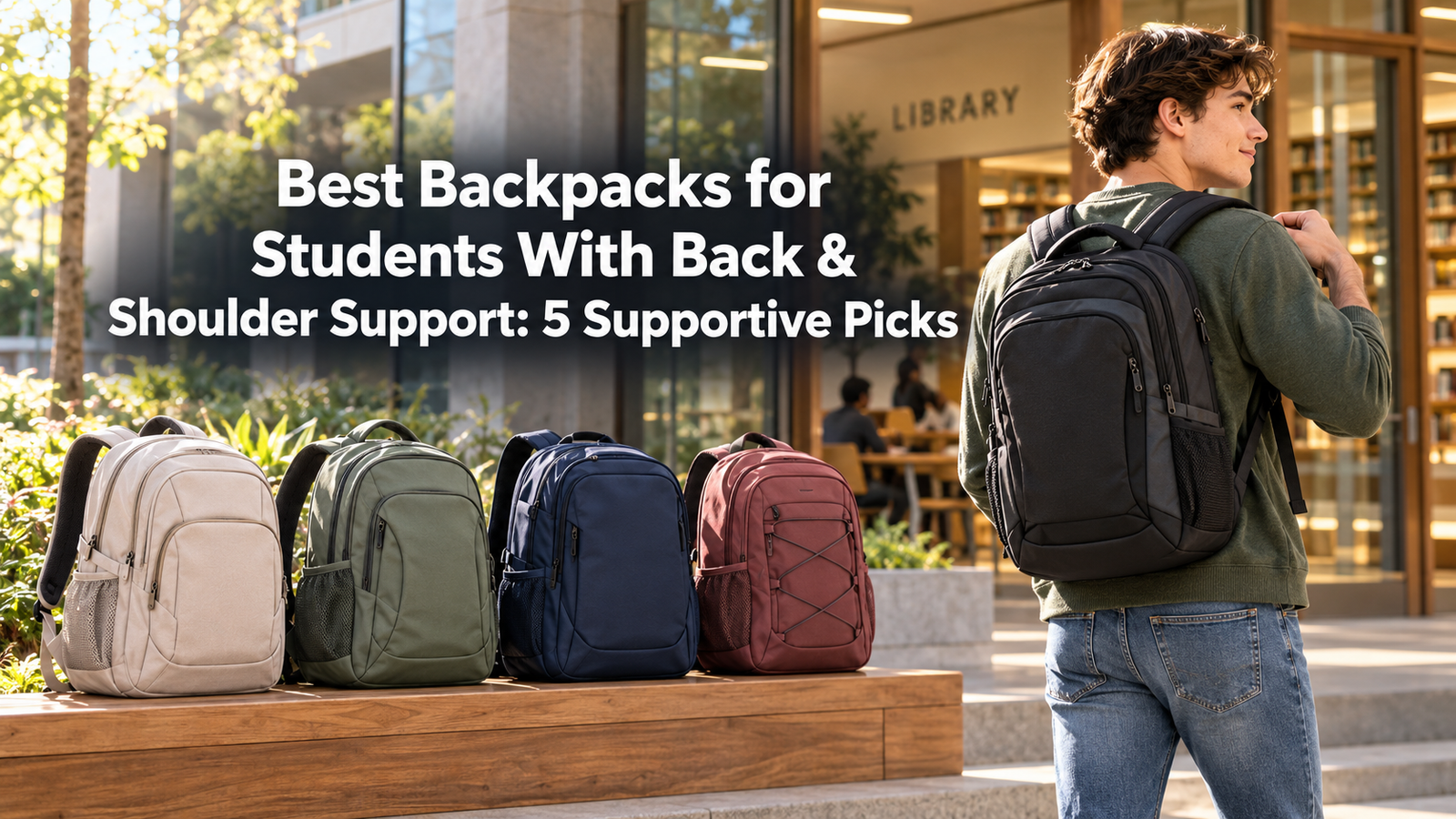
A student backpack may carry a laptop, textbooks, chargers, notebooks, lunch, and a water bottle for hours at a time. When that load is poorly organized or the bag hangs too low, even a well-padded backpack can feel uncomfortable. The best backpacks for students with back and shoulder support combine a suitable size with wide adjustable straps, a padded or structured back panel, stable compartments, and a close-to-body fit.
No backpack can guarantee perfect posture or prevent pain. Fit and packing habits matter as much as the product. The American Academy of Pediatrics advises choosing a bag proportional to the student, using two broad padded shoulder straps, and considering a chest strap or waist belt to help stabilize the load. It also recommends keeping a child’s loaded backpack at no more than 15% of body weight.
With those principles in mind, we selected five backpacks that balance carrying comfort, organization, laptop storage, and durability for school and college use.
Quick Comparison
Table of Contents
| Backpack | Best for | Capacity | Laptop fit | Support-focused features |
|---|---|---|---|---|
| The North Face Borealis | Best overall | 28L | Dedicated laptop compartment | FlexVent suspension, sternum strap, compression system |
| Osprey Nebula 32 | Heavy academic loads | 32L | Most laptops up to 16 inches | AirScape back panel, BioStretch harness, compression straps, removable web belt |
| Patagonia Refugio 30L | Lightweight versatility | 30L | Padded sleeve up to 15 inches | Breathable airmesh back panel and shoulder straps |
| Fjällräven Räven 28 | Durable everyday use | 28L | Separate compartment up to 15 inches | Padded airmesh back panel, comfortable straps, organized layout |
| SwissGear 1900 ScanSmart | Large laptops and organization | Approx. 31L | Padded compartment up to 17 inches | Multi-panel airflow back, contoured padded straps, compression straps |
1. The North Face Borealis 28L — Best Overall
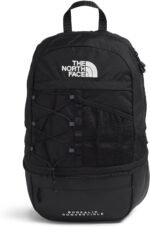
The North Face Borealis is a balanced campus backpack for students who move between classrooms, libraries, public transportation, and after-school activities. Its 28-liter capacity is roomy without being excessively large, which can help discourage carrying unnecessary items.
The key comfort feature is The North Face’s FlexVent suspension system. It combines articulated shoulder straps, a rounded back panel, and soft-touch fabric. A sternum strap helps keep the shoulder straps positioned and reduces side-to-side movement while walking. The external bungee and compression elements can also secure partially filled loads so books do not shift as much.
A dedicated laptop compartment keeps the computer close to the back, while the main compartment and front organization section separate books from smaller supplies. Two water-bottle pockets add everyday convenience.
The Borealis is best for high-school and college students who want one pack for class, commuting, and casual weekend use. Smaller students should try it on fully loaded because one-size adult packs can sit too long on a short torso.
 Pros
Pros
- Supportive FlexVent suspension system
- Sternum strap and load-stabilizing compression
- Separate laptop storage
- Useful organization without an oversized body
- Versatile school-to-weekend styling
Cons
- One-size fit will not suit every torso
- No substantial load-bearing hip belt
2. Osprey Nebula 32 — Best for Heavier Academic Loads
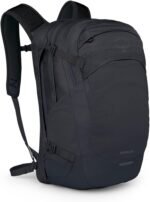
The Osprey Nebula 32 brings outdoor-inspired suspension to an everyday school and commuting design. Its AirScape back panel uses ridged foam with a framesheet, while the harness combines spacer mesh, die-cut foam, and integrated BioStretch seams. Those features create a more structured feel than many basic school bags.
The 32-liter main compartment accommodates a demanding schedule, gym clothing, or a long day on campus. A separate, TSA-compatible clamshell section holds most laptops up to 16 inches. Top and bottom compression straps reduce unused volume and help keep the contents from pulling away from the body. A removable web belt provides light stabilization, although it is not the padded hip belt found on a hiking pack.
The Nebula is an excellent option for college students carrying a laptop, several books, and daily essentials. At roughly 2.1 pounds before loading, it is not the lightest choice, and its generous capacity makes careful packing essential.
 Pros
Pros
- Structured AirScape back panel
- Cushioned, breathable harness
- Top and bottom compression straps
- Removable web belt
- Laptop compartment fits most 16-inch models
Cons
- Heavier and larger than minimalist school packs
- Easy to overfill if the student does not monitor the load
3. Patagonia Refugio Daypack 30L — Best Lightweight Pick
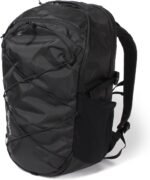
The Patagonia Refugio 30L offers substantial capacity at a published weight of about 1 pound 11 ounces. Its back panel and shoulder straps use recycled polyester airmesh for breathability, making it appealing to students who walk or bike across a large campus.
The current design includes a separate padded compartment for laptops up to 15 inches, a spacious main compartment, a front organizational pocket, reinforced bottle pockets, and a front mesh stash pocket. That outside pocket is helpful for a light jacket or items that should stay separate from books.
Patagonia lists a 19-inch torso length intended to fit most adults, so this pack is better suited to older teens and college students than small children. It does not provide the same structured suspension or compression system as the Osprey, but it is lighter and simpler.
 Pros
Pros
- Lightweight for a 30-liter backpack
- Breathable back panel and shoulder straps
- Separate padded laptop compartment
- Useful front stash pocket and bottle pockets
- Durable recycled materials
Cons
- Fixed adult-oriented torso length
- Limited load-adjustment features
Amazon.com | Patagonia Refugio Day Pack 47928 BLK Backpack 7.9 gal (30 L) | Casual Daypacks
4. Fjällräven Räven 28 — Best for Durable Everyday Use
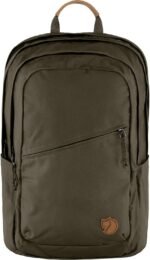
The Fjällräven Räven 28 combines a clean campus-friendly shape with hardwearing G-1000 HeavyDuty fabric. A padded airmesh back panel and comfortable shoulder straps soften contact with the body, while the rectangular profile keeps notebooks and folders organized.
The separate laptop compartment accepts models up to 15 inches. Inside, students get a large main section, a zippered security pocket, front organizer compartments, and a fleece-lined top pocket for delicate items. Side pockets hold bottles or frequently used accessories.
At approximately 2.2 pounds, the Räven is relatively heavy for its 28-liter volume. It also lacks a sternum strap and waist belt, so it is best for moderate loads rather than students who routinely haul several heavy textbooks. Choose it for material durability, thoughtful organization, and a stable everyday shape—not for hiking-pack suspension.
 Pros
Pros
- Durable G-1000 HeavyDuty construction
- Padded airmesh back panel
- Separate 15-inch laptop compartment
- Excellent small-item organization
- Structured profile keeps contents tidy
Cons
- No included sternum strap or waist belt
- Heavier than some similarly sized packs
5. SwissGear 1900 ScanSmart — Best for Large Laptops
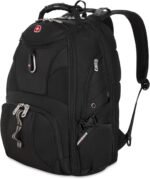
The SwissGear 1900 ScanSmart is designed for students who carry a large laptop and want extensive organization. Its padded computer compartment accommodates laptops up to 17 inches, and a separate floating pocket protects a tablet.
For carrying comfort, the 1900 uses a multi-panel airflow back design and contoured, heavily padded suspension straps. Thumb-ring adjusters make on-the-go strap changes easy, while side compression straps help reduce load movement. Multiple compartments, a file pocket, organizer panel, bottle pockets, and a cable pocket give every item a place.
The tradeoff is size. This is a substantial bag and can become very heavy when every pocket is filled. It is best for larger students who genuinely need its laptop capacity and storage rather than anyone looking for a compact daily pack.
 Pros
Pros
- Fits laptops up to 17 inches
- Multi-panel airflow back cushioning
- Contoured padded shoulder straps
- Compression straps help stabilize contents
- Extensive organization for electronics and books
Cons
- Bulky for small frames
- Numerous compartments can encourage overpacking
How to Choose a Supportive Student Backpack
Start With the Student’s Torso, Not the Capacity
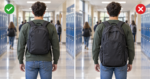 A large bag is not automatically more supportive. The top should sit roughly one to two inches below the shoulders, while the bottom should rest near the curve of the lower back rather than hanging far below the waist. A correctly sized 25-liter pack can feel better than an elaborate 35-liter model that is too long.
Look for Wide, Adjustable Shoulder Straps
Wide straps distribute pressure across more of the shoulders. Padding improves comfort, but fit still matters: both straps should be adjusted to equal length, and the bag should sit close to the back. Always use both straps rather than carrying the pack from one shoulder.
Consider a Sternum Strap or Waist Belt
 A sternum strap helps prevent shoulder straps from spreading outward and can stabilize the pack while walking. A waist belt may reduce bouncing and share some load, but a thin web belt will not transfer weight like a padded hiking hip belt. These features only work when positioned and tightened correctly.
Keep Heavy Items Close to the Back
Place the laptop, textbooks, and other dense items in compartments nearest the body. Spread smaller items evenly rather than loading one side. Compression straps can keep a partially filled pack from sagging backward.
Choose the Smallest Capacity That Works
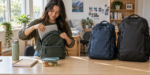 Extra space often turns into extra weight. A 26- to 30-liter bag is enough for many older students, while schedules involving sports gear or bulky lab materials may require more. Remove old papers, empty bottles, and unnecessary supplies each week.
Backpack Safety and Comfort Tips
- Keep a child’s loaded backpack at or below 15% of body weight, following current AAP guidance.
- Use both shoulder straps and secure the sternum or waist strap when included.
- Adjust the bag so it sits close to the middle of the back.
- Pack the laptop and heaviest books closest to the body.
- Bend the knees when lifting a loaded backpack from the floor.
- Use lockers, digital textbooks, or a second set of books when available.
- Do not ignore persistent back, neck, shoulder, numbness, or weakness symptoms; ask a qualified healthcare professional for advice.
Frequently Asked Questions
Can a supportive backpack improve posture?
 A well-fitting backpack may reduce pulling, bouncing, and uneven pressure, but it does not automatically correct posture. Load weight, packing, strap adjustment, strength, movement habits, and time worn all affect comfort.
Should a student backpack have a waist belt?
A waist belt is helpful for heavier loads or long walks, provided it fits correctly. For light classroom loads, broad shoulder straps and a sternum strap may be sufficient. A thin web belt mainly stabilizes the pack; a padded hip belt is more effective at transferring weight.
Is more back padding always better?
 No. Padding can improve comfort and protect the back from hard objects, but thick foam cannot compensate for poor sizing or excess weight. Shape, ventilation, load position, and strap adjustment are equally important.
Which backpack is best for most students?
The North Face Borealis is the most balanced choice for many older students because it combines a manageable 28-liter size, a structured suspension system, a sternum strap, and useful organization. Students carrying heavier loads may prefer the Osprey Nebula 32, while the Patagonia Refugio suits those prioritizing lower bag weight.