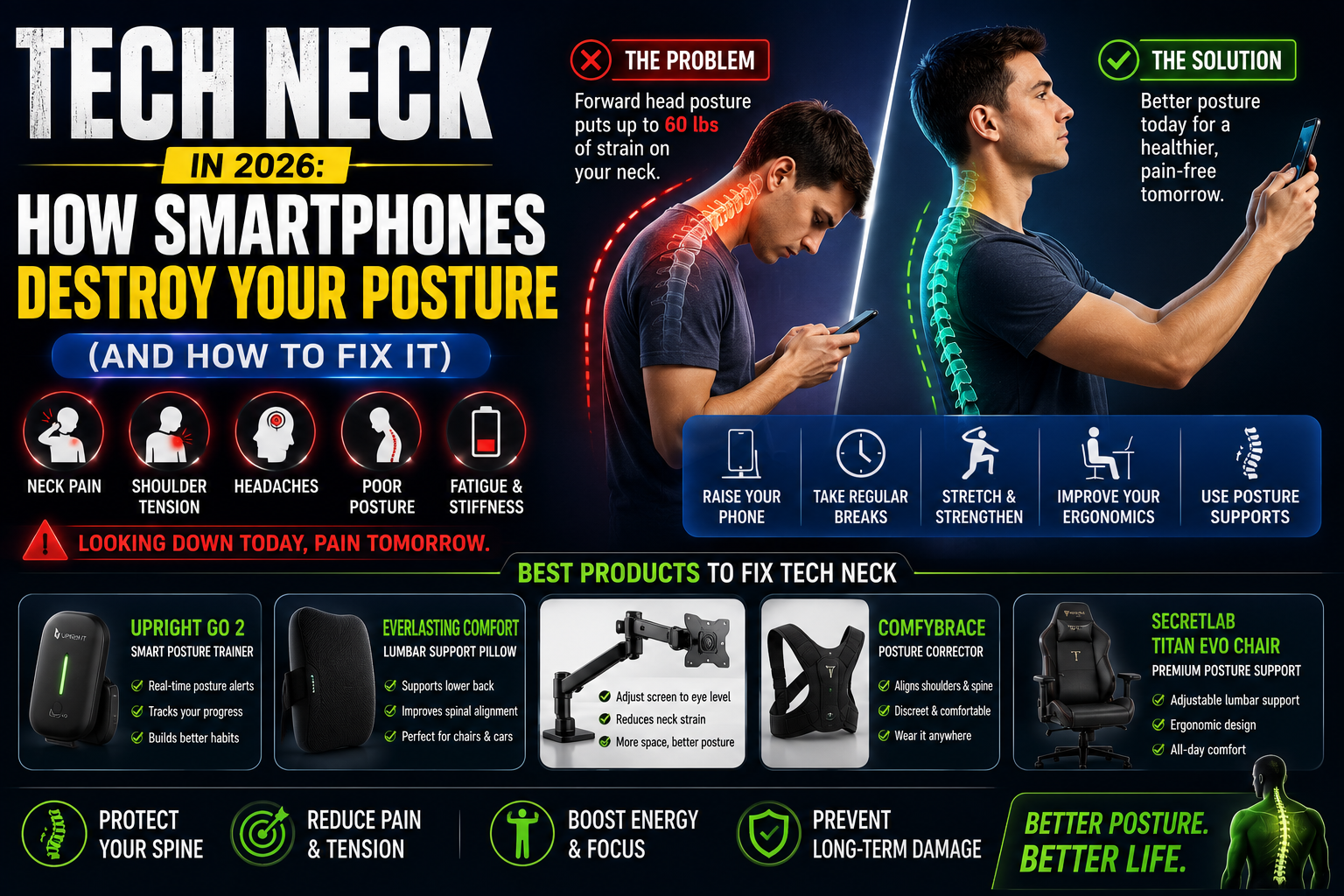
Take a quick look around any coffee shop, airport, office, or living room, and you’ll see the same thing everywhere: heads tilted down toward smartphones.
While smartphones have transformed the way we communicate, work, and entertain ourselves, they have also created a growing health problem known as Tech Neck.
What may seem like a harmless habit—checking social media, texting friends, scrolling news feeds, or watching videos—can place enormous stress on your neck, shoulders, and spine. Over time, this repeated strain can lead to chronic pain, poor posture, headaches, reduced mobility, and even long-term spinal problems.
The good news? Tech Neck is both preventable and reversible when addressed early.
In this comprehensive guide, you’ll learn exactly what Tech Neck is, why smartphones are damaging your posture, the symptoms to watch for, and the best posture-correcting products available on Amazon to help you fix the problem before it becomes permanent.
What Is Tech Neck?
Table of Contents
Tech Neck is a repetitive strain condition caused by frequently looking down at electronic devices such as:
- Smartphones
- Tablets
- Laptops
- Gaming handhelds
- E-readers
When you tilt your head forward, the effective weight placed on your neck increases dramatically.
Head Weight vs. Neck Load
| Head Position | Effective Weight on Neck |
|---|---|
| Neutral Position | 10-12 lbs |
| 15° Forward | 27 lbs |
| 30° Forward | 40 lbs |
| 45° Forward | 49 lbs |
| 60° Forward | 60 lbs |
Think about that for a moment.
Many people spend several hours every day looking down at their phones at angles between 45° and 60°, forcing their necks to support the equivalent weight of a large child.
It’s no wonder neck pain has become increasingly common.
How Smartphones Destroy Your Posture
Smartphones encourage a position known as Forward Head Posture (FHP).
Instead of your ears remaining aligned over your shoulders, your head gradually shifts forward.
This creates a chain reaction throughout the body.
The Postural Domino Effect
1. Forward Head Position
Your head moves in front of your shoulders.
2. Rounded Shoulders
Shoulders begin rolling inward.
3. Upper Back Curvature
The thoracic spine becomes excessively rounded.
4. Muscle Imbalances
Some muscles become overly tight while others weaken.
5. Chronic Pain
Pain develops in:
- Neck
- Shoulders
- Upper back
- Jaw
- Head
Over months or years, these changes can become habitual and increasingly difficult to correct.
Common Symptoms of Tech Neck
Many people don’t realize their daily discomfort is linked to smartphone use.
Watch for these warning signs:
Neck Pain
Often felt at the base of the skull or along the sides of the neck.
Shoulder Tightness
The trapezius muscles frequently become overworked.
Headaches
Muscle tension can trigger recurring headaches.
Upper Back Pain
Poor posture places excessive strain on spinal structures.
Reduced Range of Motion
Turning your head becomes more difficult.
Tingling or Numbness
Nerve compression can sometimes occur.
Fatigue
Maintaining poor posture requires additional muscular effort.
Why Tech Neck Is Getting Worse
Modern lifestyles make Tech Neck increasingly common.
Average Daily Screen Time
Many adults now spend:
- 4–8 hours on smartphones
- Additional hours on computers
- More time gaming and streaming
Children and teenagers are also experiencing posture problems at younger ages than ever before.
Without intervention, these habits can contribute to long-term spinal changes.
 Long-Term Risks of Untreated Tech Neck
Ignoring posture issues today can create serious problems tomorrow.
Chronic Neck Pain
Muscles remain in a constant state of tension.
Spinal Degeneration
Abnormal loading can accelerate wear on spinal discs.
Reduced Mobility
Stiffness and restricted movement become more common.
Nerve Compression
Poor alignment can irritate nearby nerves.
Poor Athletic Performance
Posture influences balance, movement, and breathing efficiency.
Reduced Confidence
Research suggests posture influences both appearance and self-confidence.
7 Proven Ways to Fix Tech Neck
Fortunately, small changes can produce significant improvements.
1. Raise Your Phone to Eye Level
 This is the simplest and most effective solution.
Instead of lowering your head toward the phone, raise the phone toward your eyes.
Benefits
✔ Reduces neck strain
✔ Improves spinal alignment
✔ Decreases muscle tension
2. Follow the 20-20-20 Rule
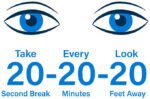 Every 20 minutes:
- Look 20 feet away
- For 20 seconds
This helps reduce:
- Eye strain
- Neck tension
- Mental fatigue
3. Strengthen Your Upper Back
 Weak upper-back muscles contribute significantly to poor posture.
Helpful exercises include:
- Face pulls
- Rows
- Resistance band pull-aparts
- Reverse flys
Strong upper-back muscles help keep shoulders aligned.
link on amazon
4. Stretch Tight Chest Muscles
 Many smartphone users develop tight chest muscles that pull the shoulders forward.
Effective stretches include:
- Doorway stretch
- Corner stretch
- Chest opener stretch
Even a few minutes daily can help.
5. Improve Your Workstation Ergonomics
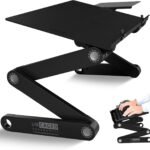 Many people alternate between smartphone use and computer work.
Ensure:
- Monitor is at eye level
- Chair supports your lower back
- Feet rest flat on the floor
Good workstation setup reinforces healthy posture habits.
6. Use a Posture Trainer
 Wearable posture trainers provide real-time feedback whenever you begin slouching.
These devices help retrain posture habits over time.
7. Invest in Posture-Supporting Products
 Certain products can make maintaining good posture much easier.
Let’s look at the best options available.
Best Products to Help Fix Tech Neck
1. Upright GO 2 Smart Posture Trainer
 Best Overall Posture Correction Device
Features
- Real-time posture feedback
- Smartphone app integration
- Progress tracking
- Lightweight design
Pros
✔ Builds awareness
✔ Encourages healthy habits
✔ Easy to use
Cons
✘ Requires consistency
Amazon Affiliate Recommendation
2. Everlasting Comfort Lumbar Support Pillow
 Best Budget Posture Aid
Features
- Memory foam support
- Ergonomic contouring
- Breathable cover
Benefits
Provides lower-back support that encourages better overall spinal alignment.
Amazon Affiliate Recommendation
3. HUANUO Monitor Arm
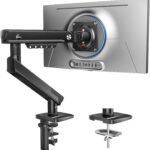 Best Desk Upgrade
Benefits
- Raises monitor height
- Reduces forward head posture
- Improves workstation ergonomics
Amazon Affiliate Recommendation
4. ComfyBrace Posture Corrector
Best Wearable Support
 Features
- Adjustable fit
- Lightweight design
- Supports shoulder alignment
Benefits
Provides gentle reminders to maintain better posture throughout the day.
Amazon Affiliate Recommendation:Amazon.com: ComfyBrace Posture Corrector-Back Brace for Men and Women- Fully Adjustable Straightener for Mid, Upper Spine Support- Neck, Shoulder, Clavicle and Back Pain Relief-Breathable : ComfyBrace: Health & Household
5. Secretlab TITAN Evo Chair
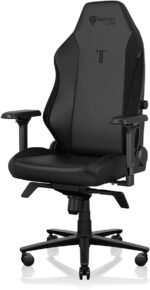 Best Premium Posture Investment
Features
- Adjustable lumbar support
- Ergonomic design
- Neck support pillow
Benefits
Provides full-body support for work, gaming, and everyday use.
Amazon Affiliate Recommendation: Amazon.com: Secretlab Titan Evo Black Gaming Chair – Reclining, Ergonomic & Comfortable Computer Chair with 4D Armrests, Magnetic Head Pillow & 4-Way Lumbar Support – Black – Leatherette : Home & Kitchen
Daily Tech Neck Prevention Checklist
Use this simple checklist every day:
✅ Hold phone at eye level
✅ Take posture breaks every 30 minutes
✅ Stretch chest muscles
✅ Strengthen upper back muscles
✅ Adjust monitor height
✅ Keep shoulders relaxed
✅ Stay hydrated
✅ Sleep with proper neck support
These habits compound over time and can dramatically improve posture.
Frequently Asked Questions
Can Tech Neck be reversed?
Yes. In many cases, posture improvements, exercise, stretching, and ergonomic changes can significantly reduce or eliminate symptoms.
How long does it take to fix Tech Neck?
Mild cases may improve within a few weeks. More severe cases may require several months of consistent correction.
Are posture correctors effective?
Yes, especially when used as training tools alongside exercise and ergonomic improvements.
Does sleeping posture matter?
Absolutely. Poor sleeping positions can reinforce neck strain and delay recovery.
Are children at risk for Tech Neck?
Yes. Increased smartphone and tablet use has made Tech Neck increasingly common among children and teenagers.
Final Verdict: Don’t Let Your Smartphone Ruin Your Posture
Smartphones have become an essential part of modern life, but they shouldn’t come at the cost of your health.
Tech Neck is one of the fastest-growing posture problems worldwide, affecting millions of people who spend hours looking down at screens every day. Left untreated, it can lead to chronic pain, reduced mobility, headaches, and long-term spinal issues.
Fortunately, fixing Tech Neck doesn’t require drastic changes. Small daily habits—such as raising your phone, strengthening your upper back, stretching tight muscles, and using posture-supporting products—can dramatically improve your posture and reduce discomfort.
If you’re serious about correcting Tech Neck, start with the Upright GO 2 Smart Posture Trainer for awareness, combine it with a quality ergonomic chair like the Secretlab TITAN Evo, and commit to consistent posture habits.
Your neck, shoulders, and spine will thank you for years to come.