Clicky

General

5 Best Lumbar Support Pillows for Office Chairs & Car Seats (2026)

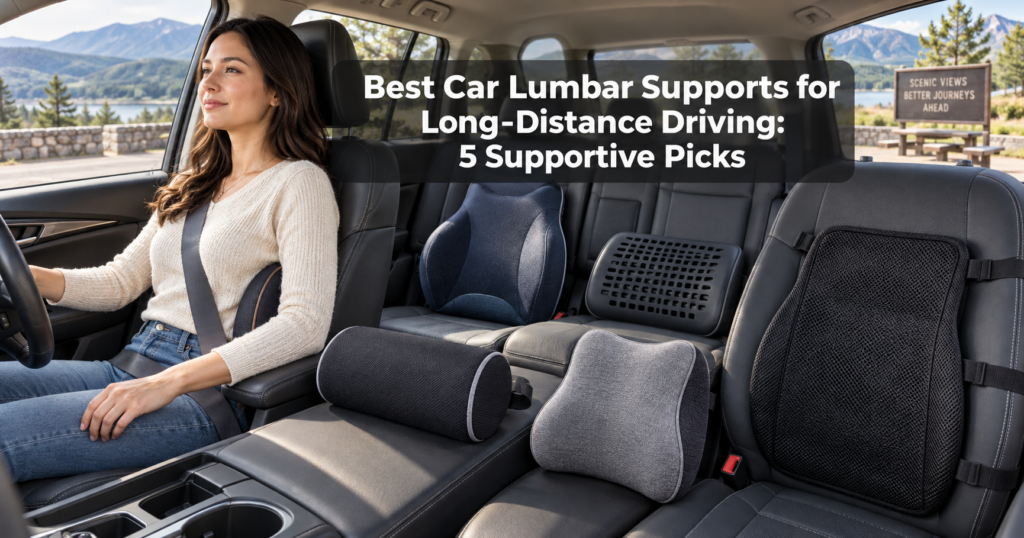
Sitting for hours at a desk or spending long stretches behind the wheel can make even a reasonably comfortable seat feel less supportive. One common problem is the space between your lower back and the chair. Without adequate support, you may find yourself gradually slouching, shifting forward, or constantly changing position to get comfortable. A lumbar support pillow is a simple way to modify a chair without replacing it. These cushions sit between your lower back and the seat back, providing additional support around the natural lumbar curve. Some use contoured memory foam that covers much of the lower back, while others use a compact roll that provides more targeted support. The best option depends heavily on where you’ll use it. A large memory foam cushion may feel great in a deep office chair but take up too much room in a compact car seat. Conversely, a slim lumbar roll…

5 Best Cervical Pillows for Forward Head Posture & Neck Support (2026)

Hours spent looking down at phones, working at laptops, and sitting at poorly arranged desks can make it difficult to maintain a comfortable head and neck position throughout the day. Then bedtime arrives—and an unsuitable pillow may leave your neck in another awkward position for hours. That’s why choosing the right pillow deserves more thought than simply finding something soft. A cervical pillow is designed to support the natural shape of the neck while providing an appropriate resting position for the head. Many use a contoured shape, raised neck support, center depression, or combination of these features. For people concerned about forward head posture, the goal shouldn’t be to find a pillow promising to magically “fix” posture overnight. Instead, look for a pillow that allows your head and neck to rest comfortably without unnecessarily forcing the head forward, backward, or sideways. This distinction matters because pillow height and shape aren’t…

5 Best Monitor Arms for Neck Pain & Better Desk Posture

If you finish a long workday rubbing your neck or realizing you’ve spent hours leaning toward your computer, your monitor position may deserve some attention. A screen that’s too low can encourage you to look downward. A monitor positioned too far away may make you lean forward to read small text. And if your primary display sits off to one side, you may spend hours repeatedly turning your head and neck. An adjustable monitor arm gives you much more control over all three. Instead of accepting the height and position determined by your monitor’s factory stand, you can move your screen up, down, forward, backward, and often tilt or rotate it until the display fits your workstation. That’s why the best monitor arms for neck pain and better desk posture aren’t necessarily the models with the longest list of features. They’re the ones that make it easy to place your…

Ergonomic Setup for Small Apartments and Tiny Desks: Best Space-Saving Office Essentials

Living in a small apartment doesn’t mean you have to choose between valuable floor space and a comfortable home office. The bigger challenge is using the space you already have intelligently. A conventional office setup spreads everything horizontally: monitor stand, laptop, keyboard, mouse, lamp, speakers, notebooks, chargers, and accessories all compete for the same desktop. On a 30- or 40-inch desk, that approach quickly becomes uncomfortable. The solution is to think vertically rather than horizontally. A monitor arm can remove a bulky monitor base. A laptop stand raises your screen while using a relatively small footprint. An under-desk keyboard tray can create extra working depth. A compact keyboard reduces the distance between your keyboard and mouse, while cable management keeps chargers and power strips away from the usable work surface. Small-space workstation guides make the same point: on a very compact desk, every object needs to justify the space it…

Posture and Foot Alignment: How Flat Feet Affect Your Back

Your feet are the foundation of almost every standing and walking movement you make. When that foundation changes, the effects don’t necessarily stop at your ankles. Flat feet—also known as pes planus—occur when the arches of the feet are low or flatten significantly while standing. Flat feet are common, and many people with them experience no pain at all. However, in some individuals, flatter arches are accompanied by excessive inward rolling of the foot, known as overpronation. That movement can influence how forces travel through the ankles, knees, hips, pelvis, and potentially the lower back. This doesn’t mean that flat feet automatically cause poor posture or back pain. Back pain is complex and can have many causes. Research into foot orthoses and flat feet also remains mixed. A recent 2025 meta-analysis found benefits from insoles for several measures associated with flexible flat feet, while previous reviews have emphasized considerable variation…

How Breathing Affects Posture and Core Stability: Improve Alignment, Core Control & Everyday Movement

Breathing is something you do thousands of times every day without thinking about it. But breathing does much more than bring oxygen into your body. The way you breathe interacts with your diaphragm, abdominal muscles, rib cage, pelvic floor, and spine—all of which play roles in maintaining trunk stability and comfortable posture. If your breathing becomes shallow or heavily concentrated in the upper chest, you may notice your shoulders rising with every breath or increased tension around your neck and upper back. On the other hand, learning to breathe with better expansion through the rib cage and diaphragm can help coordinate the muscles surrounding your trunk. That doesn’t mean breathing exercises alone will “fix” posture. Posture is influenced by many factors, including strength, mobility, workstation setup, movement habits, fatigue, and individual anatomy. However, breathing can be a useful part of a broader approach to improving body awareness and core control.…

Posture Mistakes You Make While Watching TV: Common Habits That Cause Neck & Back Pain

Watching TV is one of the most relaxing ways to unwind after a long day. Whether you’re binge-watching your favorite series, enjoying movie night with the family, or catching a sporting event, it’s easy to spend several hours sitting in the same position without realizing the impact on your body. Unfortunately, poor posture while watching TV can contribute to neck stiffness, lower back pain, shoulder tension, hip discomfort, and even headaches. Many people unknowingly adopt awkward sitting positions that place unnecessary stress on the spine and surrounding muscles. Over time, these habits may lead to chronic discomfort and reduced mobility. The good news is that improving your TV-watching posture doesn’t require expensive equipment or major lifestyle changes. Small adjustments to your sitting position, TV placement, and furniture can make a significant difference in your comfort. In this guide, we’ll explore the most common posture mistakes people make while watching TV,…

Best Evening Stretch Routine After Sitting All Day: 10 Easy Stretches to Relieve Stiffness & Improve Posture

If you’ve spent the entire day sitting at a desk, driving, studying, or working from home, you’ve probably experienced tight hips, stiff shoulders, neck pain, or an aching lower back. Prolonged sitting shortens certain muscles, weakens others, and often leads to poor posture, making your body feel tense and fatigued by the evening. A simple evening stretching routine is one of the easiest ways to undo some of the effects of prolonged sitting. Stretching can help improve flexibility, reduce muscle tightness, promote relaxation, and prepare your body for a restful night’s sleep. When combined with regular movement and ergonomic habits, it can also support better posture and overall mobility. In this guide, you’ll learn a 10–15 minute evening stretch routine, discover the best posture-supporting accessories, and find Amazon product recommendations to help you stretch more comfortably at home. Quick Evening Stretch Routine Stretch Hold Time Neck Stretch 30 seconds each…

Best Morning Stretch Routine for Better Posture: A 10-Minute Exercise Guide

Waking up with a stiff neck, tight shoulders, or an aching lower back is something many people experience. Sleeping in one position for several hours can leave muscles feeling tight, and spending the rest of the day sitting at a desk or looking down at your phone only makes posture worse. A simple morning stretching routine helps wake up your muscles, improve flexibility, increase blood circulation, and prepare your body for the day ahead. When combined with proper ergonomics and regular movement, stretching can also help reduce posture-related discomfort over time. In this guide, we’ll cover 10 easy morning stretches for better posture, explain why they work, and recommend the best stretching products available on Amazon to make your routine even more effective. Quick Morning Stretch Routine Stretch Time Full Body Stretch 30 sec Neck Stretch 30 sec each side Shoulder Rolls 10 reps Chest Stretch 30 sec Cat-Cow Stretch…

Posture Tips for Drivers, Truckers & Delivery Workers: 11 Must-Have Products to Reduce Back Pain & Fatigue

Whether you’re a truck driver covering hundreds of highway miles, a rideshare driver spending hours behind the wheel, or a delivery worker constantly getting in and out of your vehicle, your job places unique demands on your body. Long hours of sitting, repetitive movements, vibration from the road, and awkward lifting can all contribute to poor posture, back pain, neck stiffness, shoulder tension, and leg fatigue. Unlike office workers who can frequently stand and stretch, drivers often have limited opportunities to move. Over time, poor driving posture can increase stress on the spine, hips, knees, and shoulders, making every shift more uncomfortable. The good news is that a few simple posture habits—combined with the right ergonomic accessories—can dramatically improve comfort, reduce fatigue, and help prevent long-term musculoskeletal problems. In this guide, we’ll cover the best posture tips for drivers, truckers, and delivery workers, along with recommended Amazon products that can…

Navigate