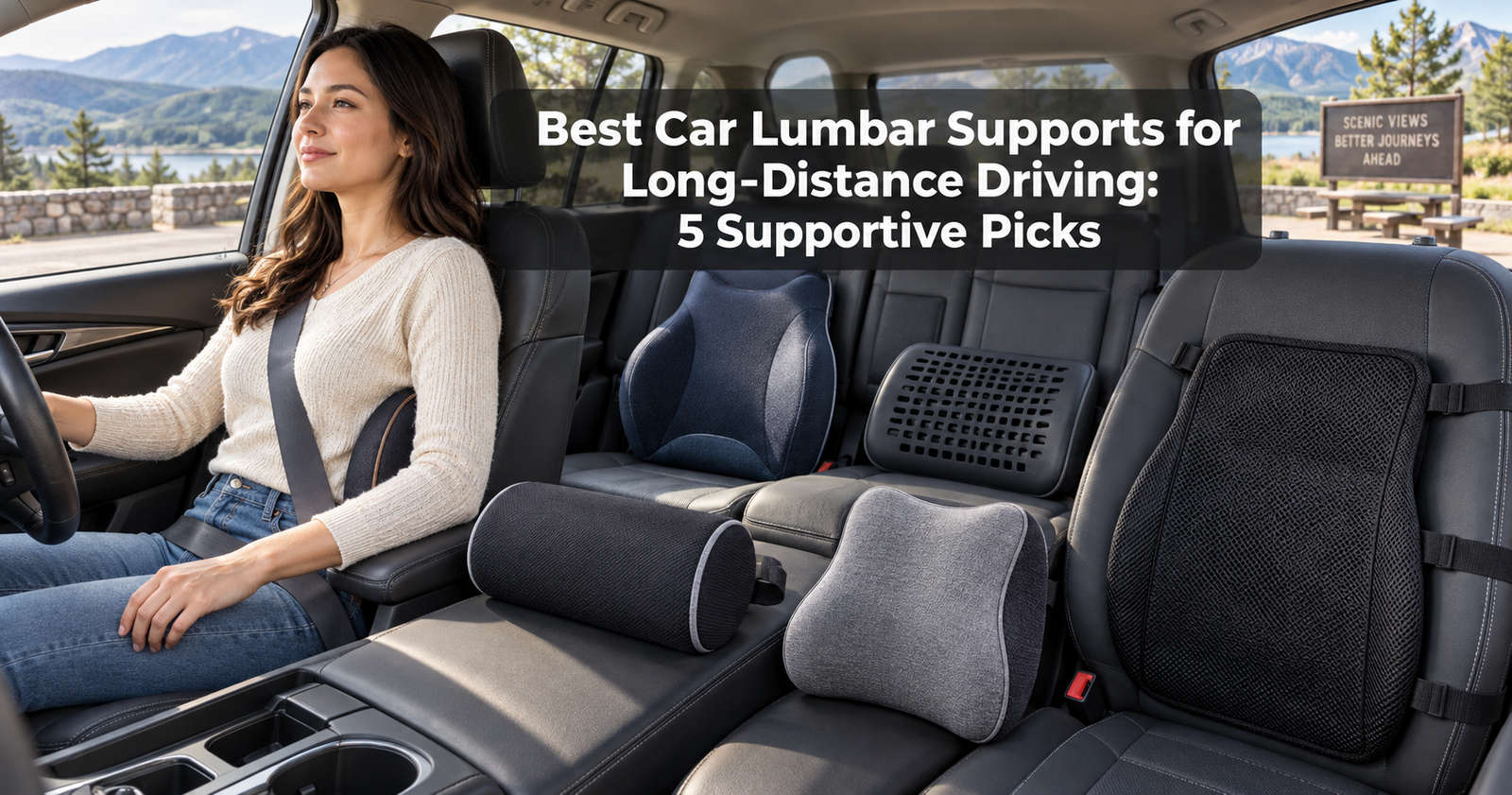
Long-distance driving can leave the lower back feeling tired and stiff, particularly when a vehicle seat does not match the driver’s body shape. A lumbar-support cushion can fill the space between the lower spine and seatback, helping the driver maintain a comfortable position without constantly slumping or shifting.
An overly thick cushion may push the torso forward, reduce thigh support, or place the head too far from the factory head restraint. The best car lumbar supports for long-distance driving preserve safe control of the vehicle.
The five options cover compact foam, contoured memory foam, and ventilated gel-grid designs. Comfort and fit remain personal.
Safety note: A lumbar cushion is a comfort accessory, not medical treatment. It must not interfere with the seat belt, seat-mounted airbags, head restraint, driving controls, or the driver’s ability to reach the pedals. Check your vehicle manual before attaching accessories to the seat.
Quick Comparison
Table of Contents
| Product | Best For | Material | Thickness/Profile | Attachment |
|---|---|---|---|---|
| Original McKenzie Lumbar Roll | Best low-profile option | Polyurethane foam | 4.75-inch round roll | Adjustable elastic strap |
| Cushion Lab Back Relief Lumbar Pillow | Best full-back contour | Extra-dense memory foam | 16 × 16 × 4 in | Gel-lined adjustable strap |
| Purple Back Cushion | Best breathable support | GelFlex Grid | 15.75 × 9.25 × 2.5 in | Strap and buckle |
| Everlasting Comfort Lumbar Support | Best everyday value | High-density memory foam | Contoured mid-size design | Adjustable straps |
| ComfiLife Leatherette + Mesh Lumbar Pillow | Best secure fit | Memory foam | 17.5 × 16 × 5 in | Three-strap system |
1. Original McKenzie Lumbar Roll — Best Low-Profile Option
The Original McKenzie Lumbar Roll is a simple cylindrical support rather than a large back pillow. At 4.75 inches in diameter and 11 inches long, it targets the lumbar curve while leaving most of the vehicle seatback exposed. This can be valuable in smaller cars or deeply sculpted seats where a full-size cushion feels too bulky.
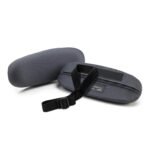 OPTP offers standard and firm densities. The standard version suits most users, while the firm model is intended for people who prefer stronger resistance. Its polyurethane foam compresses against the lower back, and the 1.5-inch adjustable elastic strap helps hold the roll against a car, truck, airplane, or office seat. The moisture-wicking polyester cover is removable and washable.
Placement matters more with a roll than with a tall cushion. Start near the belt line rather than the middle of the back, then make small adjustments. If the roll forces the ribs forward or increases discomfort, move it lower or try a softer density.
Best for: Drivers who want targeted lumbar support without substantially changing seat depth or upper-back contact.
2. Cushion Lab Back Relief Lumbar Pillow — Best Full-Back Contour
The Cushion Lab Back Relief Lumbar Pillow covers a larger area than a basic lumbar roll. Its sculpted shape includes a central spine channel, lower-back bolster, extended upper-mid-back support, and an S-curve profile. Extra-dense HyperFoam memory foam is designed to retain its shape instead of collapsing immediately under body weight.
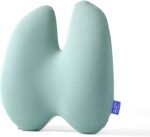 At 16 by 16 by 4 inches, it is one of the larger options in this roundup. The size may feel supportive in broad, relatively flat seats, but it can crowd compact bucket seats or move a smaller driver too far forward. The gel-lined adjustable strap grips the seatback, while the removable recycled-polyester cover is breathable and machine washable. The foam core should not be washed.
Drivers should recheck mirror position, pedal reach, steering distance, and head-restraint alignment after installing it. A cushion that feels comfortable on an office chair can behave differently in a sloped vehicle seat.
Best for: Taller users or vehicles with broad, flat seatbacks that need support across both the lower and middle back.
3. Purple Back Cushion — Best Breathable Support
The Purple Back Cushion uses the brand’s molded GelFlex Grid instead of conventional memory foam. Hundreds of open air channels help air circulate, which may be useful during warm-weather road trips or for drivers who find solid foam cushions hot.
Its dimensions—15.75 inches wide, 9.25 inches high, and 2.5 inches thick—give it a lower profile than many full-back memory-foam pillows. The contoured grid is molded for the lower back, and the adjustable strap-and-buckle system is designed for office, gaming, and car seats. Purple lists the cushion at 2.5 pounds and recommends it for extended sitting. The cover is machine washable; the grid insert can be hand washed with warm water and gentle detergent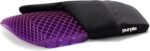 The grid has a springy feel that differs from slow-sinking memory foam. Some users will appreciate that responsive support, while others may prefer a softer cushion. Its relatively thin depth makes it a sensible starting point when preserving seat geometry is important.
Best for: Warm-climate drivers and anyone who wants responsive, ventilated support without a very thick foam profile.
4. Everlasting Comfort Lumbar Support Cushion — Best Everyday Value
Everlasting Comfort’s lumbar cushion combines a contoured high-density memory-foam core with adjustable straps and a breathable removable cover. It is marketed for cars, office chairs, gaming chairs, and everyday seating, making it convenient for people who want to move one cushion between work and the vehicle.
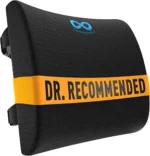 The memory foam adapts gradually to body heat and pressure. That creates a cushioned feel but also means firmness can vary with temperature: foam often feels firmer in a cold car and softer after it warms. The cover can be removed for cleaning, while the foam should be spot-cleaned and air-dried rather than submerged. Everlasting Comfort states that its foam is CertiPUR-US certified and its cover is OEKO-TEX certified.
Because this pillow covers more of the seatback than a lumbar roll, check that the upper edge does not press into the shoulder blades. Position the fullest section at the natural inward curve of the lower back, not at the tailbone.
Best for: Shoppers seeking a widely usable memory-foam support that can move between the car and office.
5. ComfiLife Leatherette + Mesh Lumbar Support — Best Secure Fit
The ComfiLife Lumbar Support Pillow stands out for its three-strap attachment system. Multiple straps can reduce sliding on a tall or smooth seatback, which is helpful when drivers repeatedly enter and exit the vehicle. Extension straps are included for wider chairs.
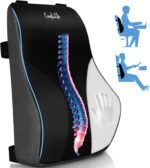 The pillow measures 17.5 by 16 by 5 inches and uses high-density memory foam. Its cover combines leatherette with a central breathable mesh area, offering an easy-to-wipe exterior and some airflow. The large dimensions and 5-inch maximum depth make it the most substantial option here. That may suit a roomy truck, SUV, wheelchair, or flat office chair, but it could move a driver too far forward in a compact car.
Before driving, confirm that every strap is secure and positioned away from airbag deployment seams, seat controls, cables, and folding mechanisms. Use only if the vehicle manufacturer allows seat-mounted accessories.
Best for: Larger or flatter seats where a full-size cushion needs extra attachment stability.
How to Choose a Car Lumbar Support
Start with the vehicle’s built-in adjustments
Before adding a cushion, adjust seat height, distance, recline, steering wheel, and factory lumbar control. Sit with the hips fully against the seatback and ensure the knees remain slightly bent when the pedals are pressed. An accessory should solve a remaining fit problem, not compensate for a  poorly adjusted seat.
Choose the smallest effective profile
More thickness is not necessarily more supportive. A slim roll or 2.5-inch grid cushion may fit a sculpted car seat better than a 4- or 5-inch pillow. You should remain close enough to the seatback for stable torso and head support.
Match firmness to body shape and seat design
Soft foam may feel comfortable initially but compress too much during a long trip. Very firm foam can create a pressure point. Adjustable-fill cushions are easiest to tune, but when choosing fixed foam, buy from a seller with a reasonable return window.
Check straps and airbag compatibility
 Seat-mounted side airbags may deploy through marked seams in the seatback. Never cover, compress, or route straps across those areas. Do not assume an accessory is safe for every vehicle—consult the owner’s manual or manufacturer.
Prioritize temperature control and cleaning
Breathable mesh, moisture-wicking fabric, or an open grid can feel cooler than dense foam. A removable washable cover matters when the cushion stays in a vehicle through hot weather, commuting, and road trips.
How to Position a Lumbar Cushion
- Park safely and place the cushion at the inward curve just above the belt line.
- Sit fully back with shoulders relaxed and hips centered.
- Move the support slightly up or down until it fills the gap without creating pressure.
- Recheck pedal reach, steering distance, mirrors, seat-belt path, and head restraint.
- Test it on a short local drive before relying on it for a long trip.
The cushion should feel supportive rather than forceful. Stop using it if it causes numbness, tingling, weakness, radiating leg pain, or worsening discomfort.
Tips for Greater Comfort on Long Drives
 Take regular walking breaks, avoid sitting on a wallet or phone, keep controls within easy reach, and make small posture changes. Seek medical advice for persistent pain, symptoms after a collision, weakness, or bowel or bladder changes.
Frequently Asked Questions
Can lumbar support prevent back pain while driving?
It may improve comfort and reduce unsupported slumping, but it cannot guarantee prevention or treat every cause of pain. Seat fit, driving duration, breaks, physical condition, and existing injuries all matter.
Should lumbar support feel firm?
It should provide noticeable contact without creating a hard pressure point or forcing the ribs and shoulders forward. Firmness preferences vary, so begin with moderate support and adjust gradually.
Can I leave a memory-foam cushion in a hot car?
Extreme heat can affect foam and cover materials. Follow the manufacturer’s storage guidance, shade the cushion when possible, and allow a hot cushion to cool before use.
Is a lumbar roll better than a full-back pillow?
A roll is compact and targeted, making it useful in contoured seats. A full-back pillow spreads pressure across a larger area and may suit broad, flat seats. The better option is the one that fills your specific gap without changing safe driving position.
Final Verdict
The Original McKenzie Lumbar Roll is the best low-profile starting point for many car seats. Choose the Cushion Lab Back Relief Pillow for broad full-back contouring, the Purple Back Cushion for breathable low-profile support, or the Everlasting Comfort model for versatile memory foam. The ComfiLife three-strap pillow is best reserved for larger seats that can accommodate its extra depth.
Fit matters more than brand. A good lumbar support should gently fill the lower-back gap while preserving safe pedal reach, seat-belt placement, head-restraint alignment, and full control of the vehicle.