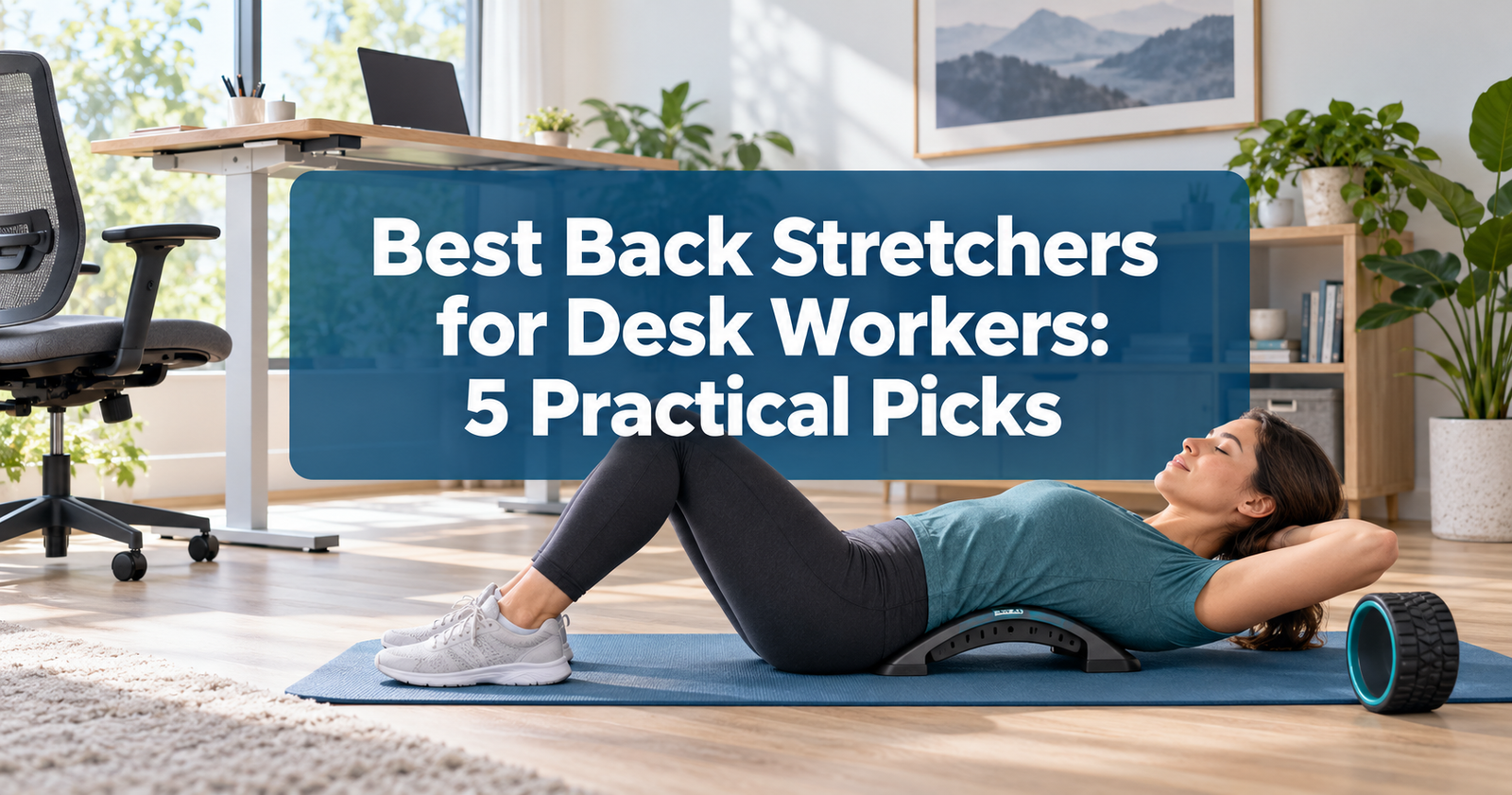
Hours spent working at a desk can leave your back feeling stiff and tired. Remaining in one position for too long may reduce movement variety, while an unsuitable workstation can encourage slouching, rounded shoulders, or excessive arching through the lower back.
Short walking breaks and regular position changes should form the foundation of a healthier workday. Some people also use a back stretcher as part of a brief mobility or relaxation routine after sitting.
Back stretchers come in several forms. A stationary lumbar arch supports the lower back while you lie down, whereas a back wheel creates a more active rolling movement. Adjustable models allow users to begin with a lower curve before gradually trying a higher setting.
The best choice depends on your mobility, experience, preferred intensity, and whether you want passive support or an active stretching tool. Here are five back stretchers desk workers can consider.
Affiliate disclosure: This article contains affiliate links. If you purchase through one of these links, we may earn a commission at no additional cost to you.
Quick Comparison
Table of Contents
| Product | Type | Adjustability | Primary Use | Best For |
|---|---|---|---|---|
| Magic Back Support | Lumbar arch board | Multiple levels | Passive lower-back stretch | Best overall |
| Chirp Wheel XR 6-Inch | Padded back wheel | Fixed 6-inch diameter | Targeted rolling | Active stretching |
| Chirp Wheel XR Bundle | Two-wheel set | 6- and 4-inch wheels | Progressive intensity | Experienced users |
| JHYLJSH Back Stretcher | Lumbar arch board | Three levels | Customizable lumbar support | Budget-conscious users |
| Air-Adjustable Back Stretcher | Inflatable foam support | Air-pump adjustment | Gradual supported extension | Gentler stretching |
Product details are based on manufacturer and Amazon listings available at the time of writing. Specifications and availability can change, so confirm the current listing before ordering.
1. Magic Back Support Back Stretcher — Best Overall
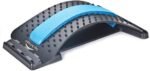
The is a lightweight lumbar arch designed for use on a bed, floor, chair, or car seat.
Its multi-level design allows the curvature to be adjusted. A lower setting provides a gentler arch, making it the logical starting point for new users. Higher positions create a more noticeable extension through the lower-back area.
The device is made from ABS plastic and includes a central cushioned strip. Raised pressure points run along the surface, although users have different reactions to textured designs. Some may enjoy the sensation, while others may find it uncomfortable through thin clothing.
This model can also be attached to certain chairs for lumbar support. That does not mean you should sit against a pronounced arch throughout the entire workday. Desk workers should continue changing positions rather than relying on one support device to hold them in a fixed posture for hours.
For floor use, place the stretcher on a nonslip exercise mat and lower yourself onto it carefully. Keep the first session short and avoid immediately selecting the highest position.
 Pros
Pros
- Multiple height settings
- Lightweight construction
- Can be used lying down or against certain seats
- Cushioned central area
- Compact enough for home-office storage
Cons
- Firm plastic surface may feel intense
- Pressure points will not appeal to everyone
- Higher settings may be unsuitable for beginners
Best for: Desk workers wanting an affordable and adjustable lumbar arch for short post-work stretching sessions.
Amazon
2. Chirp Wheel XR 6-Inch Knot Kneader — Best for Active Stretching
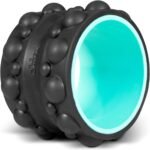
The offers a more active approach than a stationary lumbar board. Instead of lying still over an arch, the user gradually rolls the wheel along selected parts of the back.
Its six-inch diameter creates a relatively concentrated curve. The padded exterior and central spinal channel are intended to apply pressure to the muscles on either side of the spine rather than directly pressing into the spinal column.
Because the wheel has a small diameter, it can produce an intense sensation. Users unfamiliar with back wheels may prefer to begin against a wall, where body weight and rolling pressure are easier to control. Floor-based rolling requires more balance, strength, and awareness.
This tool may appeal to desk workers who already use foam rollers and want more targeted movement around the upper or middle back. It should be moved slowly and kept away from areas that feel sharp, unstable, or unusually sensitive.
A back wheel is not intended for forceful rolling over the neck or directly over injured tissue. Follow the manufacturer’s instructions and seek professional advice if you are unsure whether this type of device is appropriate for you.
 Pros
Pros
- Compact six-inch wheel
- Central channel reduces direct spinal pressure
- Padded exterior
- Suitable for targeted rolling
- Easy to store near a home-office exercise area
Cons
- More intense than a broad lumbar arch
- Requires balance and controlled movement
- Not ideal for users wanting passive relaxation
Amazon
Best for: Active users with some mobility-tool experience who want targeted rolling after desk work.
3. Chirp Wheel XR 6- and 4-Inch Bundle — Best for Progressive Intensity
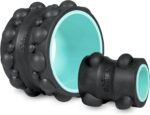
The includes six- and four-inch wheels. The two diameters provide different levels of targeted pressure.
The six-inch wheel offers a somewhat broader contact area and can be used as the introductory option. The four-inch wheel creates a much tighter curve and more concentrated sensation, making it more appropriate for experienced users who already understand how their bodies respond.
Having two sizes lets desk workers vary their mobility routine. The larger wheel may be used for broader areas, while the smaller model may help target specific muscular regions. It is unnecessary—and potentially uncomfortable—to use the smallest wheel simply because it appears more advanced.
As with the individual Chirp wheel, the central channel is designed to avoid concentrated pressure directly on the spine. The user must still control the direction and amount of force.
Beginners should start against a wall or ask a qualified professional to demonstrate appropriate use. Rolling quickly or placing excessive weight on a small wheel can create more pressure than expected.
 Pros
Pros
- Two wheel sizes included
- Allows users to vary intensity
- Compact and easy to store
- Central spinal channels
- Useful for targeted upper- and middle-back mobility
Cons
- Four-inch wheel may feel overly intense
- Costs more than buying one basic arch
- Active rolling demands control and balance
Best for: Experienced foam-rolling users who want two levels of targeted pressure.
Amazon
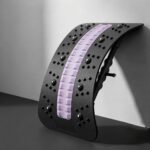
4. JHYLJSH Three-Level Back Stretcher — Best Budget Adjustable Option
The is another lumbar arch board with three listed adjustment levels.
The adjustable curve lets users experiment with the amount of extension. The lowest level is the appropriate starting point for most beginners. If that setting feels comfortable over several sessions, the height can be increased gradually rather than during the same session.
Its surface includes raised acupressure-style points. These are marketed as a massage feature, but the sensation can vary depending on clothing thickness, body weight, and sensitivity. A thin towel over the device may soften the contact, provided this does not cause slipping.
This design is compact enough to store under a desk, in a drawer, or beside an exercise mat. That makes it practical for someone who wants a quick stretching option available during a work break.
The lower price and generic construction mean shoppers should examine recent reviews, weight guidance, assembly instructions, and return terms carefully. The arch must be secured correctly before anyone lies on it.
 Pros
Pros
- Three height levels
- Compact and lightweight
- Raised massage points
- Simple stationary design
- Accessible option for occasional use
Cons
- Plastic construction may feel rigid
- Assembly must be checked carefully
- Less established brand history
- Surface texture may be uncomfortable for sensitive users
Best for: Budget-conscious desk workers who want a basic adjustable lumbar board.
Amazon
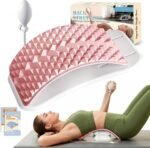
5. Air-Adjustable Soft Back Stretcher — Best Gentler Option
This uses a soft sponge surface and an air pump to modify the height. Instead of bending a rigid board into preset slots, users can add or release air to change the curve.
Incremental inflation may provide more control than a typical three-level device. This can be valuable for users who find the lowest setting of a plastic lumbar arch too pronounced.
The softer contact surface may also feel more comfortable when lying down. However, soft does not necessarily mean mild. A highly inflated cushion can still create significant lower-back extension.
Begin with minimal inflation and make small adjustments. The device should support the back evenly without producing sharp pressure, tingling, numbness, or increasing pain.
Inflatable products also require additional care. Inspect the surface, valve, tubing, and pump regularly. Stop using it if the material is damaged or cannot maintain stable pressure.
 Pros
Pros
- Air-controlled height adjustment
- Softer sponge surface
- Allows smaller changes in elevation
- Includes pressure-point texture
- Suitable for users who dislike rigid plastic arches
Cons
- Pump and valve add extra components
- Can still become intense when highly inflated
- Long-term durability depends on the air system
- Current brand and warranty details should be verified
Best for: Users who want softer contact and more gradual height adjustment.
Amazon
What Is a Back Stretcher?
A back stretcher is a device designed to place part of the spine in a supported extended position or guide a controlled rolling movement. Most consumer models belong to one of three categories.
Lumbar arch boards are curved platforms positioned beneath the lower back. Back wheels are circular props that move beneath the body or along a wall. Inflatable stretchers use adjustable air pressure to modify their height and firmness.
These products are different from inversion tables or powered traction devices. They should not be assumed to decompress the spine, correct posture, treat a disc condition, or eliminate chronic pain.
For desk workers, a back stretcher is best viewed as an optional mobility tool that complements walking, exercise, workstation adjustments, and professional care when needed.
How to Choose a Back Stretcher
Select the Right Type
Choose a stationary lumbar board if you want a passive stretch while lying down. Choose a back wheel if you prefer active movement and already have sufficient balance and body control.
An air-adjustable stretcher may suit users who want smaller changes in height and softer surface contact.
Start With Low Intensity
A deeper curve does not automatically produce a better result. Excessive extension can feel uncomfortable and may aggravate certain conditions.
Begin at the lowest height or against a wall. Increase the angle only if the previous setting consistently feels comfortable.
Consider Surface Texture
Acupressure points create more concentrated contact than a smooth cushion. They may feel stimulating through a shirt but uncomfortable against bare skin.
Users sensitive to pressure should consider a padded or smooth design. Avoid adding loose padding if it makes the device unstable.
Check Size and Weight Capacity
A stretcher should be wide enough to support your body comfortably and strong enough for your weight. Review the manufacturer’s measurements and stated capacity instead of relying only on product photographs.
Inspect adjustable tabs, hinges, and locking mechanisms before every session.
Consider Portability
Desk workers may want to store their back stretcher at the office or move it between rooms. Plastic arches are usually lightweight, while back wheels are compact but relatively thick.
A carry bag is useful if you plan to transport the product regularly.
How Desk Workers Can Use a Back Stretcher Safely
Read the complete manufacturer instructions before your first session. Assemble the device on a level, nonslip surface and make sure all adjustment points are locked.
When using a lumbar arch, sit directly in front of it and support yourself with your hands while slowly lowering your torso. Do not drop backward onto the device.
Begin with a brief session at the lowest setting. Breathe normally and leave the position immediately if you experience pain, dizziness, numbness, tingling, weakness, or symptoms traveling into an arm or leg.
For a back wheel, begin against a wall. Bend your knees slightly and control the pressure by moving your feet closer to or farther from the wall. Floor rolling should be attempted only when you can maintain controlled movement.
Do not use a back stretcher as the only response to prolonged sitting. Stand up regularly, walk, change working positions, and include general strength and mobility exercises appropriate for your health and fitness level.
When Should You Avoid a Back Stretcher?
Seek medical advice before using one if you have osteoporosis, a recent fracture, spinal instability, recent surgery, pregnancy, an inflammatory condition, a diagnosed disc problem, unexplained neurological symptoms, or significant persistent pain.
You should also seek prompt medical attention for severe pain after trauma, loss of bladder or bowel control, progressive weakness, saddle-area numbness, fever accompanied by back pain, or other concerning symptoms.
A consumer stretching device is not a diagnostic or medical treatment tool.
Frequently Asked Questions
Are back stretchers useful for desk workers?
They can provide a short supported stretch or mobility activity after sitting. Their usefulness varies by person, and they should complement—not replace—movement breaks, exercise, and an appropriately arranged workstation.
How long should I use a back stretcher?
Follow the product instructions and begin with a short session. Longer or more intense use is not necessarily more beneficial.
Should I use a back stretcher every day?
Frequency depends on the product, your response, and professional recommendations. Stop if symptoms increase rather than assuming daily use must be continued.
Is a back wheel better than a lumbar arch?
Neither is universally better. An arch offers passive support, while a wheel requires active rolling and greater control. Beginners may find a low stationary arch easier to manage.
Can a back stretcher correct poor posture?
No device can independently correct posture. A stretcher may support mobility and relaxation, but lasting changes generally require varied movement, strength, work-habit adjustments, and attention to the overall workstation.
Final Verdict
The Magic Back Support is our best overall option because its adjustable lumbar arch is compact, straightforward, and suitable for passive use. The Chirp Wheel XR 6-Inch is better for active users wanting targeted rolling, while the two-wheel Chirp bundle provides multiple intensity options.
The JHYLJSH board is a practical budget alternative, and the air-adjustable model may appeal to users who prefer softer contact and smaller height changes.
Regardless of the product, begin gently and pay attention to your body’s response. A back stretcher should support a broader movement routine—not serve as a cure for pain or a substitute for qualified medical care.