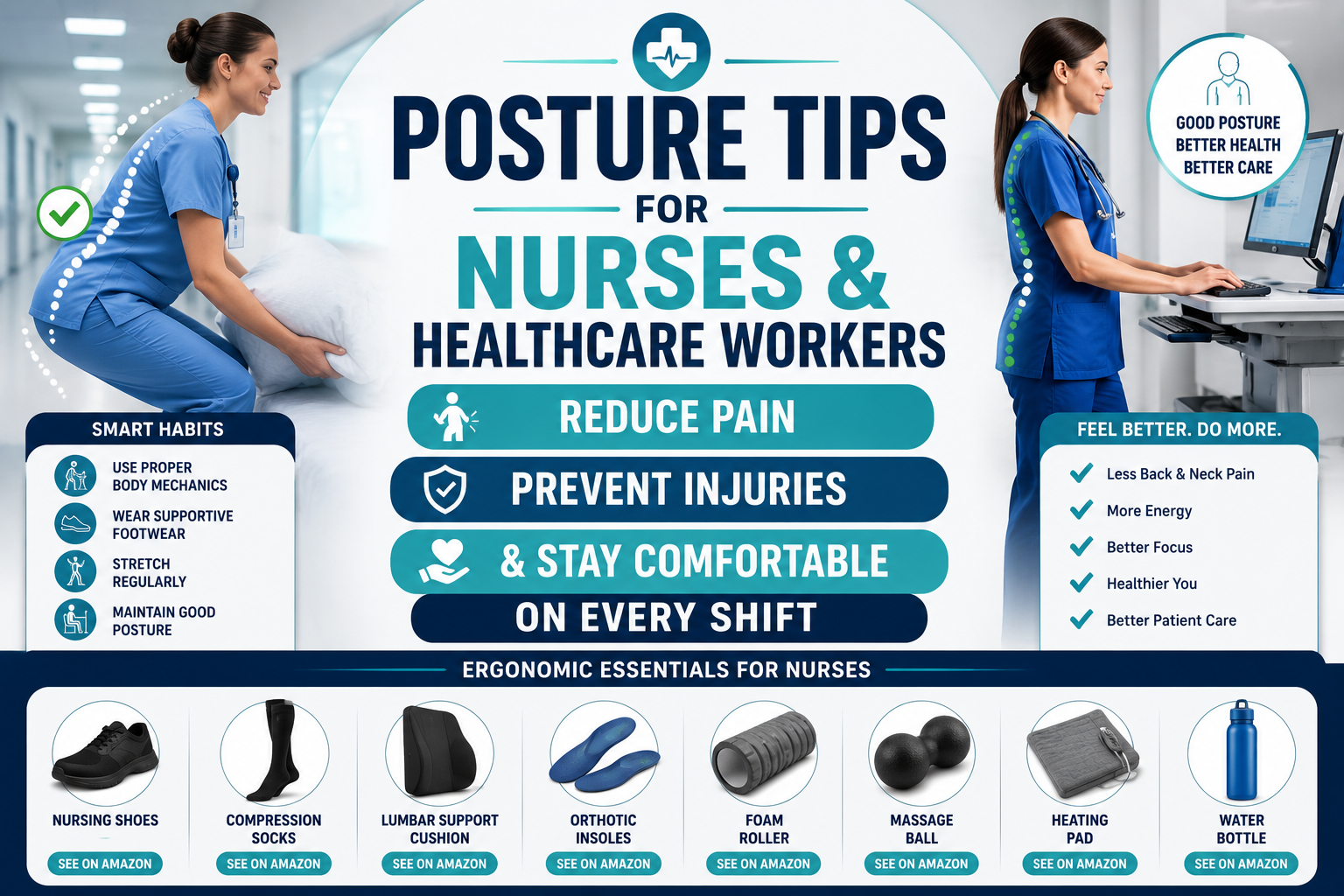
Nursing and healthcare are among the most physically demanding professions. Whether you’re assisting patients, standing for long hours, pushing medical equipment, or working overnight shifts, your body experiences constant physical stress. It’s no surprise that many nurses and healthcare workers deal with back pain, neck stiffness, sore feet, shoulder tension, and muscle fatigue.
Maintaining good posture isn’t just about standing up straight—it’s about protecting your spine, reducing unnecessary strain, and working more efficiently throughout your shift. Combined with proper body mechanics and ergonomic equipment, healthy posture habits can help prevent injuries and improve long-term comfort.
In this guide, you’ll learn practical posture tips specifically for nurses and healthcare professionals, along with recommended ergonomic products available on Amazon that can make long shifts more comfortable.
Why Posture Is So Important in Healthcare
Table of Contents
Unlike office workers who spend most of the day sitting, nurses constantly alternate between:
- Standing
- Walking
- Lifting
- Bending
- Reaching
- Turning patients
- Pushing beds and equipment
- Working at computer stations
These repetitive movements place significant stress on the muscles, joints, and spine.
Poor posture may contribute to:
- Lower back pain
- Neck stiffness
- Shoulder strain
- Hip discomfort
- Knee pain
- Foot fatigue
- Muscle soreness
- Reduced energy during long shifts
Developing better posture habits can help reduce these problems while supporting overall physical well-being.
1. Keep Your Spine in a Neutral Position
Whether you’re charting, walking, or assisting a patient, try to maintain the natural curves of your spine.
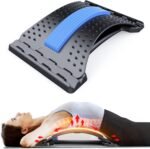 Avoid:
- Rounded shoulders
- Forward head posture
- Excessive lower back arching
Instead:
- Relax your shoulders
- Keep your ears aligned with your shoulders
- Engage your core muscles
- Stand tall without locking your knees
Recommended Product
2. Use Proper Body Mechanics When Lifting
Patient handling is one of the most common causes of workplace injuries in healthcare.
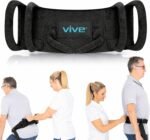 Follow these lifting principles:
- Bend at your knees—not your waist
- Keep the patient or object close to your body
- Tighten your core before lifting
- Avoid twisting while carrying weight
- Ask for assistance or use lifting devices whenever available
Recommended Product
3. Wear Supportive Footwear
Standing and walking for 10–12 hours can place tremendous pressure on your feet, knees, and lower back.
 Look for shoes that provide:
- Arch support
- Cushioning
- Slip-resistant soles
- Lightweight construction
- Shock absorption
Recommended Product
4. Consider Compression Socks
Compression socks help improve circulation and reduce swelling in the legs after long shifts.
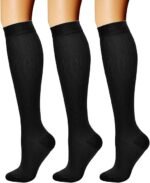 Benefits include:
- Reduced leg fatigue
- Improved blood flow
- Less ankle swelling
- Greater comfort during extended standing
Recommended Product
5. Adjust Computer Workstations
Many nurses spend part of their shift documenting patient information.
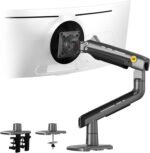 When using a computer:
- Position the monitor at eye level
- Keep wrists straight
- Sit with lumbar support
- Keep elbows close to your body
- Avoid leaning toward the screen
Recommended Product
6. Avoid Standing in One Position Too Long
 Remaining stationary for extended periods increases muscle fatigue.
Whenever possible:
- Shift your weight periodically
- Walk briefly between tasks
- Stretch your calves
- Alternate foot positions
7. Strengthen Your Core
A strong core supports your spine during lifting, bending, and standing.
 Simple exercises include:
- Planks
- Bird Dogs
- Dead Bugs
- Glute Bridges
- Side Planks
Even 10–15 minutes of exercise a few times per week can improve stability and posture.
8. Stretch During Breaks
 Quick stretching sessions can relieve muscle tightness before it becomes painful.
Focus on:
- Neck stretches
- Shoulder rolls
- Chest stretches
- Hamstring stretches
- Hip flexor stretches
- Calf stretches
9. Stay Hydrated
 Muscles perform better when properly hydrated.
Aim to drink water consistently throughout your shift to help reduce fatigue and muscle cramps.
10. Use Heat or Massage After Work
After a demanding shift, heat therapy and self-massage can help relax tired muscles.
 Helpful recovery tools include:
Heating Pad
Massage Ball
Massage Gun
Recommended Ergonomic Products for Nurses
Ergonomic Nursing Shoes
Provide cushioning and support for long hours on hard hospital floors.
Compression Socks
Reduce swelling and improve circulation.
Lumbar Support Cushion
Useful for charting stations or office chairs.
Foam Roller
Great for releasing muscle tension after long shifts.
Amazon Link
Foot Massager
Helps relieve sore feet after standing all day.
Orthotic Insoles
Provide extra arch support and improve weight distribution.
Common Posture Mistakes Healthcare Workers Make
Avoid these habits:
- Bending from the waist
- Twisting while lifting
- Looking down at charts for long periods
- Standing with locked knees
- Carrying heavy bags on one shoulder
- Wearing unsupportive shoes
- Ignoring early signs of fatigue
- Skipping stretching breaks
Daily Posture Checklist
Before starting your shift, ask yourself:
✔ Shoulders relaxed?
✔ Core engaged?
✔ Head aligned over shoulders?
✔ Comfortable footwear?
✔ Compression socks on (if needed)?
✔ Proper lifting technique?
✔ Staying hydrated?
✔ Stretching during breaks?
Frequently Asked Questions
Why do nurses experience so much back pain?
Frequent lifting, prolonged standing, repetitive movements, and awkward working positions all contribute to back pain among healthcare workers.
Are compression socks worth wearing?
Many nurses find that compression socks help reduce swelling, improve circulation, and decrease leg fatigue during long shifts.
What shoes are best for nurses?
Look for shoes with excellent arch support, cushioning, slip-resistant soles, and lightweight construction designed for long periods of standing and walking.
Can posture really reduce workplace injuries?
Yes. Maintaining proper posture and using safe body mechanics can significantly reduce the risk of musculoskeletal injuries over time.
Final Verdict
Nurses and healthcare workers dedicate countless hours to caring for others, but it’s equally important to take care of your own body. Practicing good posture, using proper lifting techniques, wearing supportive footwear, and incorporating regular stretching into your routine can help reduce pain, prevent injuries, and improve comfort throughout even the busiest shifts.
Adding ergonomic products such as supportive nursing shoes, compression socks, orthotic insoles, lumbar cushions, heating pads, massage balls, and foam rollers can further reduce strain and support recovery after long days on your feet.
By making small, consistent improvements to your posture and daily habits, you can protect your spine, reduce fatigue, and continue delivering excellent patient care while safeguarding your long-term health.