Introduction
Table of Contents
Poor posture is a common problem for people who sit at a desk, work from home, use laptops, drive for long hours, or spend too much time looking down at phones. Rounded shoulders, forward head posture, upper-back stiffness, and neck tension can slowly become part of your daily routine without you even noticing.
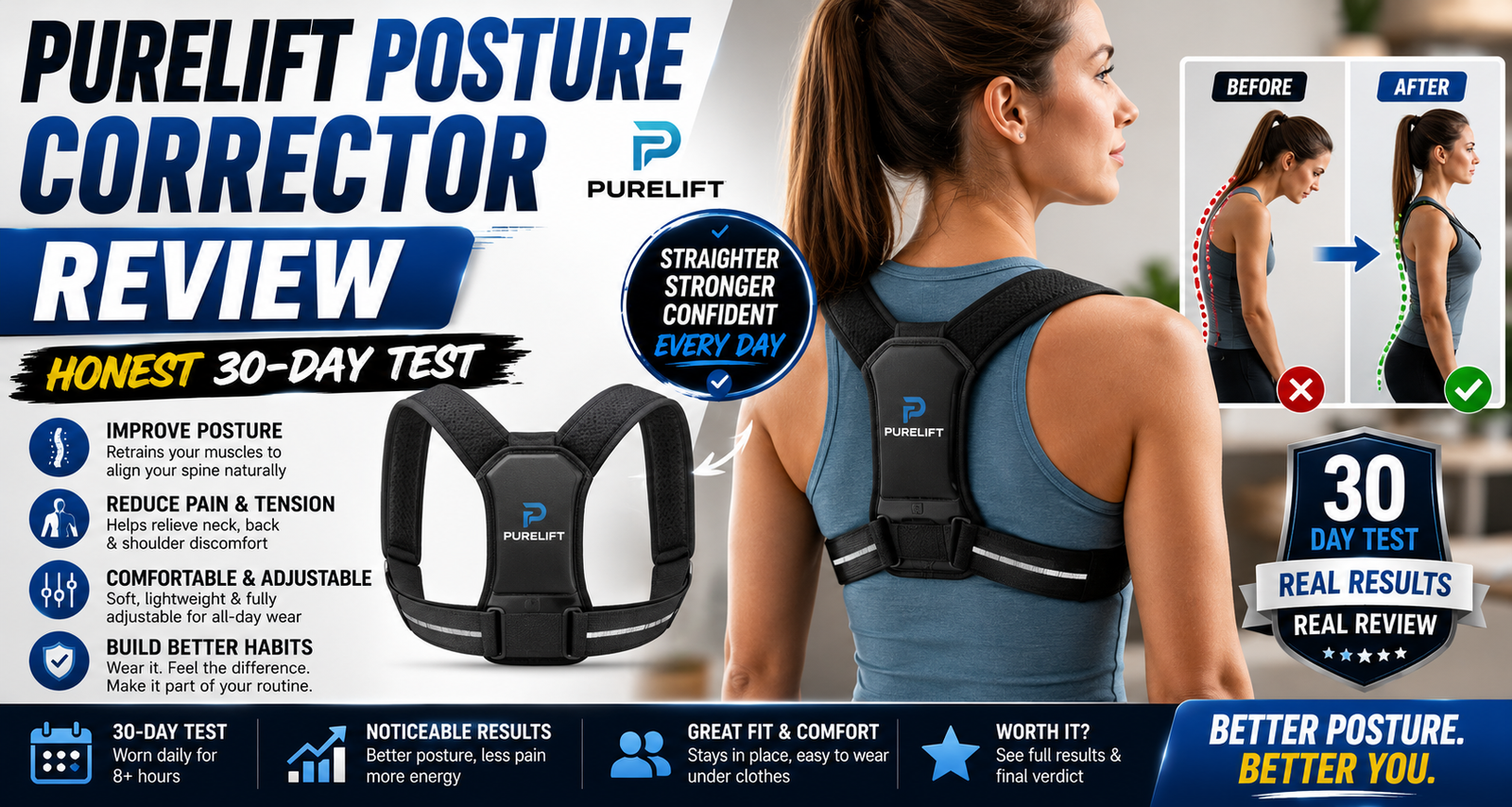
 This is why posture correctors have become popular. They promise to pull your shoulders back, support your upper back, and remind you to sit or stand straighter. One product many buyers search for is the Purelift Posture Corrector, a wearable posture support brace designed for men and women who want a simple way to improve posture awareness at home, work, or during daily activities.
But does the Purelift Posture Corrector really work, or is it just another posture gadget with big promises? In this honest 30-day test-style review, we look at comfort, support, adjustability, daily use, pros, cons, who should buy it, and whether it is worth adding to your posture improvement routine in 2026.
Before starting, it is important to be realistic. A posture corrector is not a magic cure. Experts often recommend using posture correctors for short periods and combining them with posture exercises, stretching, and better desk ergonomics. GoodRx notes that posture correctors can provide helpful cues for better posture, but they should generally be worn only for short periods.
Quick Review Summary
| Feature | Details |
|---|---|
| Product | Purelift Posture Corrector |
| Best For | Desk workers, students, home users, posture reminders |
| Product Type | Wearable posture brace |
| Main Function | Helps pull shoulders back and remind users to sit straighter |
| Use Area | Upper back, shoulders, chest posture |
| Best Use Time | Short daily sessions |
| Main Benefit | Posture awareness and shoulder positioning |
| Main Limitation | Does not strengthen muscles by itself |
| Overall Rating | 4.1/5 |
What Is the Purelift Posture Corrector?
The Purelift Posture Corrector is a wearable posture brace designed to help support the upper back and encourage better shoulder positioning. Like many adjustable posture correctors, it is typically worn around the shoulders and upper back. The purpose is to gently pull the shoulders back and remind the user not to slouch.
This type of product is different from a smart posture trainer like Upright Go 2. A smart trainer vibrates when you slouch, while a brace-style posture corrector gives physical support and pressure. Health’s 2026 posture corrector guide explains that shoulder braces are among the most common posture correctors and use straps to help align the shoulders.
The Purelift Posture Corrector is best understood as a posture reminder tool. It may help you become more aware of slouching, especially while sitting at a desk, watching TV, using a laptop, or doing light daily tasks. However, it should not be treated as a complete solution for neck pain, back pain, rounded shoulders, or long-term posture correction.
For best results, a posture brace should be combined with exercises that strengthen the upper back, shoulders, core, and neck-supporting muscles.
Honest 30-Day Test: What to Expect
Since posture improvement takes time, a 30-day test is a practical way to judge whether a posture corrector is useful. Here is a realistic breakdown of what many users may experience during one month of consistent but moderate use.
Week 1: Getting Used to the Fit
During the first week, the biggest challenge is getting used to the feel of the brace. A posture corrector is not supposed to be painfully tight. It should gently remind you to bring your shoulders back.
At first, you may feel pressure around the shoulders or underarms. This is common with brace-style posture correctors, especially if the straps are too tight. The best approach is to start with short sessions of 15 to 30 minutes per day.
During this first week, the Purelift Posture Corrector works mostly as an awareness tool. You may notice how often you round your shoulders while using a laptop, reading, cooking, or scrolling on your phone.
Week 2: Better Posture Awareness
By the second week, the brace starts to feel more familiar. You may begin sitting taller even when you are not wearing it, simply because you are more aware of your posture.
This is one of the biggest benefits of posture correctors. They do not permanently fix posture by themselves, but they can train awareness. WIRED’s 2026 guide notes that posture correctors are not a magic fix, but consistency can help train people to sit taller and develop better muscle memory over time.
At this stage, the Purelift Posture Corrector may feel useful during work sessions, study time, or short periods of desk work.
Week 3: Comfort and Consistency Matter
By week three, you will know whether the brace is comfortable enough for regular use. If it digs into your armpits, rubs your shoulders, or feels too restrictive, you may need to adjust the straps or reduce wear time.
This is also the time to add posture exercises. A posture corrector can remind your body to stay upright, but your muscles still need to do the work. Exercises like band pull-aparts, rows, face pulls, wall angels, and chest stretches can help support longer-term posture improvement.
Week 4: Realistic Results
After 30 days, the most realistic result is better posture awareness, not a perfect transformation. You may sit straighter, notice slouching faster, and feel more conscious of shoulder position. But if you stop wearing the brace and do not do strengthening exercises, old habits can return.
A Guardian writer who tested a posture corrector for two weeks reported some posture improvement but also noted that it was difficult to know whether the improvement came from the corrector itself or from additional back and core work.
That is the honest takeaway: the Purelift Posture Corrector can help, but it works best as part of a larger posture routine.
Key Features of Purelift Posture Corrector
Adjustable Strap Design
A good posture corrector should be adjustable because everyone’s shoulder width, chest size, and comfort level are different. The Purelift Posture Corrector is designed to help users customize the fit around the shoulders and upper back.
Adjustable straps are important because a brace that is too loose will not provide enough posture reminder, while a brace that is too tight can feel uncomfortable.
Upper-Back and Shoulder Support
The Purelift Posture Corrector focuses mainly on shoulder alignment and upper-back posture. It helps remind the user to avoid rounded shoulders and sit more upright.
This can be helpful for desk workers, students, and people who spend long hours in seated positions.
Lightweight Wearable Design
Posture correctors should be light enough for daily use. A bulky brace may feel uncomfortable under clothing or during work. The Purelift design is intended for everyday posture support, making it useful for home offices, study sessions, and casual daily routines.
Unisex Use
Most posture correctors are designed for both men and women. The Purelift Posture Corrector can be used by adults who want a simple posture support brace for daily reminders.
Easy Home Use
One of the main advantages of this product category is convenience. You do not need batteries, apps, charging, or complicated setup. You simply wear the brace, adjust the straps, and use it during short posture training sessions.
Purelift Posture Corrector Review: What We Like
1. It Helps You Notice Slouching
The biggest benefit of the Purelift Posture Corrector is awareness. Many people do not realize how often they slouch until something reminds them. The brace creates gentle tension when your shoulders move forward, which can remind you to sit straighter.
2. It Is Simple to Use
Unlike smart posture trainers, there is no app, Bluetooth, charging, or calibration. This makes it easier for users who want a basic posture support product.
3. Good for Desk Workers
If you work on a computer for long hours, this type of posture corrector can be useful during short work sessions. It may help remind you to avoid collapsing forward while typing, reading, or joining online meetings.
4. Helps Open the Shoulders
Posture braces can encourage the shoulders to move backward instead of rounding forward. This may feel helpful if you spend hours in a forward-leaning position.
5. Affordable Compared with Smart Devices
Brace-style posture correctors are usually more affordable than smart wearable posture trainers. For buyers who want a budget-friendly posture reminder, Purelift can be a practical option.
What Could Be Better?
1. It Can Feel Uncomfortable If Worn Too Long
One common issue with posture correctors is discomfort. If worn too tightly or for too many hours, they may rub under the arms or create pressure around the shoulders.
Today’s expert guidance suggests posture correctors should generally be worn for limited periods. One 2026 expert article recommended no more than 1 to 2 hours per day for many posture correction devices, along with posture re-education exercises.
2. It Does Not Strengthen Muscles
The Purelift Posture Corrector can remind you to sit straighter, but it does not strengthen your back by itself. Long-term posture improvement requires muscle activation and better movement habits.
3. It May Show Under Tight Clothing
Depending on the design and your clothing, the brace may be visible under fitted shirts. This may not matter at home, but some users may not want to wear it in public.
4. Not a Medical Treatment
A posture corrector is not a replacement for physical therapy or medical care. If you have severe back pain, nerve symptoms, injury, scoliosis, or chronic pain, speak with a healthcare professional before relying on a brace.
Pros and Cons
Pros
- Simple and easy to use
- No charging or app required
- Helps remind you not to slouch
- Supports shoulder positioning
- Useful for desk work and home use
- Adjustable fit
- Budget-friendly compared with smart posture trainers
- Can help build posture awareness
Cons
- May feel uncomfortable if worn too tightly
- Should not be worn all day
- Does not strengthen posture muscles
- May be visible under clothing
- Results depend on consistency
- Not a complete posture correction solution
- Not suitable for serious medical back problems without professional advice
Who Should Buy the Purelift Posture Corrector?
The Purelift Posture Corrector is best for:
- Desk workers who slouch during computer work
- Students who study for long hours
- Remote workers using laptops
- People with rounded shoulders from poor sitting habits
- Beginners who want a simple posture reminder
- Buyers who do not want a smart app-connected device
- People looking for an affordable posture support brace
It is a good choice if your main goal is to become more aware of your posture and reduce slouching during short daily sessions.
Who Should Avoid It?
The Purelift Posture Corrector may not be ideal for:
- People who want all-day back support
- Users with serious back or neck pain
- Anyone expecting instant posture correction
- People who dislike shoulder straps
- Users who need medical-grade support
- People with skin irritation or sensitivity around the shoulders
If you need serious back support, a medical brace or physical therapist-recommended support may be better.
How to Use Purelift Posture Corrector Safely
Start slowly. Wear the posture corrector for 15 to 30 minutes per day during the first few days. Do not tighten it aggressively. The goal is not to force your shoulders backward; the goal is to remind your body to sit upright.
Use it during activities where you usually slouch, such as laptop work, reading, studying, or watching TV. After you remove it, try to maintain the same upright feeling naturally.
Add posture exercises 3 to 5 times per week. Good options include:
- Band pull-aparts
- Seated rows
- Face pulls
- Wall angels
- Chin tucks
- Chest stretches
- Thoracic extension exercises
This combination is more effective than only wearing a brace.
Purelift Posture Corrector vs Smart Posture Trainer
The Purelift Posture Corrector is a brace-style product, while smart posture trainers like Upright Go 2 use vibration feedback.
A brace-style posture corrector physically pulls the shoulders back and gives body-position feedback through strap tension.
A smart posture trainer does not pull the shoulders back. Instead, it vibrates when you slouch.
The Purelift is better for people who want a simple, affordable, no-app product. A smart posture trainer is better for people who want tracking, app feedback, and vibration reminders.
Is Purelift Posture Corrector Worth It in 2026?
Yes, the Purelift Posture Corrector can be worth it if you want a simple and affordable posture reminder for home or desk use. It is not a miracle fix, but it can help you become more aware of slouching and encourage better shoulder positioning during short daily sessions.
It is best for people who understand that posture correction takes effort. The brace can remind you, but your muscles and habits still need training. If you combine it with strengthening exercises, stretching, ergonomic desk setup, and regular movement breaks, it can be a helpful tool.
However, it may not be worth it if you expect instant results or want something to wear all day without discomfort.
Final Verdict
The Purelift Posture Corrector is a practical posture support brace for people who want a simple way to reduce slouching and improve posture awareness at home. During a realistic 30-day test, the biggest improvement is likely to be awareness, not a dramatic physical transformation.
It is comfortable enough for short sessions, easy to use, and useful for desk workers, students, and remote workers. But it should not be treated as a complete posture correction solution. For best results, use it together with posture exercises and better workstation habits.
Overall Rating: 4.1/5
Best For: Desk workers, students, home office users, and people who want a simple posture reminder.
Check Price on Amazon: [Insert Amazon Affiliate Link]
FAQs About Purelift Posture Corrector
Does Purelift Posture Corrector really work?
It can help improve posture awareness by reminding you not to slouch. However, it works best when combined with exercises and better desk habits.
Can I wear Purelift Posture Corrector all day?
It is better to use posture correctors for short periods. Start with 15 to 30 minutes and gradually increase if comfortable.
Will Purelift Posture Corrector fix rounded shoulders?
It may help remind you to pull your shoulders back, but rounded shoulders usually also need stretching and upper-back strengthening exercises.
Is Purelift Posture Corrector good for back pain?
It may help if your discomfort comes from poor posture habits, but it is not a medical treatment. For serious or persistent pain, consult a healthcare professional.
Can I wear it under clothes?
You may be able to wear it under loose clothing, but it may show under tight shirts.
Is Purelift better than a smart posture trainer?
It depends on your needs. Purelift is simpler and does not need charging or an app. A smart posture trainer provides vibration feedback and tracking.
How long does it take to see results?
You may notice better posture awareness within a few days, but long-term improvement usually takes weeks of consistent use and exercise.