Introduction
Table of Contents
Anterior pelvic tilt is one of the most common posture issues people notice when they look at their side profile. It can make the lower back look overly arched, the stomach appear pushed forward, and the hips look tilted. Many people describe it as “swayback posture” or a posture where the pelvis tips forward too much.
This posture pattern is often linked with long sitting hours, weak core muscles, tight hip flexors, weak glutes, poor desk posture, lack of mobility, and imbalanced training habits. If you work from home, sit at a desk all day, drive for long hours, or skip lower-body and core strengthening, anterior pelvic tilt may become more noticeable over time.
The good news is that anterior pelvic tilt can often be improved with better awareness, targeted stretching, strengthening exercises, and supportive products. Cleveland Clinic explains that pelvic tilt treatment often includes working with a physical therapist, strengthening weak muscles, and stretching tight muscles so the pelvis can stay in a more neutral position.
In this 2026 updated guide, we explain what anterior pelvic tilt is, what causes it, signs to look for, exercises that may help, and the best products that can support your posture routine at home.
Medical Note: This article is for educational purposes only. If you have severe back pain, hip pain, numbness, weakness, injury, scoliosis, pregnancy-related pain, or symptoms that do not improve, consult a doctor or physical therapist before starting exercises or using posture products.
What Is Anterior Pelvic Tilt?
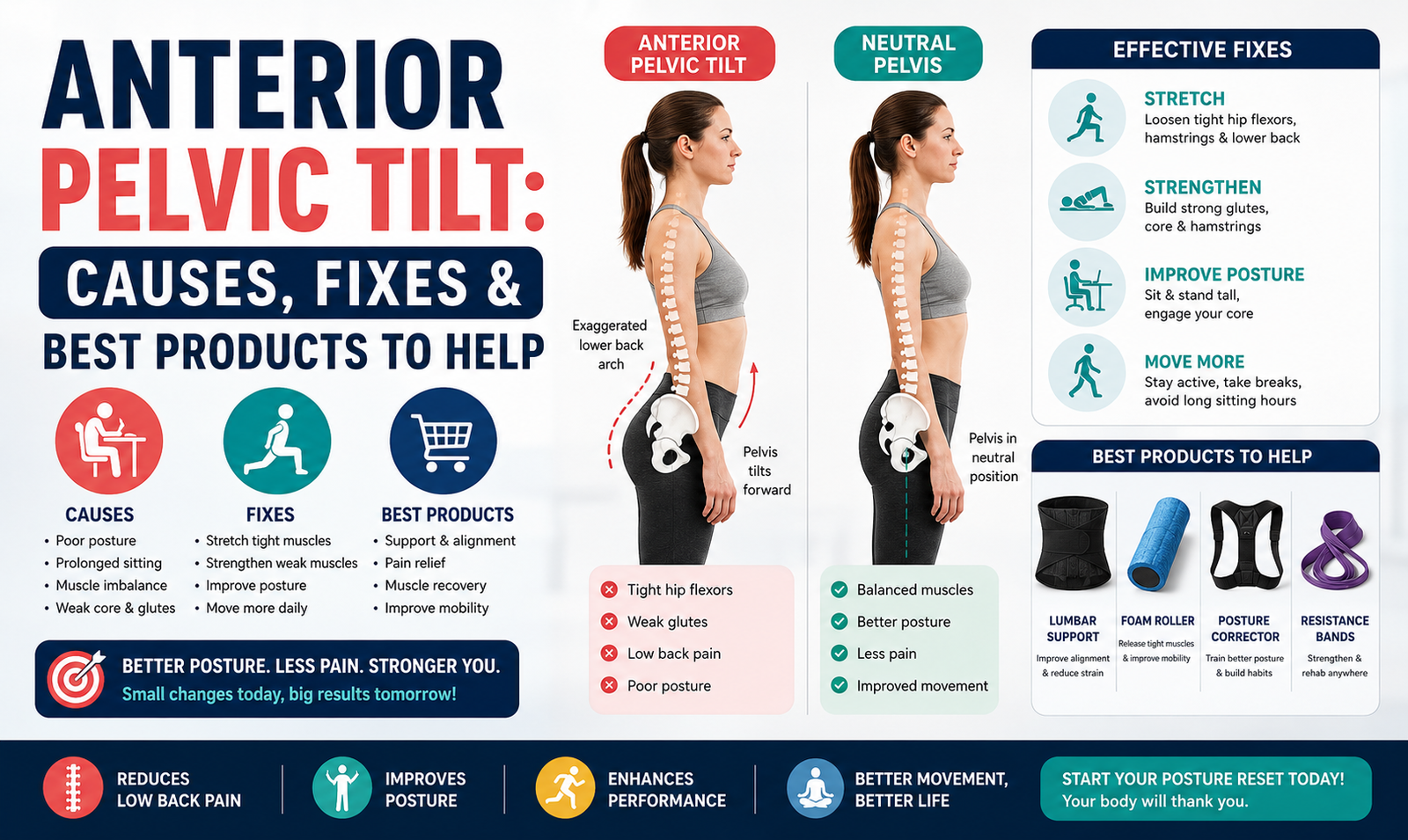
Anterior pelvic tilt happens when the front of the pelvis rotates downward and the back of the pelvis lifts upward. This position increases the curve in the lower back and can make the buttocks and abdomen appear more prominent.
A small amount of pelvic tilt is normal. The pelvis naturally moves in different directions when you walk, bend, sit, or exercise. The issue happens when the pelvis rests too far forward for long periods, creating excessive lower-back arching and muscle imbalance.
Healthline describes anterior pelvic tilt as a forward rotation of the pelvis that forces the spine to curve, often linked with excessive sitting, tight hip flexors, and weak glute and abdominal muscles.
Anterior pelvic tilt is not always painful. Some people have it and feel fine. Others may experience lower-back tightness, hip discomfort, hamstring tension, or poor movement mechanics. The goal is not to force the spine into a perfectly flat shape, but to restore better balance, strength, and control around the pelvis.
Common Signs of Anterior Pelvic Tilt
You may have anterior pelvic tilt if you notice:
- Lower back arches deeply when standing
- Belly appears pushed forward even if body fat is not high
- Buttocks appear more pronounced
- Hip flexors feel tight
- Lower back feels tight after standing
- Hamstrings feel stretched or tense
- Glutes feel weak or inactive
- Difficulty keeping a neutral spine during exercises
- Lower-back discomfort during squats, deadlifts, or standing
- Posture looks like a “swayback” from the side
A simple visual clue is the side profile. If your pelvis tips forward, your lower back may look more curved than normal. Medical News Today explains that anterior pelvic tilt is often visible because it gives the lower back an exaggerated arch and makes the buttocks stick out.
However, self-checks are not a diagnosis. If you are unsure, a physical therapist can assess your posture, movement, hip mobility, core strength, and pelvic position more accurately.
What Causes Anterior Pelvic Tilt?
Anterior pelvic tilt is usually linked to muscle imbalance and daily habits. It often develops gradually, especially when the body spends too much time in seated positions.
1. Prolonged Sitting
Sitting for long hours can shorten the hip flexors and reduce glute activation. When the hip flexors become tight and the glutes become weak, the pelvis may be pulled into a forward tilt.
This is common for office workers, drivers, students, gamers, and remote workers who sit for many hours each day.
2. Tight Hip Flexors
The hip flexors sit at the front of the hips and help lift the knees. When they become tight, they can pull the pelvis forward. Tight hip flexors are one of the most common contributors to anterior pelvic tilt.
3. Weak Glutes
The glutes help extend the hips and stabilize the pelvis. Weak glutes may make it harder to keep the pelvis in a neutral position, especially during standing, walking, squatting, and lifting.
4. Weak Core Muscles
The abdominal muscles help control the pelvis and lower back. If the core is weak, the lower back may overarch and the pelvis may tip forward.
5. Poor Exercise Balance
Some people train the lower back and hip flexors more than the glutes and core. For example, doing lots of lower-back extension work without enough abdominal and glute strengthening may worsen imbalance.
6. High Heels or Poor Footwear
Shoes that shift posture forward may affect pelvic positioning. High heels can increase lower-back arching in some people.
7. Pregnancy or Body-Weight Changes
Pregnancy and changes in body weight can affect pelvic position, core strength, and lower-back posture. Anyone with pregnancy-related pelvic or back pain should get professional guidance.
Can Anterior Pelvic Tilt Be Fixed?
In many cases, anterior pelvic tilt can be improved, especially when it is related to posture habits, muscle tightness, and weakness. The main approach is usually:
- Stretch tight hip flexors
- Strengthen weak glutes
- Strengthen deep core muscles
- Improve hamstring and hip control
- Practice neutral pelvis awareness
- Reduce long sitting periods
- Improve desk ergonomics
- Use supportive products wisely
Cleveland Clinic notes that treatment for excessive pelvic tilt often includes customized stretches and exercises from a physical therapist, with the goal of strengthening weak muscles and stretching tight ones so the pelvis can stay more neutral.
The key is consistency. One stretch will not fix anterior pelvic tilt overnight. A regular routine over several weeks is usually more effective.
Best Exercises for Anterior Pelvic Tilt
Before starting, remember that exercises should not cause sharp pain. Move slowly and focus on control.
1. Hip Flexor Stretch
A half-kneeling hip flexor stretch can help reduce tightness at the front of the hips. Kneel on one knee, place the opposite foot forward, gently tuck your pelvis under, and shift forward slightly until you feel a stretch in the front of the hip.
2. Glute Bridges
Lie on your back with knees bent and feet flat. Gently tuck your pelvis, squeeze your glutes, and lift your hips. This helps strengthen the glutes and teaches hip extension without overusing the lower back.
3. Dead Bug
Lie on your back with arms up and knees bent. Brace your core and slowly lower the opposite arm and leg while keeping the lower back controlled. This helps strengthen the deep core.
4. Posterior Pelvic Tilt
Lie on your back with knees bent. Gently flatten your lower back toward the floor by tilting the pelvis backward. This teaches pelvic control and awareness.
5. Plank
A proper plank can strengthen the core and improve pelvic stability. Keep the ribs down, glutes lightly engaged, and lower back from arching.
6. Squats With Neutral Pelvis
Squats can help strengthen glutes and legs, but only if performed with good form. Focus on keeping the spine neutral and avoiding excessive lower-back arching.
7. Hamstring and Glute Strengthening
Romanian deadlift patterns, resistance band hip hinges, and controlled step-ups can help strengthen the posterior chain when done properly.
Healthline also lists posterior pelvic tilt, glute bridges, squats, and hip stretches among exercises that may help reduce anterior pelvic tilt.
Best Products to Help With Anterior Pelvic Tilt
Products do not “cure” anterior pelvic tilt, but the right tools can support your exercise, mobility, and posture routine. Here are the most helpful product categories for home use.
1.Resistance Bands — Best for Glute and Core Activation
 Resistance bands are one of the best tools for anterior pelvic tilt because they help strengthen the glutes, hips, and core. They are affordable, portable, and easy to use at home.
You can use loop bands for glute bridges, lateral band walks, clamshells, monster walks, and hip thrusts. These exercises help activate the glutes, which are often weak in people with anterior pelvic tilt.
Long resistance bands can also be used for hip mobility work, assisted stretching, and strength exercises.
Why It Helps: Strengthening the glutes and hips can improve pelvic control and reduce overreliance on the lower back.
Best For: Glute activation, hip strengthening, home workouts, beginners, and desk workers.
2. Yoga Mat — Best for Daily Stretching and Core Exercises
 A good yoga mat makes it easier to do pelvic tilt exercises, hip flexor stretches, dead bugs, planks, glute bridges, and mobility work at home.
For anterior pelvic tilt, floor-based exercises are very useful. Without a comfortable mat, you may avoid doing them consistently. A supportive yoga mat can protect your knees, back, elbows, and wrists during daily exercise sessions.
Look for a mat that is non-slip, medium-thick, and stable. Very thick foam mats may feel comfortable but can reduce balance during standing exercises.
Why It Helps: A yoga mat creates a comfortable space for daily corrective exercises and stretching.
Best For: Home workouts, stretching, pelvic tilts, core work, glute bridges, and hip mobility.
3. Foam Roller — Best for Hip and Back Mobility
 A foam roller can help release tension in tight muscles and improve mobility. For anterior pelvic tilt, it may be useful for the hip flexors, quads, glutes, and thoracic spine.
Foam rolling should not replace strengthening, but it can be a helpful warm-up or recovery tool. It may help reduce tightness before stretching or exercise.
Choose a medium-density foam roller if you are a beginner. Very firm rollers can feel uncomfortable, especially if your muscles are sensitive.
Why It Helps: Foam rolling may improve mobility and make stretching feel easier before posture exercises.
Best For: Hip flexor tightness, quad tension, glute mobility, back mobility, and recovery.
4. Lumbar Support Pillow — Best for Desk Sitting
 A lumbar support pillow can help keep your lower back supported while sitting. It will not fix anterior pelvic tilt by itself, but it can help improve sitting posture and reduce lower-back strain during long work sessions.
If your chair does not support the natural curve of your lower back, you may sit in a poor position for hours. A lumbar pillow can help your spine stay more neutral while working.
Look for a pillow with adjustable straps, breathable material, and enough firmness to support your lower back without pushing you too far forward.
Why It Helps: Better sitting support can reduce posture stress during long desk hours.
Best For: Office chairs, gaming chairs, car seats, remote workers, students, and long sitting sessions.
5. Adjustable Laptop Stand or Monitor Riser — Best for Work-from-Home Posture
 Anterior pelvic tilt is often part of a bigger posture problem. If your laptop screen is too low, you may lean forward, arch your back, and sit poorly for hours. A laptop stand or monitor riser can bring your screen closer to eye level.
This helps improve overall desk posture by reducing forward head posture, rounded shoulders, and slouched sitting. Pair it with an external keyboard and mouse for the best ergonomic setup.
A good workstation setup can make your corrective exercise routine more effective because you are not spending the rest of the day reinforcing poor posture.
Why It Helps: Better screen height can reduce slouching and improve full-body sitting posture.
Best For: Remote workers, students, office users, laptop users, and desk posture improvement.
How to Build a Simple Anterior Pelvic Tilt Routine
Here is a beginner-friendly routine you can do 3 to 5 times per week:
- Hip flexor stretch — 30 seconds each side
- Glute bridges — 2 sets of 12 reps
- Dead bugs — 2 sets of 8 reps each side
- Posterior pelvic tilts — 2 sets of 10 reps
- Plank — 2 sets of 20 to 30 seconds
- Banded lateral walks — 2 sets of 10 steps each side
- Foam rolling quads and hip flexors — 1 to 2 minutes each side
Move slowly. Focus on feeling the glutes and core work rather than arching through the lower back. If any exercise causes pain, stop and ask a professional for advice.
Mistakes to Avoid
Wearing a Brace and Doing Nothing Else
Support products can help, but they are not a replacement for exercise. The best results come from strengthening and stretching.
Stretching Only
Many people stretch hip flexors but never strengthen glutes or core. Stretching may feel good temporarily, but strength is needed for lasting pelvic control.
Overarching During Exercises
If you arch your lower back during glute bridges, planks, or squats, you may reinforce the same posture problem. Learn to control the pelvis first.
Sitting for Hours Without Breaks
Even the best products cannot undo eight hours of poor sitting. Stand up, walk, stretch, and reset your posture regularly.
Expecting Overnight Results
Anterior pelvic tilt usually develops over time, so improvement also takes time. Consistency matters more than intensity.
When Should You See a Professional?
You should consider seeing a doctor or physical therapist if you have:
- Severe or persistent lower-back pain
- Hip pain that does not improve
- Numbness, tingling, or weakness
- Pain after injury
- Difficulty walking or standing
- Symptoms spreading down the leg
- Pregnancy-related pelvic pain
- Scoliosis or known spine condition
- Pain during basic exercises
A physical therapist can assess your posture, mobility, strength, and movement patterns. They can also give you a personalized plan instead of guessing which exercises you need.
Final Verdict
Anterior pelvic tilt happens when the pelvis tips forward, often creating an exaggerated lower-back arch and swayback posture. It is commonly linked to long sitting hours, tight hip flexors, weak glutes, weak core muscles, and poor posture habits.
The best way to improve anterior pelvic tilt is usually a combination of stretching tight muscles, strengthening weak muscles, improving desk ergonomics, and practicing better posture awareness. Products like resistance bands, yoga mats, foam rollers, lumbar support pillows, and laptop stands can support your routine, but they should not be seen as instant fixes.
If you want the most useful product for anterior pelvic tilt, start with resistance bands and a good yoga mat. These help you do the exercises that matter most. Add a lumbar support pillow and laptop stand if your posture problem is connected to long sitting or remote work.
With consistent effort, better movement habits, and the right support tools, many people can improve pelvic control and reduce posture-related discomfort over time.
FAQs About Anterior Pelvic Tilt
What is anterior pelvic tilt?
Anterior pelvic tilt happens when the pelvis rotates forward, increasing the curve in the lower back and often creating a swayback posture.
What causes anterior pelvic tilt?
Common causes include prolonged sitting, tight hip flexors, weak glutes, weak core muscles, poor posture, and muscle imbalance.
Can anterior pelvic tilt be fixed?
Many posture-related cases can improve with stretching, strengthening, posture awareness, and ergonomic changes. More serious or painful cases should be assessed by a professional.
What muscles are weak in anterior pelvic tilt?
The glutes and abdominal muscles are often weak or underactive. The hip flexors and lower-back muscles may feel tight.
What is the best exercise for anterior pelvic tilt?
Glute bridges, posterior pelvic tilts, dead bugs, planks, and hip flexor stretches are commonly recommended exercises.
Do posture correctors help anterior pelvic tilt?
A posture corrector may help with awareness, but it will not fix anterior pelvic tilt by itself. Strengthening and stretching are more important.
Is anterior pelvic tilt dangerous?
Not always. Some people have it without pain. But if it causes discomfort, movement issues, or worsening symptoms, it is best to get professional advice.
What products help with anterior pelvic tilt?
Resistance bands, yoga mats, foam rollers, lumbar support pillows, and laptop stands can support exercises, mobility, and better posture habits.