Swayback Posture: How to Identify and Correct It Naturally
Table of Contents
Poor posture has become increasingly common due to long hours of sitting, smartphone usage, desk jobs, and lack of physical activity. One of the most overlooked postural problems is swayback posture — a condition that can quietly lead to chronic back pain, tight hips, poor balance, and long-term spinal stress.
Many people assume swayback posture is simply “standing with bad posture,” but it actually involves a specific imbalance in the pelvis, spine, and muscles throughout the body.
The good news is that swayback posture can often be improved naturally through targeted exercises, stretching routines, lifestyle changes, and supportive posture correction products.
In this detailed guide, you’ll learn:
- What swayback posture is
- Common signs and symptoms
- Main causes
- Best exercises to fix it
- Stretches that help
- Helpful Amazon posture correction products
- Prevention tips for long-term spinal health
If you’ve been dealing with lower back discomfort, rounded shoulders, or poor posture, this guide can help you start correcting it effectively.
What Is Swayback Posture?
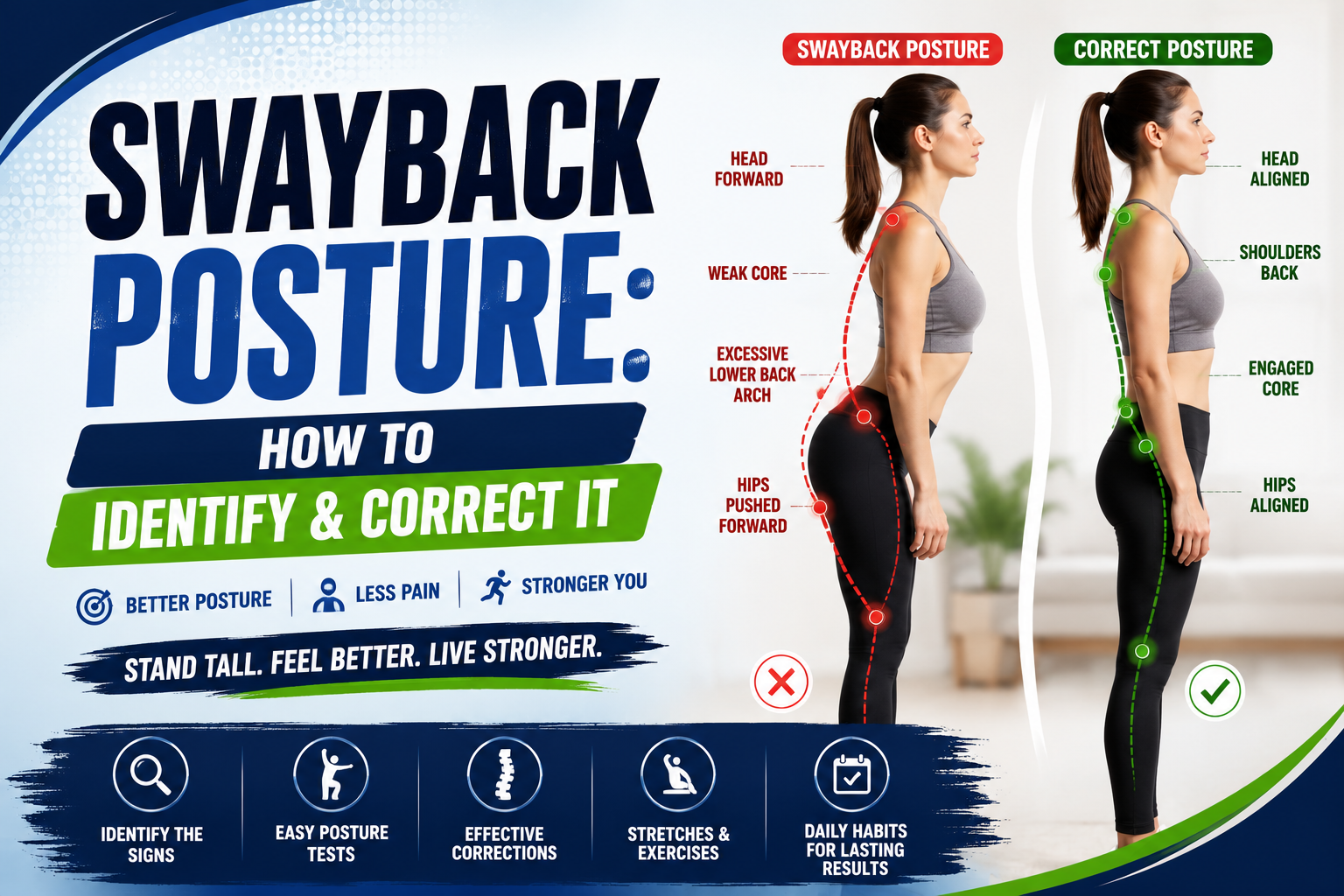
Swayback posture is a postural imbalance where the hips shift forward while the upper body leans backward. This creates excessive stress on the lower spine and changes the body’s natural alignment.
Unlike a normal standing posture, swayback posture causes:
- The pelvis to move forward
- The hips to lean in front of the ankles
- Rounded shoulders
- Tight hamstrings
- Weak core muscles
- An exaggerated curve in the lower back
Over time, this posture can affect movement efficiency and increase strain on muscles and joints.
Common Signs of Swayback Posture
Many people live with swayback posture without realizing it. Here are some of the most common signs:
1. Hips Positioned Forward
Your hips appear pushed forward while standing.
2. Rounded Shoulders
The shoulders roll inward or downward.
3. Lower Back Discomfort
Many people experience chronic lower back tightness or fatigue.
4. Tight Hamstrings
The hamstrings often become shortened and overactive.
5. Weak Core and Glutes
Weak abdominal and glute muscles contribute heavily to swayback posture.
6. Head Positioned Forward
Forward head posture often develops alongside swayback posture.
What Causes Swayback Posture?
Several lifestyle and muscular factors contribute to swayback posture.
Prolonged Sitting
Sitting for long hours weakens the glutes and core muscles while tightening the hip flexors.
Poor Standing Habits
Leaning on one hip or standing with locked knees encourages pelvic imbalance.
Weak Core Muscles
The abdominal muscles help stabilize the spine and pelvis.
Tight Hip Flexors and Hamstrings
Muscle tightness pulls the pelvis out of proper alignment.
Lack of Physical Activity
Sedentary lifestyles are one of the biggest contributors to poor posture.
Can Swayback Posture Cause Pain?
Yes. Swayback posture can place excessive stress on the:
- Lower back
- Neck
- Shoulders
- Hips
- Knees
Over time, this may lead to:
- Chronic lower back pain
- Sciatica-like symptoms
- Neck stiffness
- Hip discomfort
- Reduced mobility
- Muscle fatigue
Correcting posture early can help prevent long-term issues.
How to Identify Swayback Posture at Home
A simple wall posture test can help identify swayback posture.
Wall Test
- Stand against a wall.
- Keep your heels close to the wall.
- Observe your posture.
You may have swayback posture if:
- Your hips push significantly forward
- Your upper back rounds excessively
- Your head juts forward
- There is excessive lower back arching
You can also take side-profile photos to compare your alignment over time.
Best Exercises to Correct Swayback Posture
Correcting swayback posture requires strengthening weak muscles while stretching tight areas.
Consistency is key.
1. Glute Bridges
Glute bridges strengthen the glutes and stabilize the pelvis.
How to Do It
- Lie on your back with knees bent.
- Keep feet flat on the floor.
- Lift your hips upward.
- Squeeze your glutes at the top.
- Lower slowly.
Recommended Sets
3 sets of 12–15 reps.
2. Planks
Planks help strengthen the deep core muscles that support proper spinal alignment.
How to Do It
- Position yourself on your forearms.
- Keep your body in a straight line.
- Tighten your core.
- Hold for 20–60 seconds.
Recommended Sets
3 rounds.
3. Dead Bugs
Dead bugs improve pelvic stability and core control.
Instructions
- Lie flat on your back.
- Raise arms and legs.
- Slowly lower opposite arm and leg.
- Return and alternate sides.
4. Bird Dogs
Bird dogs improve spinal stability and posture awareness.
Instructions
- Start on hands and knees.
- Extend one arm and opposite leg.
- Hold briefly.
- Alternate sides.
5. Resistance Band Rows
Rows strengthen the upper back muscles and reduce rounded shoulders.
Benefits
- Improves posture
- Strengthens scapular muscles
- Reduces shoulder rounding
Best Stretches for Swayback Posture
Stretching tight muscles is equally important.
1. Hip Flexor Stretch
Tight hip flexors pull the pelvis forward.
How to Perform
- Kneel in a lunge position.
- Push hips forward gently.
- Hold for 30 seconds.
2. Hamstring Stretch
Tight hamstrings contribute heavily to pelvic imbalance.
Instructions
- Sit with one leg extended.
- Reach toward your toes.
- Hold gently without bouncing.
3. Chest Stretch
Rounded shoulders often tighten the chest muscles.
Benefits
- Opens chest muscles
- Improves upper-body posture
- Reduces shoulder tightness
Lifestyle Tips to Improve Swayback Posture
Exercises alone are not enough. Daily habits matter too.
Avoid Standing with Locked Knees
Keep a slight bend in your knees while standing.
Strengthen Your Core Regularly
A strong core supports healthy spinal alignment.
Improve Your Workstation Setup
Use ergonomic chairs and proper desk positioning.
Limit Excessive Sitting
Take movement breaks every 30–60 minutes.
Practice Posture Awareness
Be mindful of your posture throughout the day.
Best Amazon Affiliate Products for Swayback Posture
Using supportive posture products can help improve alignment and reinforce healthy habits.
1. Posture Corrector Brace
A posture corrector gently pulls the shoulders back and encourages proper alignment.
Benefits
- Improves posture awareness
- Reduces shoulder rounding
- Supports upper back alignment
Best For
Desk workers and beginners learning posture correction.
2. Ergonomic Office Chair
A supportive chair can significantly reduce spinal stress.
Features to Look For
- Lumbar support
- Adjustable height
- Proper seat depth
- Breathable cushioning
3. Standing Desk
Alternating between sitting and standing can reduce prolonged spinal stress.
Benefits
- Encourages movement
- Reduces sitting time
- Improves posture habits
4. Resistance Bands
Resistance bands are excellent for posture correction exercises.
Benefits
- Affordable
- Portable
- Great for upper-back strengthening
5. Foam Roller
Foam rollers help release muscle tightness and improve mobility.
Best Uses
- Upper-back mobility
- Hip release
- Hamstring relaxation
How Long Does It Take to Correct Swayback Posture?
Improvement timelines vary depending on severity and consistency.
Most people notice:
- Better posture awareness within 2–4 weeks
- Reduced discomfort within 4–8 weeks
- Significant posture improvement within 3–6 months
Consistency with exercise and posture habits is essential.
Can You Fully Fix Swayback Posture?
In many cases, yes.
Mild to moderate swayback posture often improves significantly through:
- Strength training
- Stretching
- Ergonomic improvements
- Posture awareness
- Lifestyle changes
However, severe structural issues may require professional guidance from a physical therapist or healthcare provider.
When to See a Professional
You should consult a physical therapist or doctor if you experience:
- Severe chronic pain
- Numbness or tingling
- Difficulty walking
- Progressive spinal issues
- No improvement after several months
Professional assessment can identify underlying musculoskeletal problems.
Final Thoughts
Swayback posture is more than just standing incorrectly. It’s a full-body muscular imbalance that can affect your spine, hips, shoulders, and overall movement quality.
The good news is that with the right combination of strengthening exercises, stretching routines, ergonomic improvements, and supportive posture products, most people can significantly improve their posture naturally.
Consistency matters far more than perfection.
Start with small daily improvements, stay active, strengthen your core, and pay attention to how you stand and sit throughout the day.
Over time, these simple habits can help reduce pain, improve posture, and support long-term spinal health.
Frequently Asked Questions
Is swayback posture serious?
Mild swayback posture is common, but severe cases can contribute to chronic pain and movement dysfunction.
Can exercise fix swayback posture?
Yes. Strengthening weak muscles and stretching tight areas can significantly improve posture.
What muscles are weak in swayback posture?
Common weak muscles include:
- Glutes
- Deep core muscles
- Upper back muscles
Are posture correctors effective?
They can help improve posture awareness when combined with exercise and stretching.
How should I sleep with swayback posture?
Sleeping on your back with knee support or on your side with a pillow between the knees may help maintain spinal alignment.