Introduction
Table of Contents
Spine posture can be confusing, especially when terms like kyphosis, lordosis, and scoliosis are used together. Many people simply say they have “bad posture,” but different spine curves can affect the body in different ways. Some curves happen naturally and are part of a healthy spine, while others may become exaggerated, painful, or noticeable in daily posture.
The human spine is not supposed to be perfectly straight from the side. A normal spine has natural curves that help absorb shock, support the head, and keep the body balanced. However, when these curves become too extreme or curve in the wrong direction, they can affect how you stand, sit, walk, and move.
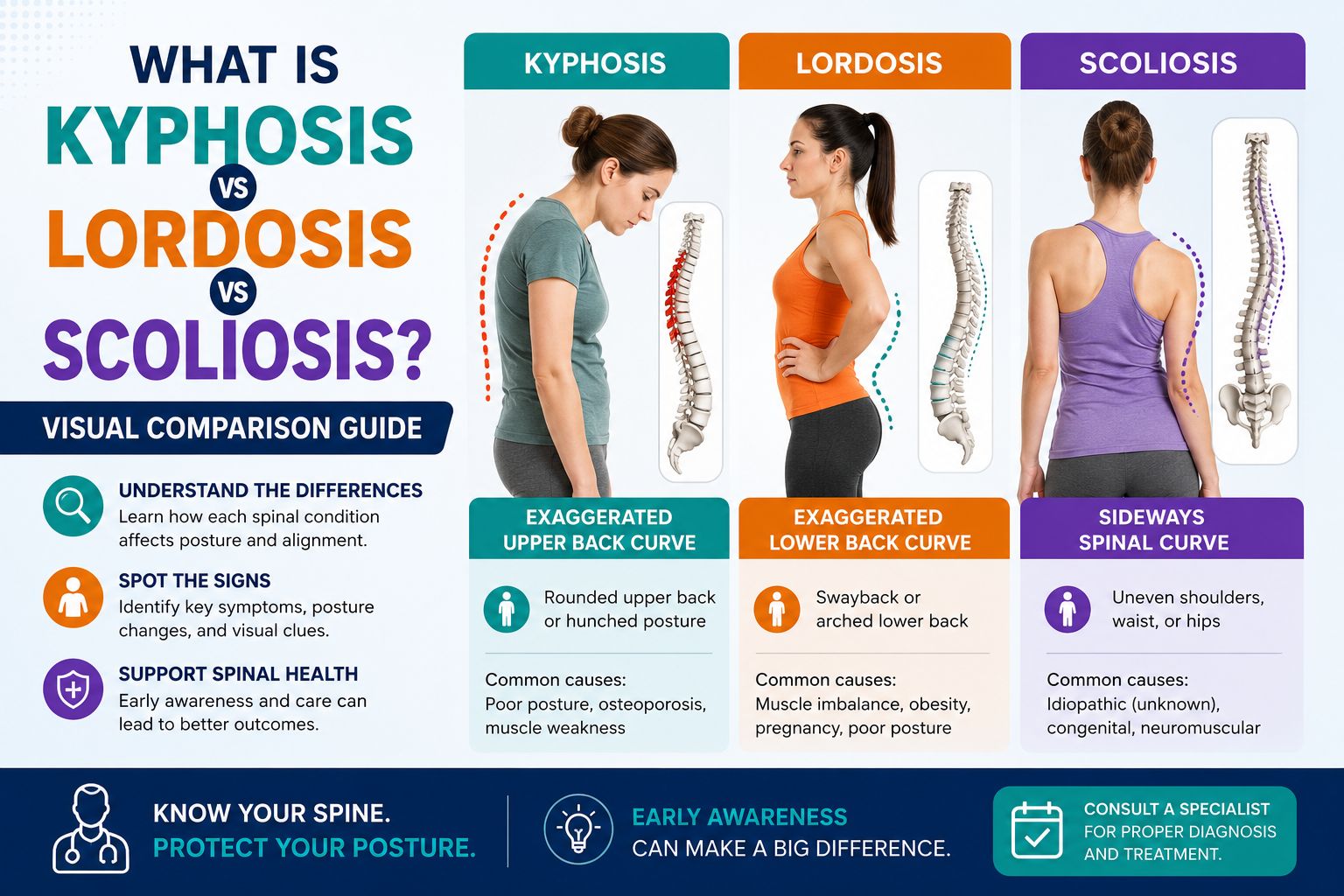
The three most common posture-related spine curve terms are kyphosis, lordosis, and scoliosis. Kyphosis usually refers to excessive rounding of the upper back. Lordosis usually refers to an exaggerated inward curve of the lower back. Scoliosis refers to a sideways curve of the spine, often with rotation.
In this 2026 updated visual comparison guide, we explain the difference between kyphosis, lordosis, and scoliosis in simple language. We will also cover common signs, possible causes, treatment options, when to see a doctor, and helpful posture support products that may support better daily habits.
Medical Note: This article is for educational purposes only. Spine conditions should be diagnosed by a qualified healthcare professional. If you have pain, numbness, weakness, breathing issues, visible spinal changes, or worsening posture, consult a doctor or physical therapist.
Quick Visual Comparison: Kyphosis vs Lordosis vs Scoliosis
| Condition | Main Curve Direction | Common Appearance | Usually Affects | Simple Description |
|---|---|---|---|---|
| Kyphosis | Forward rounding | Rounded upper back or hunched posture | Upper back/thoracic spine | Upper back curves outward too much |
| Lordosis | Inward curve | Swayback or exaggerated lower-back arch | Lower back/lumbar spine | Lower back curves inward too much |
| Scoliosis | Sideways curve with rotation | Uneven shoulders, uneven hips, curved spine | Any part of spine | Spine curves sideways like “S” or “C” |
A simple way to remember the difference:
Kyphosis: upper back rounds forward.
Lordosis: lower back arches inward.
Scoliosis: spine curves sideways.
What Is Kyphosis?
Kyphosis is a condition where the upper back curves outward more than normal. It is often described as a rounded upper back, hunched posture, or “roundback.” A small amount of kyphosis in the upper back is normal, but excessive kyphosis can make the shoulders round forward and the upper back look noticeably curved.
Kyphosis is often seen in people who sit with poor posture for long hours, especially while using laptops, phones, or desks that are not ergonomically set up. However, kyphosis can also be related to structural spine problems, aging, osteoporosis, spinal fractures, congenital conditions, or Scheuermann’s kyphosis in adolescents.
Postural kyphosis is usually more flexible and may improve with posture training, strengthening exercises, stretching, and better desk habits. Structural kyphosis may need medical evaluation and, in some cases, bracing or other treatment.
Common Signs of Kyphosis
Common signs may include:
- Rounded upper back
- Forward head posture
- Shoulders rolling forward
- Upper-back stiffness
- Neck or shoulder tension
- Tired posture after sitting
- Difficulty standing fully upright
- Back discomfort after long desk work
In mild cases, kyphosis may be more of a posture concern. In more severe cases, it can cause pain, stiffness, limited mobility, or difficulty with daily activities.
Helpful Products for Kyphosis Support
 Posture products cannot cure kyphosis, but they may help with posture awareness and daily support when used correctly. Useful products may include:
- Posture corrector braces
- Upper-back posture trainers
- Resistance bands for upper-back strengthening
- Ergonomic office chairs
- Lumbar support pillows
- Foam rollers for thoracic mobility
- Laptop stands and monitor risers
Recommended Product Type: Adjustable posture corrector or resistance bands
Check Price on Amazon
What Is Lordosis?
Lordosis refers to the natural inward curve of the neck and lower back. However, when people talk about lordosis as a posture problem, they usually mean excessive lumbar lordosis, also called swayback. This happens when the lower back arches inward too much.
Lordosis can make the abdomen appear pushed forward and the buttocks appear more prominent. Some people with excessive lordosis may feel lower-back tightness, hip flexor tightness, or discomfort when standing for long periods.
Lordosis may be related to posture habits, weak core muscles, tight hip flexors, pregnancy, obesity, muscle imbalances, certain spine conditions, or structural differences. It can also occur when the pelvis tilts forward too much, which is often called anterior pelvic tilt.
Common Signs of Lordosis
Common signs may include:
- Deep inward curve in the lower back
- Pelvis tilting forward
- Belly appearing pushed forward
- Lower-back tightness
- Hip flexor tightness
- Back discomfort after standing
- Difficulty keeping a neutral spine
- Gap between lower back and floor when lying down
Not every lower-back curve is a problem. The lower back naturally curves inward. The concern is when the curve becomes excessive, uncomfortable, or linked to poor movement patterns.
Helpful Products for Lordosis Support
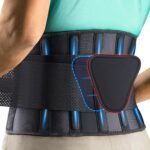 For lordosis, the focus is often on core strength, hip mobility, and lower-back support. Helpful products may include:
- Lumbar support pillows
- Ergonomic office chairs
- Core exercise mats
- Resistance bands
- Yoga mats for posture practice
- Foam rollers
- Adjustable standing desks
Recommended Product Type: Lumbar support pillow or posture-focused yoga mat
Check Price on Amazon
What Is Scoliosis?
Scoliosis is a sideways curve of the spine. Instead of appearing straight when viewed from the back, the spine may curve in a “C” or “S” shape. Scoliosis often also includes rotation, which means the spine twists as it curves.
Scoliosis is most commonly diagnosed in children and teenagers, especially during growth spurts, but adults can also develop scoliosis or experience symptoms from an existing curve. Some cases are mild and only need monitoring. Others may need bracing, physical therapy, or surgery depending on severity, age, growth, symptoms, and curve progression.
Unlike posture-related slouching, scoliosis is not simply caused by sitting badly. Many cases are idiopathic, meaning the exact cause is unknown. Because scoliosis can progress during growth, professional diagnosis and monitoring are important.
Common Signs of Scoliosis
Common signs may include:
- Uneven shoulders
- One shoulder blade sticking out more
- Uneven waistline
- One hip appearing higher
- Body leaning to one side
- Clothes hanging unevenly
- Visible sideways spine curve
- Back pain in some cases
- Rib hump when bending forward
If scoliosis is suspected, a healthcare professional may use a physical exam and imaging tests to measure the spinal curve.
Helpful Products for Scoliosis Support
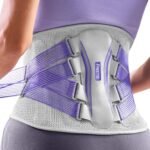 Scoliosis should not be self-treated with random posture braces. Medical bracing for scoliosis is different from general posture correctors and should be prescribed by a professional when needed.
However, some supportive products may help with comfort, exercise, and posture-friendly habits:
- Physical therapy exercise bands
- Yoga or exercise mats
- Lumbar pillows
- Ergonomic chairs
- Foam rollers
- Heat pads for muscle tension
- Doctor-recommended braces only if prescribed
Recommended Product Type: Exercise bands or ergonomic support accessories
Check Price on Amazon
Kyphosis vs Lordosis vs Scoliosis: Main Differences
The easiest way to compare these three conditions is by looking at the direction of the curve.
Kyphosis is usually seen from the side. The upper back rounds outward too much, creating a hunched or rounded appearance.
Lordosis is also seen from the side. The lower back curves inward too much, creating a swayback posture.
Scoliosis is usually seen from the front or back. The spine curves sideways and may rotate, creating uneven shoulders, hips, or waistline.
Here is another simple comparison:
| Feature | Kyphosis | Lordosis | Scoliosis |
| View Where It Is Most Noticeable | Side view | Side view | Back/front view |
| Curve Type | Excessive outward curve | Excessive inward curve | Sideways curve |
| Common Area | Upper back | Lower back | Thoracic or lumbar spine |
| Posture Look | Hunched back | Swayback | Uneven body alignment |
| Common Focus | Upper-back extension | Core and hip balance | Medical monitoring and curve management |
| Can Be Postural? | Yes, sometimes | Yes, sometimes | Usually structural or medical |
| Needs Diagnosis? | If painful or severe | If painful or severe | Yes, especially in children/teens |
What Causes These Spine Curves?
There is no single cause for all spinal curve problems. Causes can vary depending on age, body structure, posture habits, medical history, and lifestyle.
Possible Causes of Kyphosis
Kyphosis may be caused by poor posture, weak upper-back muscles, tight chest muscles, Scheuermann’s disease, osteoporosis, spinal fractures, aging, congenital spine problems, or degenerative changes.
Possible Causes of Lordosis
Lordosis may be linked to anterior pelvic tilt, weak core muscles, tight hip flexors, obesity, pregnancy, poor posture habits, certain spine conditions, or muscle imbalance.
Possible Causes of Scoliosis
Scoliosis may be idiopathic, congenital, neuromuscular, degenerative, or related to other medical conditions. In many adolescent cases, the exact cause is unknown.
Because scoliosis can progress, especially in growing children, it is important not to rely only on posture exercises or posture products.
Can Posture Correctors Help?
Posture correctors may help with awareness, but they are not a cure for kyphosis, lordosis, or scoliosis.
For postural kyphosis or slouching, a posture corrector may remind the shoulders to stay back. For lordosis, lumbar support and core training may be more useful than shoulder braces. For scoliosis, a general posture corrector should not replace medical advice.
A posture corrector is best used as a short-term reminder tool. It should be combined with exercises, stretching, movement breaks, and ergonomic changes.
Best Support Products to Consider
| Product Type | Best For |
| Posture corrector brace | Slouching and rounded shoulders |
| Resistance bands | Upper-back and shoulder strengthening |
| Lumbar support pillow | Lower-back support during sitting |
| Yoga mat | Posture, stretching, and mobility exercises |
| Foam roller | Thoracic mobility and muscle release |
| Laptop stand | Reducing forward head posture |
| Ergonomic chair | Better desk posture support |
Best Posture Support Product CTA:
Check Price on Amazon: [Insert Amazon Affiliate Link]
Exercises That May Support Better Posture
Exercise should be personalized, especially if you have pain or a diagnosed spine condition. However, many people benefit from gentle posture-focused movements.
For kyphosis or rounded shoulders, common exercises may include:
- Band pull-aparts
- Face pulls
- Wall angels
- Thoracic extensions
- Chest stretches
- Scapular retractions
For lordosis or swayback posture, useful exercises may include:
- Dead bugs
- Pelvic tilts
- Glute bridges
- Hip flexor stretches
- Planks
- Core stabilization exercises
For scoliosis, exercises should be guided by a professional, especially if the curve is moderate or severe. Scoliosis-specific physical therapy may be recommended in some cases.
When Should You See a Doctor?
You should consider seeing a doctor, physical therapist, or spine specialist if you notice:
- Visible spine curve
- Uneven shoulders or hips
- Back pain that does not improve
- Numbness, tingling, or weakness
- Difficulty breathing
- Worsening posture
- Child or teen showing signs of scoliosis
- Severe rounding of the upper back
- Lower-back curve causing pain
- Difficulty walking, standing, or moving normally
Early evaluation can help determine whether the curve is postural, structural, mild, progressive, or related to another condition.
Buying Guide: Best Products for Posture and Spine Support
When buying posture support products, focus on comfort, adjustability, and realistic use.
If you have rounded shoulders or mild slouching, an adjustable posture corrector may help you stay aware during desk work. If you have lower-back discomfort, a lumbar support pillow may be more useful. If you want to build strength, resistance bands are one of the best low-cost tools. If you sit all day, a monitor riser or laptop stand can reduce forward head posture.
Avoid buying any product that promises to “cure” scoliosis, permanently fix spine curves, or replace medical care. Support products can help comfort and habits, but diagnosis and treatment should come from qualified professionals.
Final Verdict
Kyphosis, lordosis, and scoliosis are three different types of spinal curves. Kyphosis usually means excessive rounding of the upper back. Lordosis usually means an exaggerated inward curve of the lower back. Scoliosis means a sideways spinal curve, often with rotation.
The best way to remember the difference is simple: kyphosis rounds forward, lordosis arches inward, and scoliosis curves sideways.
For mild posture issues, supportive products like posture correctors, resistance bands, lumbar pillows, yoga mats, foam rollers, and ergonomic desk tools may help improve awareness and comfort. But these products should be used wisely. They are not medical cures.
If you suspect scoliosis, have persistent pain, notice visible spine changes, or have symptoms like numbness or weakness, it is best to get a professional evaluation. The right approach may include monitoring, exercises, physical therapy, bracing, lifestyle changes, or medical treatment depending on the condition.
FAQs About Kyphosis, Lordosis, and Scoliosis
What is the main difference between kyphosis, lordosis, and scoliosis?
Kyphosis is excessive rounding of the upper back, lordosis is excessive inward curve of the lower back, and scoliosis is a sideways curve of the spine.
Is kyphosis the same as bad posture?
Not always. Mild postural kyphosis can be related to slouching, but structural kyphosis may involve spinal changes and should be evaluated by a professional.
Is lordosis normal?
Some lordosis is normal in the neck and lower back. It becomes a concern when the curve is excessive, painful, or affects movement.
Can scoliosis be fixed with posture correctors?
No. General posture correctors do not fix scoliosis. Scoliosis should be diagnosed and managed by a healthcare professional.
Which condition causes a hunched back?
Kyphosis is most commonly associated with a rounded or hunched upper back.
Which condition causes swayback posture?
Excessive lumbar lordosis is commonly associated with swayback posture.
Can exercises help spine posture?
Exercises may help improve posture, strength, and mobility, especially for posture-related issues. Diagnosed spinal conditions should be managed with professional guidance.
Should I buy a posture corrector for spine curves?
A posture corrector may help with posture awareness, but it should not replace medical diagnosis or treatment. For scoliosis or severe curves, consult a professional first.