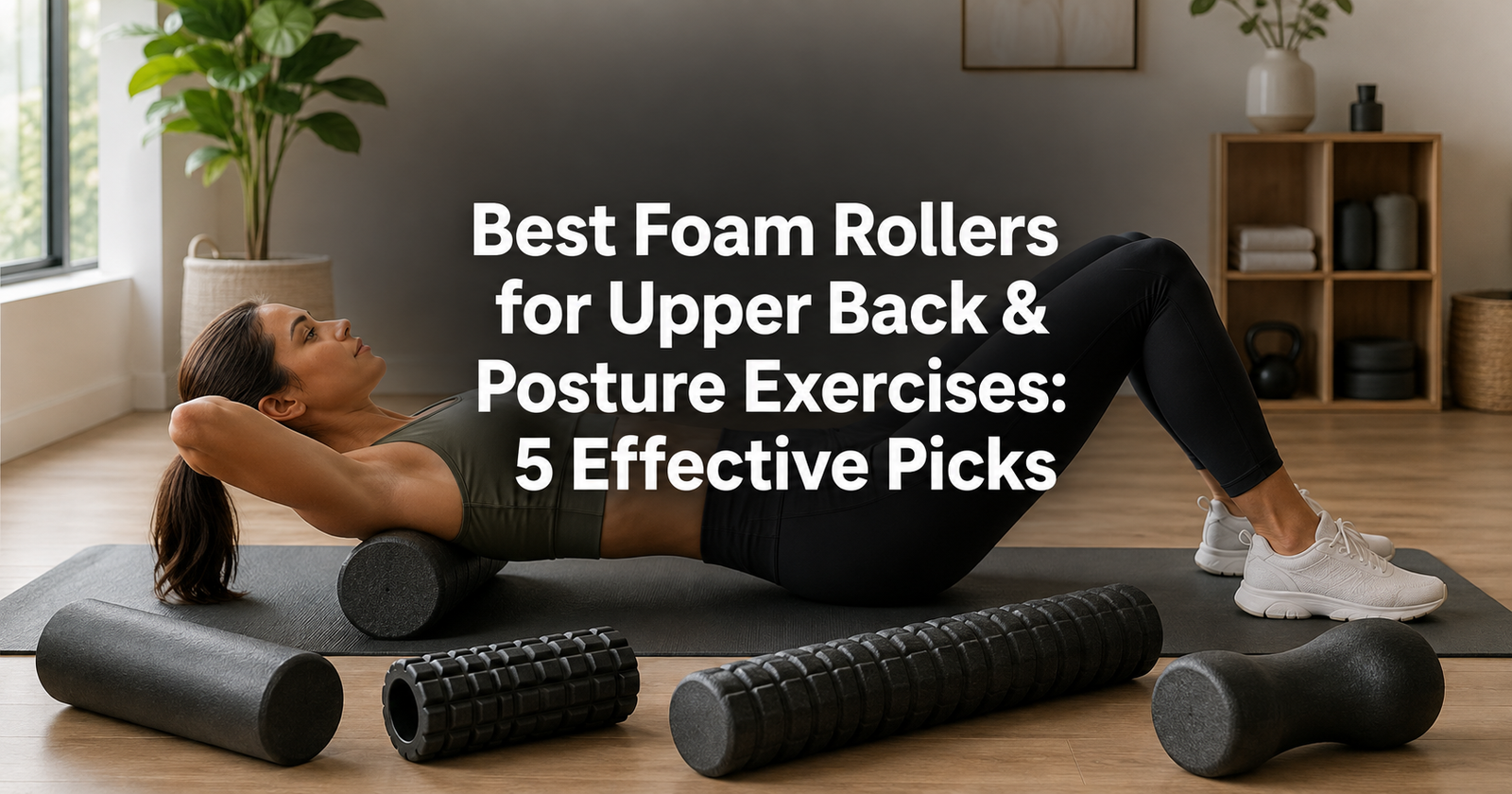
Sitting at a computer, looking down at a phone, driving, and repeating the same workouts can leave your upper back feeling stiff, tired, and restricted. A foam roller offers an affordable way to add gentle self-massage and thoracic-mobility exercises to your daily routine.
The best foam rollers for upper back and posture exercises provide enough support to help you feel stable while allowing you to control the amount of pressure. They can be used for upper-back extensions, chest-opening movements, shoulder-mobility drills, and post-workout recovery.
However, a foam roller cannot permanently “fix” poor posture by itself. Posture is influenced by mobility, muscle strength, workstation setup, activity level, and daily habits. Foam rolling works best when combined with strengthening exercises, regular movement breaks, and a more ergonomic working environment.
To help you choose the right option, we compared roller density, length, surface design, durability, portability, comfort, and suitability for common posture exercises.
Quick Comparison of the Best Foam Rollers
Table of Contents
| Product | Best For | Length Options | Surface | Density |
|---|---|---|---|---|
| TriggerPoint GRID 1.0 | Best overall | 13 inches | Multi-density grid | Medium-firm |
| OPTP PRO-ROLLER Soft | Beginners and posture exercises | 18 or 36 inches | Smooth | Soft |
| Rollga Standard | Contoured upper-back support | About 18 inches | Ribs and grooves | Medium |
| RumbleRoller Original | Deep-tissue pressure | 12, 22, or 31 inches | Flexible bumps | Firm |
| LuxFit Premium High Density | Budget-friendly support | 12, 18, or 36 inches | Smooth | Extra-firm |
Product dimensions, colors, prices, and availability may change. Check the selected variation before placing your order.
1. TriggerPoint GRID 1.0 Foam Roller — Best Overall
The TriggerPoint GRID 1.0 earns our best overall recommendation because it offers an excellent balance of pressure, portability, and durability.
Its 13-inch body is compact enough to carry in a gym bag but wide enough for most upper-back and thoracic rolling exercises. A rigid hollow core helps the roller maintain its shape, while the surrounding EVA foam creates a more comfortable surface.
The GRID pattern contains different zones that vary the pressure across the roller. It provides more stimulation than a completely smooth roller without feeling as aggressive as models covered in tall, rigid knobs.
This balanced design makes the TriggerPoint GRID suitable for the upper back, lats, glutes, hamstrings, and calves. It is a practical choice for people who want one roller for posture exercises and general workout recovery.
The roller measures approximately 13 x 5.5 inches and can reportedly support up to 300 pounds. Its compact design does require slightly more balance than a 36-inch roller. Beginners who want to lie lengthwise on their roller may prefer the longer OPTP model.
 Pros:
Pros:
- Balanced medium-firm pressure
- Durable hollow-core construction
- Compact and travel-friendly
- Textured but not overly aggressive
- Water- and sweat-resistant exterior
- Suitable for multiple muscle groups
Cons:
- Less stable than a full-length roller
- Texture may feel intense on a sensitive back
Best for: Anyone wanting one portable roller for upper-back mobility and whole-body recovery.
2. OPTP PRO-ROLLER Soft — Best for Beginners
If high-density rollers make you tense your muscles instead of relaxing them, consider the OPTP PRO-ROLLER Soft.
This professional-quality roller uses soft-density EVA foam to provide gentler pressure. Its forgiving surface makes it particularly suitable for beginners, sensitive users, and people performing slow mobility or posture exercises.
The 36 x 6-inch version is especially useful for posture work. You can lie lengthwise on it with your head, upper back, and pelvis supported. From this position, you can perform chest-opening stretches, breathing exercises, and controlled arm movements without constantly struggling to maintain your balance.
You can also position it horizontally underneath your upper back for gentle thoracic extensions.
OPTP offers the PRO-ROLLER Soft in several configurations, including an 18-inch roller, a 36-inch full roller, and a 36-inch half roller. Make sure you select the correct variation before purchasing.
The softer surface does not deliver the concentrated pressure that experienced users may want for stubborn muscle tension. The 36-inch version also requires more storage space. Nevertheless, it is one of the most comfortable options for restorative exercises.
 Pros:
Pros:
- Gentle soft-density construction
- Comfortable for beginners
- Full-length option supports the entire torso
- Excellent for chest-opening exercises
- Durable EVA foam
- Smooth and easy-to-control surface
Cons:
- May feel too soft for experienced users
- Full-size model is difficult to travel with
Best for: Beginners, sensitive users, gentle chest openers, and supported posture exercises.
3. Rollga Standard Foam Roller — Best Contoured Design
Traditional cylindrical rollers may place uncomfortable pressure on the spine and other bony areas. The Rollga Standard addresses this problem with its distinctive contoured profile.
Instead of using one completely flat rolling surface, it features alternating ribs and grooves. Its channels are designed to reduce direct compression on the spine and bones while allowing the raised sections to contact the surrounding muscles.
This shape makes the Rollga particularly appealing for upper-back exercises. When positioned correctly, it can direct pressure toward the muscles alongside the spinal column instead of concentrating it directly on the vertebrae.
The Standard is Rollga’s medium-density model. It provides a more approachable level of pressure than the company’s hard-density PRO model. Its compact size also makes it convenient to store or carry to the gym.
The unusual shape requires some practice. It feels noticeably different from a traditional smooth cylinder, and careful positioning is necessary to align the grooves comfortably.
It is also less suitable for exercises that require you to lie lengthwise on the roller. Choose a traditional 36-inch model if full-body support is a priority.
 Pros:
Pros:
- Contours help reduce pressure on bones
- Medium density balances comfort and stimulation
- Compact and portable
- Can target muscles around the spine
- Suitable for upper-back and lower-body exercises
Cons:
- Contoured shape takes time to learn
- Not ideal for lengthwise balance exercises
Best for: Users who dislike the feeling of a traditional cylinder pressing against the spine.
4. RumbleRoller Original — Best for Deep-Tissue Pressure
The RumbleRoller Original is designed for experienced users who want a deeper and more targeted massage sensation.
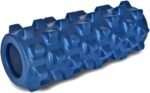
Its surface features tall but flexible bumps that contact broad muscular areas such as the upper back and lats. The spaces between the bumps allow soft tissue to move differently than it would against a smooth, flat cylinder.
The manufacturer offers this roller in 12-, 22-, and 31-inch lengths. The 12-inch version is suitable for travel and targeted rolling, while the 22-inch model balances portability and coverage. The 31-inch version provides the greatest stability for floor exercises.
All three sizes have a 6-inch diameter. The roller uses a high-density EVA core with molded outer bumps designed to retain their shape. It is also listed as latex-free.
This is not the most suitable option for beginners or people who are highly sensitive to pressure. Start slowly and use only as much body weight as you can comfortably control.
The Original model is already firm enough for most experienced users. The company describes its Xtra Firm version as an advanced option rather than a starting point.
 Pros:
Pros:
- Provides concentrated muscular pressure
- Flexible bumps feel less blunt than plastic spikes
- Available in three useful lengths
- Suitable for the upper back and lats
- Durable solid-core construction
- Includes a lifetime satisfaction warranty
Cons:
- May feel too intense for beginners
- Not ideal for relaxing supported stretches
- More expensive than a basic smooth roller
Best for: Experienced users targeting tight upper-back and lat muscles.
5. LuxFit Premium High Density Foam Roller — Best Budget Pick
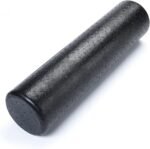
The LuxFit Premium High Density Foam Roller is a simple and affordable option for users who prefer a firm, smooth surface.
It is commonly available in 12-, 18-, and 36-inch sizes. The smaller versions are easy to transport, while the 36-inch model offers better stability for posture-focused floor exercises.
When used lengthwise, the full-size roller can support your head, upper back, and pelvis. This position is useful for chest-opening movements, breathing exercises, arm sweeps, and gentle balance work.
Its dense polypropylene foam resists deformation and works well for users who already know they prefer firm support. The smooth surface also makes it easier to perform controlled movements without raised knobs catching on clothing.
Remember that higher density does not automatically mean better results. An extra-firm roller may cause sensitive users to tense their muscles. Choose this product for its affordable price and firm support—not because maximum pressure is necessary.
 Pros:
Pros:
- Affordable and straightforward design
- Multiple lengths available
- Firm, supportive construction
- Smooth surface allows controlled movement
- Full-length version works for posture exercises
Cons:
- May be uncomfortable for beginners
- Does not include channels for the spine
- Basic design provides less targeted pressure
Best for: Budget-conscious users who already prefer a firm, smooth roller.
How to Choose a Foam Roller for Your Upper Back
Choose a Comfortable Density
A foam roller should create noticeable but manageable pressure. Soft foam is generally more approachable for beginners and sensitive users.
Medium-density foam balances comfort and massage pressure, while firm or textured rollers may suit experienced users. If the pressure causes you to hold your breath or tighten your shoulders, choose a softer option.
Match the Length to Your Exercises
A 12- to 18-inch roller is portable and works well when placed horizontally underneath the thoracic area.
A 30- to 36-inch roller offers greater stability and can support the head, back, and pelvis when used lengthwise. Choose a longer model if your routine includes chest openers, arm sweeps, breathing exercises, or balance-based posture drills.
Consider the Surface Design
Smooth rollers distribute pressure evenly and are usually easier for beginners to control.
Textured rollers concentrate pressure and may feel more stimulating on broad back muscles. Contoured rollers use channels to reduce contact with the spine and other bony areas.
No single surface is best for everyone. Choose according to your pressure tolerance and intended exercises.
How Foam Rolling Supports a Posture Routine
Foam rolling should be viewed as preparation rather than a complete posture program. It may temporarily improve mobility and help relieve the sensation of muscular tightness, but it does not replace progressive strengthening.
After rolling, use the available movement with exercises that strengthen your upper back, shoulder stabilizers, and core.
A simple routine might include:
- Thirty to sixty seconds of controlled thoracic rolling.
- Five gentle upper-back extensions over the roller.
- Eight to ten wall slides.
- Ten to fifteen resistance-band rows.
- A short chest stretch.
- Regular movement breaks throughout the working day.
These active habits help turn a temporary feeling of looseness into better movement capacity and postural endurance.
How to Foam Roll Your Upper Back Safely
Place the roller horizontally underneath your upper or middle back. Support your head with your hands and keep your neck relaxed.
Lift your hips slightly and use your legs to move your torso slowly across the roller. Keep the range of motion controlled and focus on the broad muscular area surrounding your shoulder blades.
Avoid aggressively grinding across the spine or other prominent bones. Do not use a foam roller directly on your neck or lower back.
Stop immediately if you experience sharp pain, numbness, tingling, dizziness, or pain radiating into your arm.
Consult a qualified healthcare professional before foam rolling if you have osteoporosis, osteopenia, a recent fracture, recent surgery, an acute injury, impaired sensation, a bleeding disorder, or another condition that may be affected by pressure.
Foam rolling should complement—not delay—professional assessment of persistent or worsening pain.
Frequently Asked Questions
Can a foam roller correct poor posture?
A foam roller cannot correct poor posture by itself. It may help improve thoracic mobility and reduce temporary muscular tension, but long-term improvement also requires strength training, regular movement, better workstation ergonomics, and healthier daily habits.
Is a smooth or textured roller better?
A smooth, soft-to-medium roller is generally better for beginners. A textured roller provides more concentrated pressure for experienced users. The right choice is the one that allows you to move slowly without bracing or experiencing sharp pain.
What roller length is best for posture exercises?
A 36-inch roller is the most versatile option for exercises performed lengthwise because it can support the head, spine, and pelvis. A compact 12- to 18-inch roller is more portable and adequate for most horizontal thoracic exercises.
How long should I foam roll my upper back?
Start with approximately 30 to 60 seconds of slow, controlled rolling. Longer sessions and greater pressure are not necessarily more effective. Increase the duration gradually only if the movement remains comfortable.
Can I use a foam roller every day?
Some people tolerate short, gentle daily sessions. However, you should avoid repeatedly applying heavy pressure to sore or irritated tissue. Reduce the frequency if you notice bruising, increased tenderness, or worsening discomfort.
Final Verdict
The TriggerPoint GRID 1.0 is the best foam roller for upper back and posture exercises for most people. It combines durable construction, moderate texture, and a portable design.
Choose the OPTP PRO-ROLLER Soft if comfort and full-length support are your main priorities. The Rollga Standard is a compelling alternative if you want channels designed to reduce pressure on the spine.
Experienced users may prefer the deeper sensation offered by the RumbleRoller Original, while the LuxFit Premium High Density Foam Roller delivers firm support at a budget-friendly price.
Regardless of which model you select, use gentle pressure and combine foam rolling with strengthening exercises and better movement habits. Consistency and control matter much more than buying the hardest roller available.