If you work at a desk, use a laptop for long hours, or spend most of your day looking down at a phone, you may have noticed tight shoulders, neck stiffness, upper-back discomfort, or a rounded posture. These problems are common among office workers, remote workers, students, gamers, and anyone who spends long periods sitting in front of a screen.
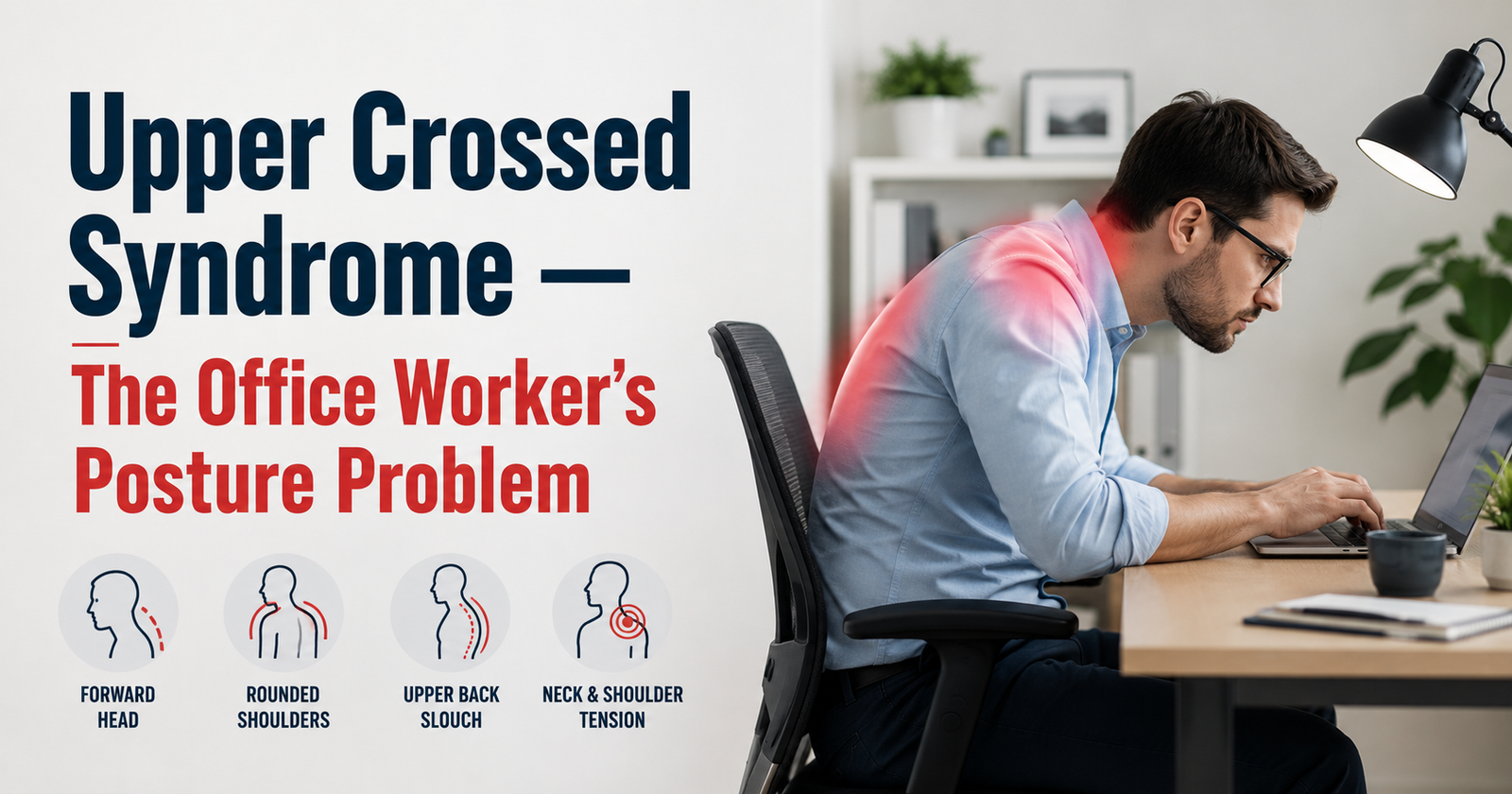
One posture issue often linked with this modern work lifestyle is Upper Crossed Syndrome. It is a muscle imbalance pattern that usually involves tight muscles in the chest and neck, combined with weak muscles in the upper back and deep neck area. Over time, this imbalance can create forward head posture, rounded shoulders, tight traps, neck pain, and a hunched upper back.
Upper Crossed Syndrome does not happen overnight. It often develops slowly from repeated daily habits. Sitting with your head forward, working on a low laptop screen, reaching toward a keyboard, and not taking movement breaks can all make the problem worse.
The good news is that many office-related posture problems can improve with better awareness, stretching, strengthening exercises, ergonomic changes, and supportive products. In this 2026 updated guide, we explain what Upper Crossed Syndrome is, why office workers are at risk, how to fix it, and the best products that may help you build a healthier posture routine at home or work.
Medical Note: This article is for educational purposes only. If you have severe pain, numbness, tingling, weakness, headaches, dizziness, injury, or symptoms that do not improve, consult a doctor or physical therapist.
What Is Upper Crossed Syndrome?
Table of Contents
Upper Crossed Syndrome, often called UCS, is a posture-related muscle imbalance affecting the neck, shoulders, chest, and upper back. It is called “crossed” because the tight and weak muscles form a cross-like pattern across the upper body.
In many cases, the tight muscles include:
- Upper trapezius
- Levator scapulae
- Pectoralis major and minor
- Neck extensor muscles
The weaker or lengthened muscles often include:
- Deep neck flexors
- Lower trapezius
- Middle trapezius
- Rhomboids
- Serratus anterior
This imbalance can pull the head forward, round the shoulders, tighten the chest, and make the upper back look hunched. For office workers, this often happens because the body spends too much time in a forward-facing, seated position.
A simple way to understand it is this: your front body becomes tight, while your upper-back stabilizing muscles become weak. The result is a posture that looks collapsed forward.
Common Signs of Upper Crossed Syndrome
You may have signs of Upper Crossed Syndrome if you notice:
- Forward head posture
- Rounded shoulders
- Tight chest muscles
- Neck stiffness
- Upper-back pain
- Shoulder tension
- Tight upper traps
- Headaches from neck tension
- Shoulder blade discomfort
- Difficulty sitting upright for long periods
- Hunched posture while working
- Reduced shoulder mobility
- Feeling like your head is always leaning forward
Some people also feel pain between the shoulder blades or at the base of the skull. Others may not feel pain but notice their posture looks worse in side-view photos.
Not every rounded shoulder posture means you have Upper Crossed Syndrome, but if you sit for long hours and regularly feel neck or shoulder tightness, this pattern may be part of the problem.
Why Office Workers Are at Higher Risk
Office workers are especially vulnerable because modern work habits often place the body in the exact position that encourages Upper Crossed Syndrome.
1. Long Hours of Sitting
Sitting for many hours can reduce movement and make muscles stiff. If your sitting posture is poor, the neck, shoulders, and chest may adapt to that position over time.
2. Laptop Screens Are Too Low
A laptop screen often sits below eye level. This forces the head to tilt downward and forward. Over time, this can contribute to “tech neck” and forward head posture.
3. Rounded Shoulders While Typing
When your keyboard and mouse are too far away, your arms reach forward. This can round the shoulders and tighten the chest.
4. Weak Upper-Back Muscles
Many office workers do not train the upper back enough. Without strong shoulder blade stabilizers, it becomes harder to hold an upright posture.
5. Phone and Tablet Use
Looking down at phones and tablets adds more forward-head stress. Even short periods throughout the day can add up.
6. Lack of Movement Breaks
The body is designed to move. Sitting in one position for hours can make posture muscles tired and tight.
Upper Crossed Syndrome vs Normal Bad Posture
Bad posture is a general term. Upper Crossed Syndrome is more specific. It refers to a repeated muscle imbalance pattern: tight chest and neck muscles combined with weak upper-back and deep neck muscles.
Someone may slouch occasionally without having a major muscle imbalance. But if the same posture becomes your default position and causes tightness, pain, or movement restriction, it may develop into a more consistent pattern like Upper Crossed Syndrome.
The best approach is not just to “sit straight.” Instead, you need to stretch tight muscles, strengthen weak muscles, and fix the desk setup that keeps pulling your body forward.
Best Exercises for Upper Crossed Syndrome
Exercises for Upper Crossed Syndrome usually focus on two goals: stretching what is tight and strengthening what is weak.
1. Chin Tucks
Chin tucks help strengthen the deep neck flexors and reduce forward head posture. Sit or stand tall. Gently pull your chin straight backward, as if making a double chin. Hold for a few seconds and release.
Best For: Forward head posture and tech neck.
2. Doorway Chest Stretch
Stand in a doorway with your forearms on the frame. Step forward gently until you feel a stretch across your chest. This helps open tight pectoral muscles.
Best For: Rounded shoulders and tight chest.
3. Band Pull-Aparts
Hold a resistance band in front of your chest. Pull the band apart while squeezing your shoulder blades together. Move slowly and avoid shrugging.
Best For: Upper-back strengthening and shoulder posture.
4. Banded Rows
Anchor a resistance band in front of you. Pull the handles or band toward your ribs while squeezing your shoulder blades back and down.
Best For: Middle back and posture support.
5. Wall Angels
Stand with your back against a wall. Keep your ribs down and slide your arms up and down like a snow angel. This helps improve shoulder mobility and posture control.
Best For: Shoulder mobility and upper-back awareness.
6. Face Pulls
Use a resistance band anchored at face height. Pull the band toward your face while keeping elbows high and squeezing the upper back.
Best For: Rear delts, traps, and shoulder blade control.
7. Thoracic Extensions
Use a foam roller across your upper back. Gently extend over the roller to improve upper-back mobility.
Best For: Stiff upper back and hunched posture.
For best results, do these exercises consistently, 3 to 5 times per week. Move slowly and focus on control rather than heavy resistance.
Best Products to Help With Upper Crossed Syndrome
Products cannot cure Upper Crossed Syndrome by themselves, but the right tools can support your posture routine, exercise habits, and desk setup.
1. Resistance Bands — Best for Upper-Back Strengthening
 Resistance bands are one of the best products for Upper Crossed Syndrome because they help strengthen the muscles that pull your shoulders back and support your upper spine.
You can use bands for pull-aparts, rows, face pulls, external rotations, and shoulder mobility drills. They are affordable, lightweight, and easy to use at home or in the office.
Why It Helps: Strengthens weak upper-back muscles and improves shoulder blade control.
Best For: Office workers, home workouts, posture correction exercises, and beginners.
Check Price on Amazon
2. Foam Roller — Best for Thoracic Mobility
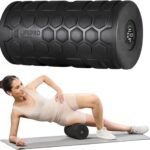 A foam roller can help improve upper-back mobility and reduce stiffness. Many people with Upper Crossed Syndrome have a stiff thoracic spine, which makes it harder to sit tall and open the chest.
Using a foam roller for thoracic extensions can help your upper back move better. It may also help reduce tightness in the chest, shoulders, and upper back when used carefully.
Why It Helps: Supports upper-back mobility and helps counter rounded posture.
Best For: Desk workers, stiff upper back, mobility work, and home stretching.
Check Price on Amazon
3.Laptop Stand or Monitor Riser — Best for Desk Posture
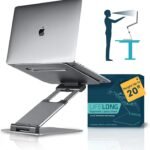 A laptop stand or monitor riser is one of the most important office products for posture. If your screen is too low, your head naturally moves forward and downward. Raising the screen closer to eye level can reduce neck strain and help you sit more upright.
For laptop users, a stand should be paired with an external keyboard and mouse. This allows the screen to stay high while your hands remain at a comfortable typing height.
Why It Helps: Reduces forward head posture caused by low screens.
Best For: Remote workers, students, office desks, laptop users, and home offices.
Check Price on Amazon
4. Ergonomic Office Chair — Best for Long Sitting Hours
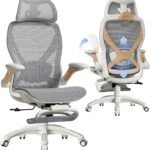 A good ergonomic office chair can support better sitting posture during long workdays. Look for adjustable seat height, lumbar support, armrests, and a backrest that supports the natural spine curve.
An office chair will not fix weak muscles, but it can reduce the stress caused by poor sitting positions. If your chair is too low, too deep, or lacks support, it can make posture problems worse.
Why It Helps: Improves sitting support and reduces posture fatigue.
Best For: Full-time office workers, remote workers, programmers, writers, and students.
Check Price on Amazon
5. Posture Corrector or Smart Posture Trainer — Best for Posture Awareness
 A posture corrector or smart posture trainer can help remind you when your shoulders round forward. Traditional braces give physical feedback, while smart posture trainers may vibrate when you slouch.
These products should be used for short posture-awareness sessions, not all day. They work best when combined with exercises and ergonomic improvements.
Why It Helps: Provides reminders when you start slouching.
Best For: People who forget to sit upright, desk workers, and home office users.
Check Price on Amazon
Simple Daily Routine for Office Workers
Here is a beginner-friendly routine you can do during work breaks:
- Chin tucks — 10 reps
- Doorway chest stretch — 30 seconds
- Band pull-aparts — 12 reps
- Banded rows — 12 reps
- Wall angels — 8 reps
- Thoracic extensions on foam roller — 1 minute
- Stand and walk — 2 to 5 minutes
This routine can be done once or twice per day. The goal is not to do a hard workout. The goal is to reset your posture, wake up weak muscles, and reduce stiffness from sitting.
Desk Setup Tips to Prevent Upper Crossed Syndrome
Your exercises will work better if your desk setup supports better posture.
Place your monitor directly in front of you. The top of the screen should be at or slightly below eye level. Keep the screen about an arm’s length away. Your keyboard and mouse should be close enough that your elbows stay near your body.
Keep your feet flat on the floor. Your knees should be around hip level. Sit back in your chair instead of perching at the edge. Use armrests only if they let your shoulders stay relaxed.
If you use a laptop, raise it with a stand and use an external keyboard and mouse. A low laptop screen is one of the easiest ways to create forward head posture.
Take movement breaks. Even a perfect chair cannot replace movement. Stand up, stretch, and walk regularly.
Mistakes to Avoid
Only Wearing a Posture Brace
A brace may remind you to sit upright, but it will not strengthen your upper back. Use it as a tool, not a cure.
Stretching Only
Stretching the chest feels good, but you also need to strengthen weak muscles. Add rows, pull-aparts, and chin tucks.
Sitting Perfectly Still
Good posture is not about freezing in one position. The best posture is one that changes throughout the day.
Ignoring Screen Height
If your screen is too low, your neck will keep moving forward. Fix your workstation first.
Overtraining the Neck
Neck exercises should be gentle. Avoid aggressive movements or heavy resistance without guidance.
When to See a Professional
You should speak with a doctor or physical therapist if you have:
- Severe or persistent neck pain
- Tingling or numbness in the arms or hands
- Weakness in the shoulder, arm, or hand
- Frequent headaches
- Pain after injury
- Dizziness
- Symptoms that worsen despite exercise
- Reduced range of motion
- Pain that affects sleep or work
A physical therapist can check whether your symptoms are caused by Upper Crossed Syndrome, nerve irritation, shoulder problems, disc issues, or another condition.
Final Verdict
Upper Crossed Syndrome is one of the most common posture problems among office workers. It often develops from long sitting hours, low laptop screens, rounded shoulders, weak upper-back muscles, tight chest muscles, and poor movement habits.
The best way to improve it is to combine stretching, strengthening, ergonomic desk changes, and regular movement breaks. Resistance bands, foam rollers, laptop stands, ergonomic chairs, and posture trainers can all support the process, but they should not replace exercise or professional care when needed.
If you work at a desk every day, start with the basics: raise your screen, move often, stretch your chest, strengthen your upper back, and practice chin tucks. Small daily changes can make a big difference over time.
FAQs About Upper Crossed Syndrome
What is Upper Crossed Syndrome?
Upper Crossed Syndrome is a posture-related muscle imbalance involving tight chest and neck muscles with weak upper-back and deep neck muscles.
What causes Upper Crossed Syndrome?
Common causes include poor posture, long sitting hours, low laptop screens, phone use, weak upper-back muscles, and tight chest muscles.
Is Upper Crossed Syndrome common in office workers?
Yes. Office workers are at higher risk because they often sit for long periods and work in forward-head, rounded-shoulder positions.
Can Upper Crossed Syndrome be fixed?
Many posture-related cases can improve with stretching, strengthening, better ergonomics, and consistent movement habits. Persistent pain should be checked by a professional.
What are the best exercises for Upper Crossed Syndrome?
Chin tucks, chest stretches, band pull-aparts, rows, wall angels, face pulls, and thoracic extensions are commonly used.
Do posture correctors help Upper Crossed Syndrome?
They can help with posture awareness, but they do not strengthen muscles by themselves. They work best when combined with exercise.
What products help with Upper Crossed Syndrome?
Resistance bands, foam rollers, laptop stands, ergonomic chairs, and posture trainers can support posture improvement routines.